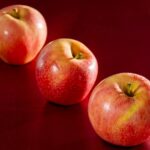
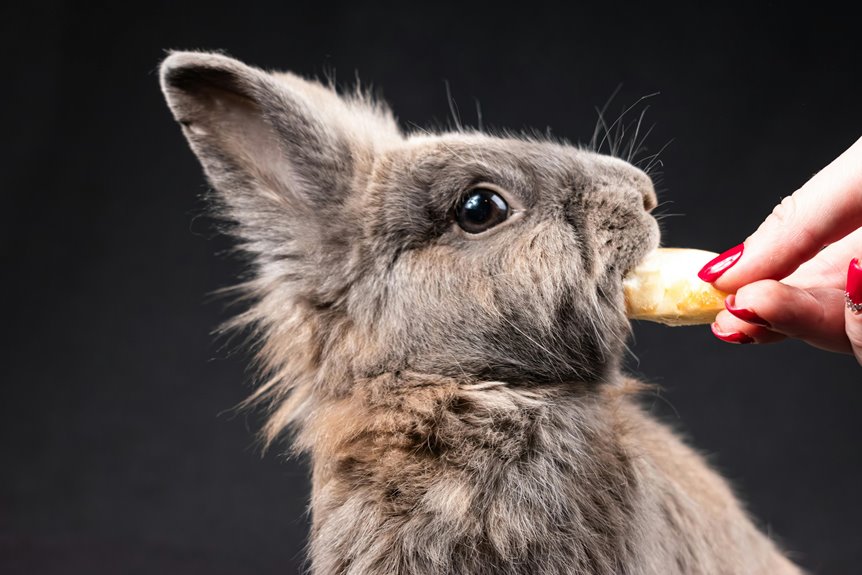
Wild rabbits don’t naturally seek out apples—they’re far more interested in grasses, clover, and dandelions. If apples do appear in their environment, rabbits might nibble them only when preferred greens disappear.
Here’s the catch: their digestive systems evolved for fibrous plants, not sugary fruits. Even small amounts can disrupt their gut bacteria and cause diarrhea.
If you’re curious about what actually keeps wild rabbits healthy and thriving, there’s plenty more to explore.
What Wild Rabbits Actually Eat in Nature
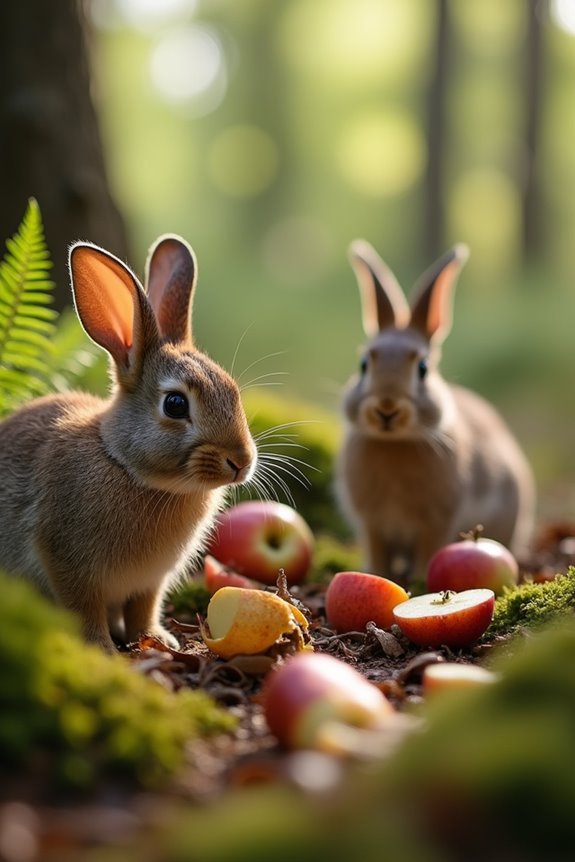
Ever wonder what wild rabbits munch on when they’re hopping through meadows and forests? I’ve learned that these little hoppers are actually pretty selective eaters. Their wildlife-foraging diet consists mainly of grasses, weeds, clover, dandelions, and goldenrod—basically whatever’s abundant and natural in their habitat. They’ll also nibble leafy greens and herbaceous plants they find growing around them. Notably, they don’t seek out fruits like apples, even though those might show up in fruiting trees within their range. Wild rabbits stick to what they know because their digestive systems are delicate. Sudden diet changes? That’s a recipe for stomach trouble. So when you see rabbits in nature, they’re working hard to find reliable, familiar forage that keeps them healthy and happy.
Do Wild Rabbits Seek Out Apples?
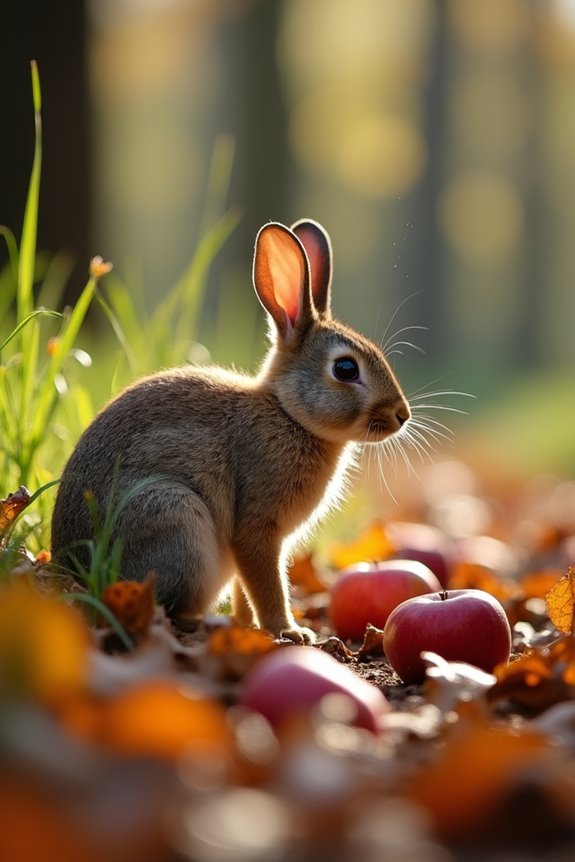
Now that we’ve covered what wild rabbits actually eat in their natural habitats, you might be wondering: what happens when apples do cross their paths?
Here’s the truth: wild rabbits don’t naturally seek out apples. They’re far more interested in grasses, clover, and vegetables they encounter in fields and gardens. However, if an apple falls nearby—say from an orchard or backyard tree—a curious rabbit might investigate and nibble it.
| Factor | Wild Rabbit Behavior |
|---|---|
| Natural preference | Grasses and clover |
| Apple availability | Seasonal, location-dependent |
| Likelihood of eating | Only if encountered |
| Nutritional priority | Low compared to greens |
The reality? Apples aren’t on their grocery list. Your local rabbits aren’t hoping for fruit; they’re hunting for their favorite leafy greens instead.
Why Wild Rabbit Stomachs Can’t Handle Apples
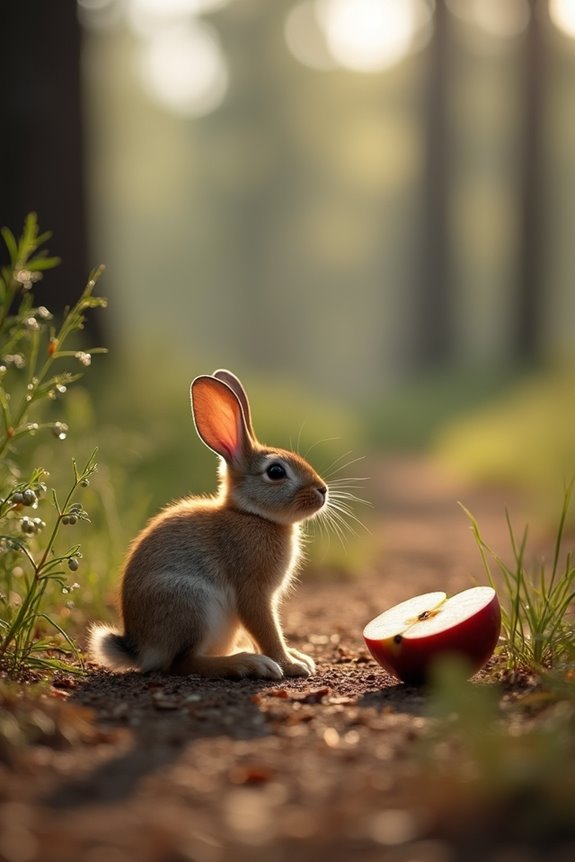
So the thing is: wild rabbits can technically eat apples in small amounts, but their digestive systems aren’t really built for them. Here’s why—their guts rely on specific bacteria to break down fibrous plants like clover and grass. When you introduce apples, the high sugar content disrupts that delicate balance. This disruption can trigger diarrhea, soft stools, or worse digestive issues, especially in less active rabbits. Think of it like suddenly changing your diet drastically; your stomach protests. The fiber in apples does help, but it’s overshadowed by the sugar problem. That’s why I recommend limiting apples to one or two slices once or twice weekly, keeping them under 5% of their daily intake. Moderation truly matters here.
Why Feeding Any Rabbit Apples Creates Digestive Emergencies
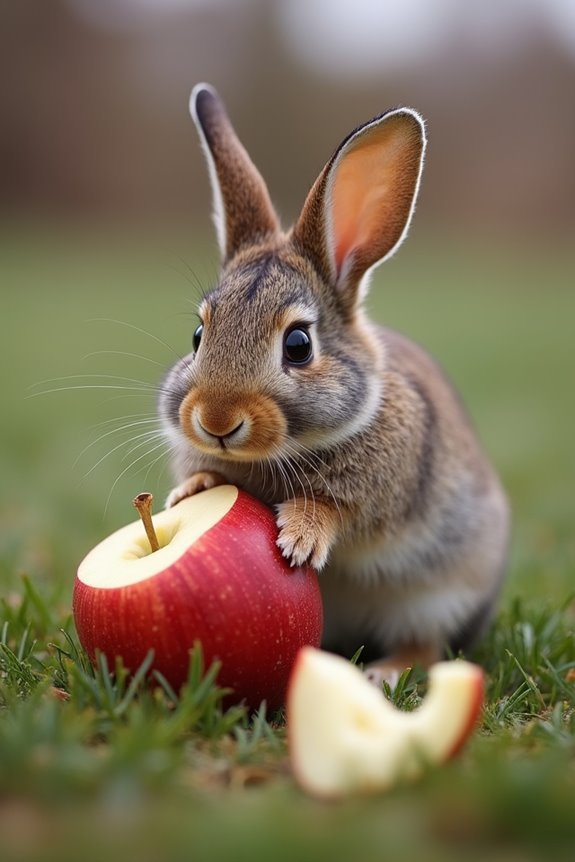
The problem? Apples are high in natural sugars. When rabbits eat too much, their digestive system gets thrown off balance. Therefore apples should never exceed 5% of their daily diet—way less than their 80–90% hay requirement.
Start small, monitor closely, and watch for digestive upset. Your rabbit’s stomach will benefit from this approach.
Winter Habitat for Wild Rabbits: A Better Solution
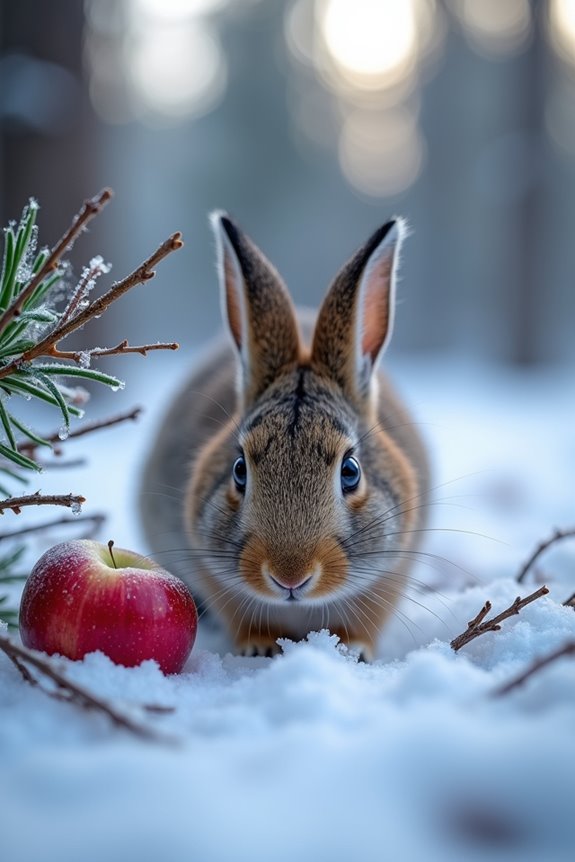
Instead of leaving apples out as winter treats, I’ve found that supporting wild rabbits through their coldest months means focusing on what they naturally seek: adequate shelter, dense brush, and accessible vegetation they’d find in their native habitat. Creating brush piles, leaving leaf litter undisturbed, and protecting shrubby areas gives them the cover and food sources they need to survive winter without relying on human-provided treats. You’ll help wild rabbits thrive far more by preserving their natural environment than by offering apples, which can cause serious digestive problems they’re not equipped to handle.
Natural Food Sources Matter
Why should we care about what wild rabbits naturally eat instead of relying on human food like apples? Here’s the thing: wild rabbits thrive on their natural diet of high-fiber hay, grasses, and leafy greens. When we offer apples—even occasionally—we’re introducing foods their digestive systems aren’t built for. I’ve learned that their stomachs work best with 80–90% hay and vegetation they’d find foraging naturally. Apples contain sugar that can upset their digestion and cause diarrhea. By respecting what nature intended, we’re actually helping rabbits stay healthy. Sure, apples seem harmless, but sticking to natural food sources keeps their gut balanced. Your local wild rabbits will be better off when we let them eat what evolution designed them to eat.
Creating Shelter and Cover
While we can’t control what wild rabbits eat when they’re foraging on their own, we absolutely can help them survive the harsh months ahead by giving them safe places to rest and stay warm. Creating a wildlife shelter improves your yard as a rabbit habitat. Start with dense brush piles—stack branches, logs, and fallen leaves in corners. You can also build simple wooden structures with roof overhangs, leaving entrance holes about four inches wide. Evergreen shrubs provide year-round cover. The key is layering: ground-level access, overhead protection, and insulation from wind and snow. Even small efforts make a difference. When rabbits have secure shelters nearby, they’ll thrive through winter without relying on supplemental feeding.
Supporting Healthy Winter Survival
How can you actually help wild rabbits make it through the cold months without creating dependency on handouts? I’ve found the best approach focuses on their natural needs. Maintain dense brush piles and evergreen shrubs—these provide shelter and accessible vegetation. Leave dried grasses and clover standing rather than clearing everything. If you want to offer occasional treats like small apple pieces (seeds removed, cut tiny), keep it rare and sparse. Remember, apples are maybe 5% of their diet at most. The real winter support comes from protecting their habitat: providing access to bark, twigs, and dried plants they’d naturally eat. You’re not replacing nature—you’re just getting out of their way and removing obstacles to survival.
Backyard Plants Wild Rabbits Naturally Prefer
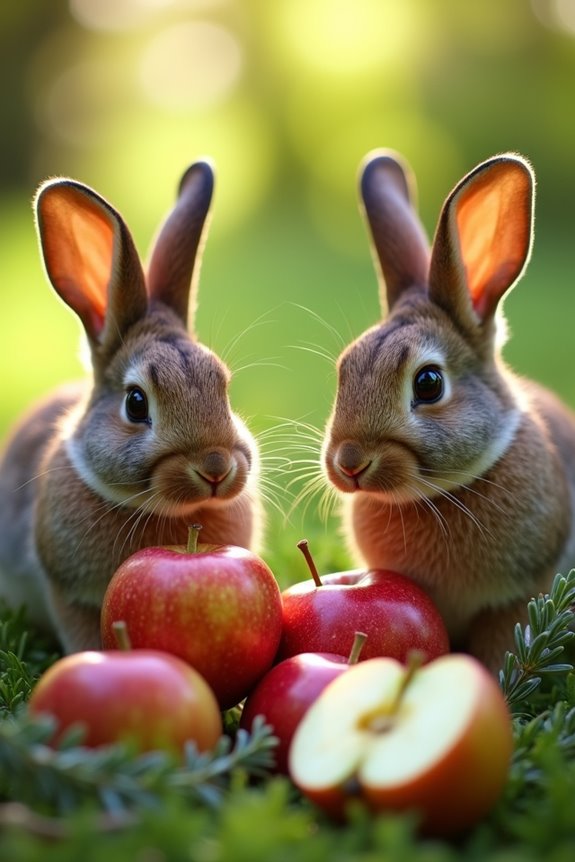
If you’ve got wild rabbits visiting your yard, they’re probably already feasting on what nature provides—grasses, clover, dandelions, and weeds—because these native plants are exactly what their digestive systems evolved to handle. You’ll notice they’re pickiest about uncut, weedy areas where they can nibble throughout dawn and dusk, the times they’re most active, so letting part of your lawn grow wild actually does them more good than any apple or garden vegetable you might leave out. The real trick isn’t planting special foods for them; it’s creating a habitat where wildflowers, native grasses, and seasonal vegetation flourish naturally, giving these rabbits the varied, safe diet they need year-round.
Native Vegetation Rabbits Prefer
When you look out at your yard, you’re actually looking at a rabbit’s pantry. I’ve noticed that wild rabbits gravitate toward native vegetation that grows naturally in most yards—grasses, clover, dandelions, and weeds are their go-to foods. They’ll munch on goldenrod and wild strawberries too, especially during warmer months. What makes these plants appealing? They’re low-growing, readily available, and don’t require rabbits to venture far from their burrows. Unlike apples or other human foods, these native plants align with what rabbits’ digestive systems evolved to handle. When you skip the supplemental feeding and let your yard grow naturally, you’re actually supporting healthy rabbit populations. They’ll find what they need without your intervention, thriving on the vegetation that’s already there.
Seasonal Forage Availability Patterns
Throughout the year, wild rabbits’ diets shift dramatically depending on what’s actually growing in your yard right now. During spring and summer, rabbits feast on abundant dandelions, clover, and fresh grasses—they have many options. Fall brings different opportunities: goldenrod and wild strawberries supplement their greens. Winter’s tougher. When snow covers everything, rabbits seek hardy weeds and low-lying grasses poking through. They’ll nibble bark and whatever dried vegetation they can find.
Here’s what’s worth noting: rabbits rarely touch apples or other fallen fruits unless their preferred greens vanish. Since they’re crepuscular, they’re most active browsing at dawn and dusk. You’ll support year-round rabbit populations by maintaining unmowed patches and allowing wild vegetation to thrive. These natural forage sources work better than supplemental foods.
Cultivating Natural Rabbit Habitat
Want to turn your yard into a rabbit buffet? Creating natural rabbit habitat starts with letting nature do its thing. Instead of manicuring everything, leave sections of grass uncut and allow wild plants to flourish. Rabbits naturally browse grasses, clover, dandelions, and weeds—they’re not picky eaters, though wild apples? They’ll nibble those too if available.
| Plant Type | Season | Nutrition | Rabbit Preference |
|---|---|---|---|
| Clover | Spring-Fall | High protein | Excellent |
| Dandelions | Spring-Summer | Vitamins | Excellent |
| Wild grasses | Year-round | Fiber | Excellent |
| Goldenrod | Summer-Fall | Minerals | Good |
Skip chemical sprays completely. Avoiding frequent landscaping changes protects rabbit nests and maintains consistent food sources. You’ll spot them foraging at dawn and dusk—that’s prime viewing time. This approach converts your yard into a genuine rabbit sanctuary.
Watching Wild Rabbits Without Interfering
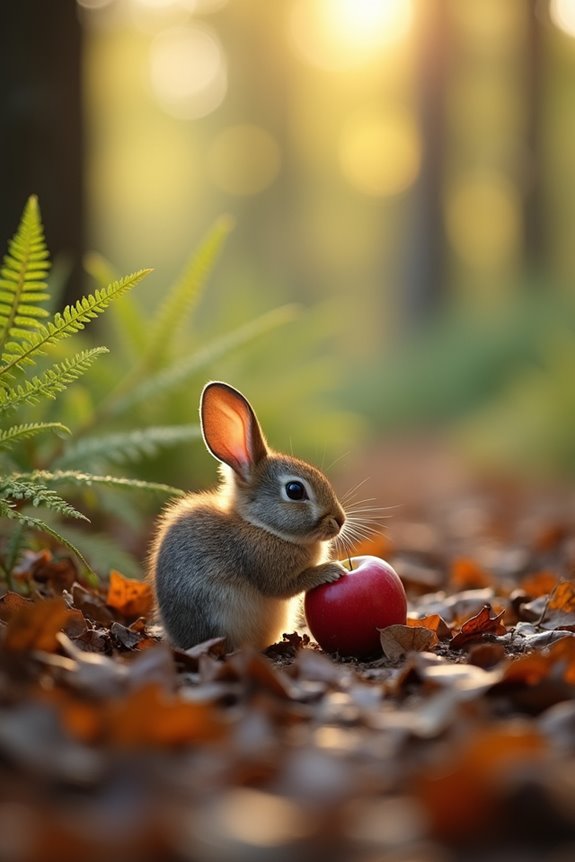
How can you enjoy watching wild rabbits without accidentally changing their natural behavior? I’ve learned that observation takes restraint, especially when you’re tempted to offer treats like apples. Here’s what I do:
- Keep your distance—stay at least 10-15 feet away so rabbits don’t associate you with food or danger
- Avoid feeding entirely, even small apple pieces, which can disrupt their natural foraging habits
- Watch during dawn or dusk when they’re most active, minimizing your presence
The truth is, wild rabbits thrive on their own diet of hay, clover, and natural vegetation. When we intervene—even with good intentions—we risk making them dependent or altering their gut health. I find that simply observing from afar, notebook in hand, builds a real connection. You’re part of their world without changing it.