
Pasteurized apple cider vinegar can be safe during pregnancy when you dilute it properly—mix 1–2 tablespoons in water, max two servings daily. The pasteurization process kills harmful bacteria like Listeria and Salmonella that pose real risks to you and your baby. Unpasteurized versions? Skip those. The bigger concern is acidity, which can erode tooth enamel and trigger heartburn. Evidence for morning sickness relief is mostly anecdotal. Before trying it, chat with your healthcare provider, especially if you’re managing gestational diabetes or taking medications. There’s definitely more nuance worth exploring here.
What Makes Apple Cider Vinegar Risky or Safe in Pregnancy?
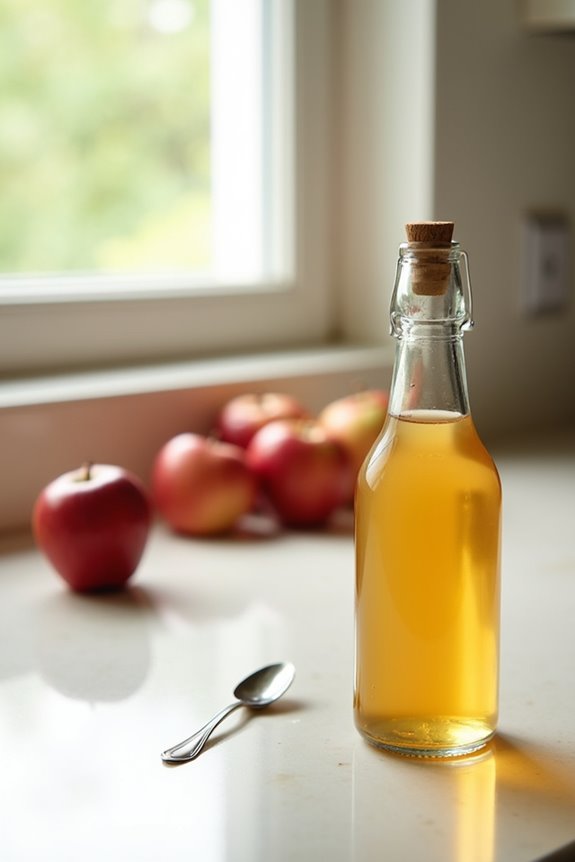
Why does one bottle of apple cider vinegar get a thumbs-up from doctors while another gets the side-eye? The difference comes down to pasteurization. When you’re pregnant, your immune system changes, making you more vulnerable to infections from harmful bacteria like Listeria and Salmonella. Unpasteurized apple cider vinegar can harbor these pathogens, posing real pregnancy risks you’ll want to avoid. Pasteurized versions, however, undergo heat treatment that kills dangerous bacteria, making them considerably safer for you and your baby. The trade-off? Pasteurization removes the “mother”—those beneficial bacteria clusters—but safety is the priority here. If you’re considering apple cider vinegar during pregnancy, always consult your healthcare provider first. They’ll help you decide what works best for your specific situation.
Pasteurized or Unpasteurized: Which Is Safer?

I’ll break down the key differences for you, because choosing between these two matters when you’re pregnant. Pasteurization heats the vinegar to about 161–185°F, which kills harmful bacteria like Listeria and Salmonella that can threaten your pregnancy, while unpasteurized versions skip this step and keep that cloudy “mother” (a mix of beneficial bacteria and yeast) that some people value for potential probiotic content. Here’s the reality: pasteurized ACV trades some potential probiotic benefits for safety, so if you’re considering using it during pregnancy, sticking with the pasteurized option and checking labels carefully is the recommended approach.
Pasteurization Process Explained
When you’re shopping for apple cider vinegar during pregnancy, you’ll notice labels that say either “pasteurized” or “unpasteurized,” and honestly, that distinction matters more than you might think. Pasteurization is a heat-treatment process that kills harmful bacteria lurking in the vinegar. Here’s what happens:
- Heat treatment destroys dangerous pathogens like Listeria and Salmonella
- The process reduces infection risk during your pregnancy
- Your immune system gets extra protection when you need it most
Pasteurized apple cider vinegar gives you peace of mind. Unpasteurized ACV keeps the “mother” and probiotics intact, but carries real risks. While pasteurization removes some beneficial bacteria, pregnancy safety takes priority. You’re making a smart choice by understanding what’s actually in your bottle and choosing what protects both you and your baby.
Bacterial Contamination Risks
Unpasteurized apple cider vinegar can harbor bacteria—Listeria, E. coli, and Salmonella—that thrive in products that haven’t been heat-treated. When you’re pregnant, your immune system’s slightly compromised, making you more vulnerable to these pathogens. Listeria is particularly concerning because it can cross your placenta and potentially cause miscarriage, preterm labor, or newborn illness.
Choose pasteurized cider instead. Products from farmers’ markets, local farms, or homemade batches are typically unpasteurized and carry serious infection risk. Pasteurized cider reduces bacterial contamination significantly, making your pregnancy safer.
Check labels carefully—if it doesn’t say pasteurized, skip it. Your baby’s health is worth protecting, and pasteurized options are readily available.
Safe Consumption Guidelines
The choice between pasteurized and unpasteurized apple cider vinegar during pregnancy basically comes down to this: pasteurized wins for safety.
What you need to know about vinegar consumption during pregnancy:
- Pasteurized ACV eliminates harmful bacteria like Listeria and Salmonella, protecting both you and baby
- Unpasteurized varieties retain some probiotics but carry genuine contamination risks that aren’t worth it
- Dilution matters: Mix 1–2 tablespoons in a large glass of water to protect your digestive system
Unpasteurized may sound more “natural,” but safety during pregnancy takes priority over trends. Always consult your healthcare provider before using any ACV product, especially supplements. They’ll confirm it’s right for your specific situation. When you’re growing a human, choosing pasteurized options is the sensible approach.
Why Pasteurization Matters: Bacteria and Safety
Since pregnancy naturally changes how your immune system works, you’re more vulnerable to foodborne bacteria like Listeria and Salmonella—pathogens that can hide in unpasteurized vinegar products. Pasteurization heats vinegar to kill harmful bacteria, making it safer for you and your baby. Unpasteurized varieties might contain the “mother” and beneficial probiotics, but the infection risk is not advisable during pregnancy. Pasteurization removes some live cultures, yet safety is the priority. By choosing pasteurized options, you’re protecting both of you. Talk with your healthcare provider about which vinegar form and amount works best for your specific pregnancy. They’ll help you make the right choice for your situation.
Can Apple Cider Vinegar Help With Pregnancy Morning Sickness?

You’ve probably heard someone swear that apple cider vinegar helped their morning sickness, but here’s the deal: we don’t actually have solid scientific proof that it works. If you’re curious about trying it, the safest approach is diluting a small amount in water (think 1-2 teaspoons in a glass) and using it sparingly, though you’ll want to chat with your doctor first to make sure it’s right for your specific situation.
Limited Scientific Evidence
How much scientific proof do we actually have that apple cider vinegar can ease morning sickness? Honestly, not much. When I look at the research, I find mostly anecdotal stories rather than solid clinical trials specifically testing pregnant people. Here’s what the evidence really shows:
- Most claims come from personal experiences, not controlled studies
- Few robust clinical trials exist examining ACV’s effects during pregnancy
- Results vary widely between individuals who try it
The takeaway? If you’re considering apple cider vinegar for morning sickness, prenatal guidance typically suggests trying established nausea management strategies first. Should you explore ACV as a cautious option, remember that pasteurized ACV is safer than unpasteurized varieties during pregnancy. The limited evidence means we can’t call it a cure, but mild nausea relief remains possible for some people.
Dilution and Dosage Guidelines
So you’re thinking about trying apple cider vinegar for morning sickness—fair enough, but let’s talk about doing it safely. I’d recommend mixing 1–2 tablespoons of ACV into a large glass of water to reduce acidity and make it gentler on your stomach. Start small, then watch how your body responds. If nausea gets worse or digestive discomfort kicks in, stop immediately. Here’s the thing: always choose pasteurized ACV instead of unpasteurized versions, which carry higher infection risks during pregnancy. Before you begin any ACV regimen, chat with your healthcare provider, especially if you’re taking medications or managing pregnancy-related conditions. Your doctor can help you determine whether ACV dilution actually makes sense for your specific situation and morning sickness dosage guidelines.
Pregnancy-Specific Risks: Acidity, Enamel Damage, and Heartburn
Why does apple cider vinegar seem to amplify heartburn just when pregnancy already makes digestion tricky? The high acidity in ACV can worsen your pregnancy heartburn and acid reflux—not ideal when you’re already dealing with digestive changes.
Apple cider vinegar’s high acidity can worsen pregnancy heartburn and acid reflux when digestion is already compromised.
Here’s what happens:
- Acidic irritation: The vinegar irritates your digestive tract, creating discomfort after you consume it
- Enamel erosion: Repeated exposure to acidic beverages gradually weakens your tooth enamel over time
- Reflux aggravation: Pregnancy hormones already relax your esophageal muscles, and ACV makes this worse
I get it—you’re weighing whether the potential benefits are worth these risks. That’s smart thinking. If you’re experiencing worsening symptoms, chat with your healthcare provider. They’ll help you decide if ACV fits your pregnancy safely or if you should skip it altogether.
Safe Dosing for Pregnancy

If you decide to use apple cider vinegar during pregnancy, here’s what to do safely. Mix one to two tablespoons of pasteurized apple cider vinegar into water, and stick to one or two servings per day maximum. Diluting it matters because it reduces acidity hitting your teeth and stomach directly. Always choose pasteurized varieties to avoid bacterial risks.
Before you start using apple cider vinegar during pregnancy, consult your healthcare provider first—especially if you’re managing gestational diabetes or taking medications. They’ll help you determine if it’s appropriate for your situation.
Apple Cider Vinegar and Medication Interactions
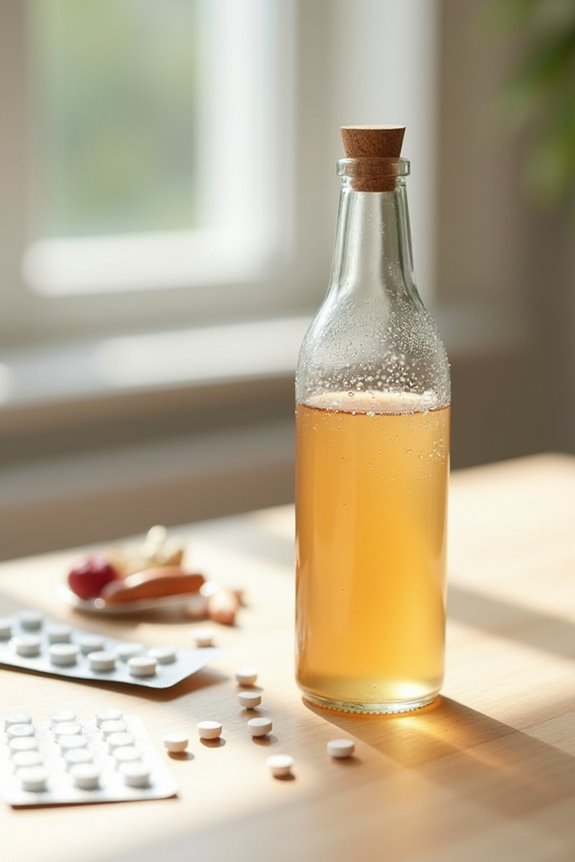
If you’re taking medications during pregnancy, apple cider vinegar isn’t just another food choice you can casually add to your routine—it’s something that deserves a conversation with your doctor first.
Here’s why I’m saying this: ACV can interfere with how your body handles certain medications. Consider these potential concerns:
- Blood sugar and diabetes medications: ACV may lower blood sugar levels, potentially causing dangerous drops if you’re already taking diabetes meds
- Potassium-affecting drugs: Since ACV reduces potassium, combining it with diuretics or blood pressure medications creates real risk
- Absorption issues: The acid in ACV can alter how your body absorbs oral medications
Additionally, unpasteurized ACV carries infection risks like Listeria that are more serious during pregnancy when your immune system is already compromised. The precautions? Skip unpasteurized versions entirely, and absolutely consult your healthcare provider before using ACV if you’re managing any chronic conditions or taking prescription medications. Your safety matters most.
Are ACV Gummies Safe During Pregnancy?
You’ve probably seen those little gummy bottles at the store, promising all the benefits of apple cider vinegar in a sweet, chewable form—and honestly, I understand the appeal. Here’s the thing: we don’t really know if ACV gummies are pregnancy safe yet. These gummies pack concentrated acetic acid, plus various additives, but robust human studies during pregnancy just don’t exist. They might help with nausea or digestion, but the evidence is limited. One trade-off I’d mention? Pasteurized gummies reduce infection risk, but they lose those probiotic benefits unpasteurized liquid ACV offers. Before taking them, talk with your health provider. Check product labels carefully for ingredients and choose reputable sources. Your baby’s health matters too much to guess.
Safe Alternatives When ACV Isn’t Right for You
So ACV gummies didn’t work out for you—or maybe your doctor said to skip the vinegar altogether. I understand. The good news? You have solid options that support digestion and pregnancy safety without the infection risk that unpasteurized varieties carry.
Safe digestion support in pregnancy exists beyond ACV—explore pasteurized, infection-free alternatives your body will thank you for.
Consider these alternatives:
- Ginger tea or peppermint tea – sip warm for nausea and digestive comfort
- Pasteurized probiotic supplements – support gut health without bacterial contamination concerns
- Lemon water – aids digestion gently and refreshingly
These choices work because they deliver similar benefits—better digestion, relief from heartburn, nausea support—without worrying about Listeria or E. coli exposure. Always consult your healthcare provider before trying anything new, especially if you’re managing preexisting conditions or taking medications. You’re making thoughtful choices for your pregnancy.