McIntosh apples are a useful tool for tender, saucy baked desserts—but here’s the catch: their high water content and soft flesh need different handling than most recipes expect. I’d slice them before baking, pair them with firmer varieties like Granny Smith for better texture, and adjust your measurements since one medium McIntosh yields only about one cup sliced.
Store them cold, prep them just before baking, and you’ll achieve consistent results every time. Want to master the specifics?
Why McIntosh Apples Excel in Baked Desserts
Have you ever bitten into an apple pie and wondered why some fillings turn into a thick, cohesive sauce while others stay chunky and separate? That’s where McIntosh apples work well in baked desserts.
McIntosh apples soften quickly and break down into a tender, saucy texture that blends seamlessly into your filling. Their natural sweetness and mild tartness actually deepen during baking, which enhances spice-driven pies and crisps. Here’s what makes them effective: they release moisture reliably, preventing overly dry pastries while creating that soft, cohesive filling.
McIntosh apples macerate and break down more than firmer varieties, making them ideal for cobblers and creamy fillings. Plus, their skins darken without collapsing dramatically, preserving an inviting color in your finished desserts.
Choose and Store McIntosh for Best Results
When should you reach for McIntosh apples, and when should you skip them? Timing matters. McIntosh apples work best in pies and crisps where you’re mixing them with firmer varieties like Empire or Braeburn. This combination keeps everything from turning into mush.
For storage: refrigerate your McIntosh apples at about 33°F before baking. This preserves their texture and prevents premature browning. Since McIntosh breaks down quickly during baking time, slice them rather than baking them whole. You’ll want to adjust your baking time accordingly, watching for softness instead of assuming a standard recipe works perfectly.
Pairing varieties isn’t cheating—it’s practical baking.
How to Prep McIntosh Apples Before Baking
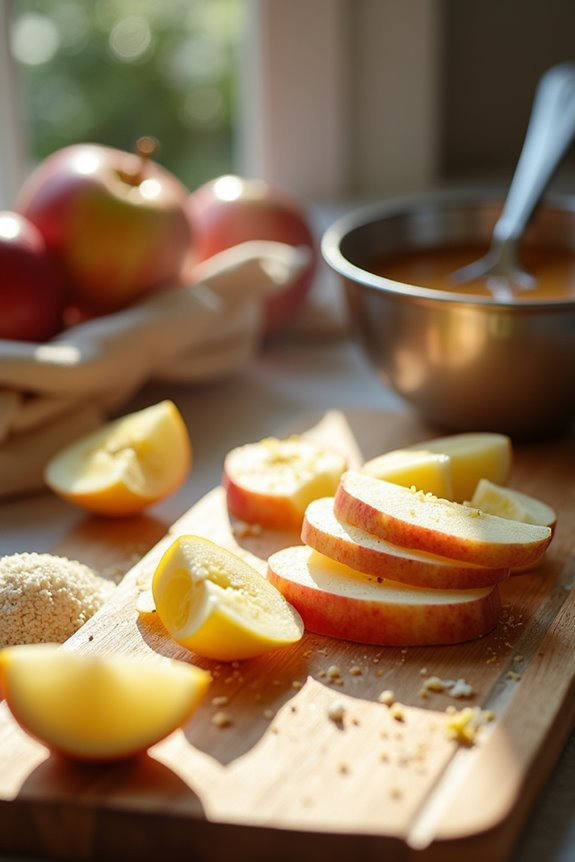
Now that you’ve got your McIntosh apples stored and ready, I’ll show you how to pick the best ones and prep them properly for baking. When you’re selecting apples at the store or farmers market, look for ones that feel slightly soft to the touch—that’s actually what you want with McIntosh, since they’ll break down well during baking. I always give mine a quick rinse under cool water, pat them dry, then cut them into even, bite-sized pieces, which helps them cook uniformly and prevents those mushy spots that can ruin your filling.
Selecting Quality McIntosh Apples
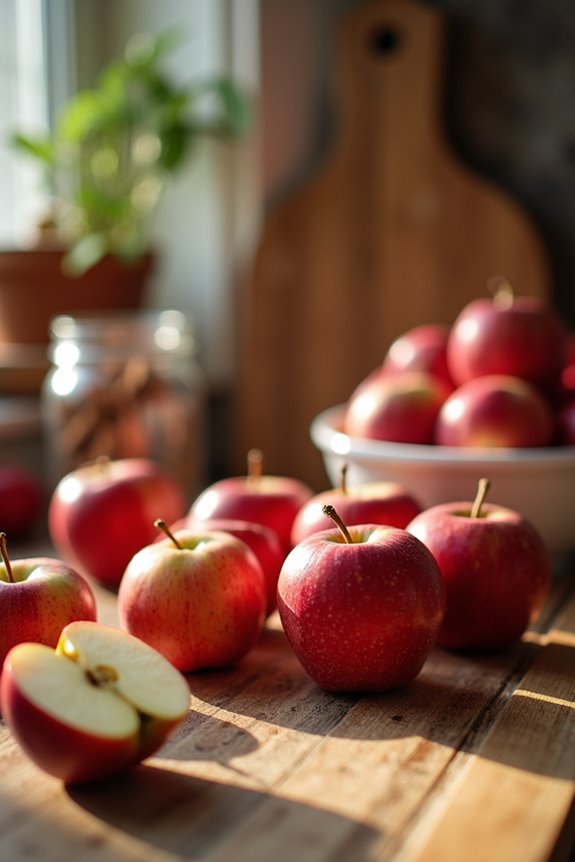
Why do some bakers swear by McIntosh apples while others avoid them entirely? The answer lies in selection. When choosing baking apples, I look for firm Macintosh apples with unblemished skin—no bruises or soft spots that signal breakdown problems. I gently squeeze each one to confirm it’s solid, not mushy. Not all baking apples perform equally. Some varieties collapse into mush, which isn’t what we want. McIntosh apples, though, break down beautifully into tender, sauce-like fillings. Before I take mine home, I inspect them carefully under good light. Selecting quality Macintosh apples takes just a minute but improves your final pie or crisp.
Washing And Chopping Techniques
Once you’ve got your quality McIntosh apples home, the real work begins—but it’s straightforward stuff that’ll pay off. I start by rinsing each apple under cool running water, scrubbing away surface dirt gently. Then comes the drying part—don’t skip this. Extra moisture affects your filling’s consistency.
| Step | Action |
|---|---|
| Washing | Rinse under cool water, remove dirt |
| Drying | Pat thoroughly with clean towel |
| Chopping | Core, quarter, slice uniformly |
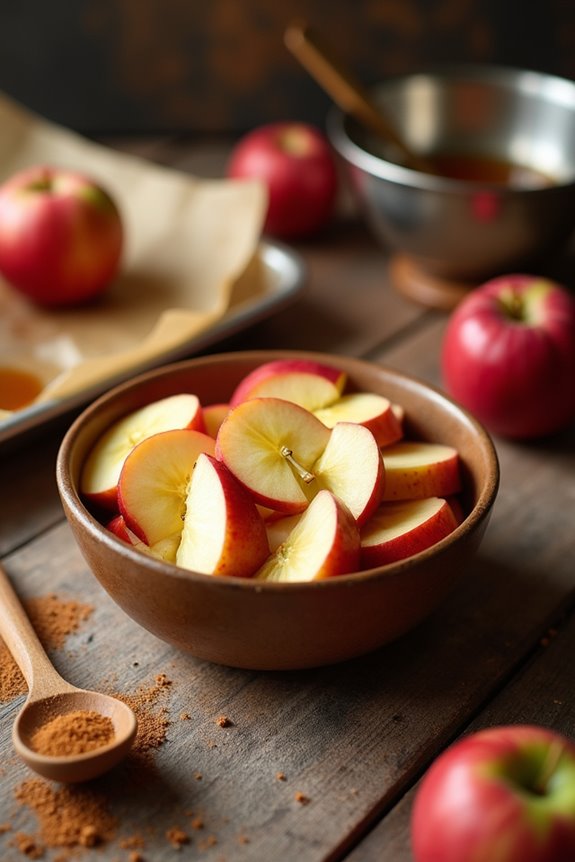
Now for chopping. I core and quarter each apple, then slice into uniform 1/4-inch pieces for even baking. Here’s my approach: toss those slices immediately with lemon juice. It prevents browning and keeps your apples looking fresh. Whether you peel or leave skin on depends on your preference—peeled gives softer texture, while skin adds color and slight texture variation.
Pair Mcintosh With Other Apple Varieties for Depth
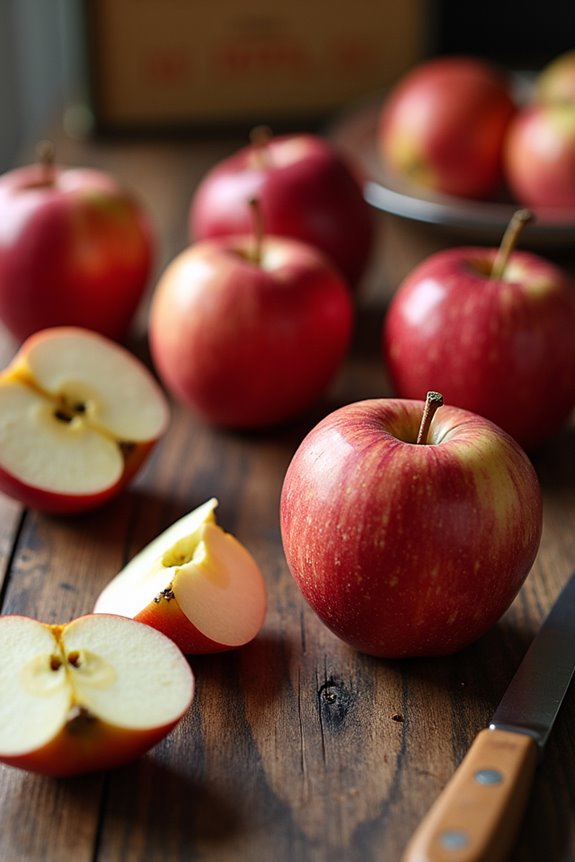
Macintosh breaks down into a soft, flavorful base, so I combine it with firmer apples. Honeycrisp keeps structure intact while maintaining sweetness. For tartness, Granny Smith balances everything perfectly—it holds its shape better during baking too.
I also love mixing in Empire or Jonathan for layered complexity. Empire brings red-tart notes, while Jonathan adds intricate flavor. Want visual interest? Blend Macintosh with Pink Lady for crispness or Fuji for mellow sweetness.
I use a 60/40 or 50/50 Macintosh-to-firmer-variety ratio. This keeps my pie filled with flavorful apples that maintain structure after baking.
Adjusting Sweetness and Spices to Complement McIntosh
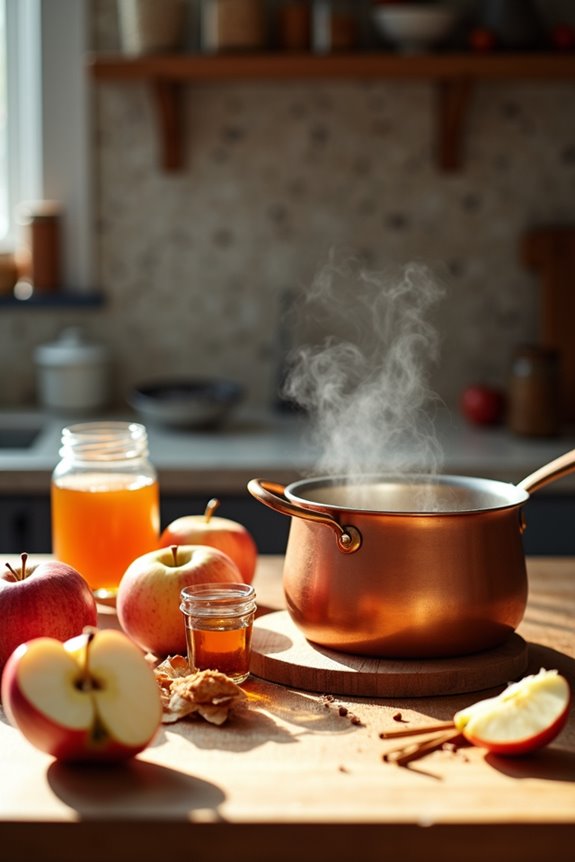
How do you know when you’ve got the sweetness and spice balance just right? I’ve found that McIntosh apples already bring natural sweetness to the table, so I reduce my sugar by 2–3 tablespoons per recipe. This keeps things from getting cloying.
For spices, I’m a fan of the classic combo: 1 teaspoon cinnamon, 1/4 teaspoon nutmeg, and 1/4 teaspoon ginger per 4 cups of sliced apples. These warm spices complement McIntosh well without overpowering that distinctive apple flavor we’re after.
Don’t skip the lemon juice either—about 1 tablespoon per 4 cups. It brightens everything up and prevents browning during prep. Once you nail these proportions, you’ll join the crowd of bakers who’ve mastered McIntosh. Your taste buds will appreciate the results.
McIntosh Apples to Cup Measurements
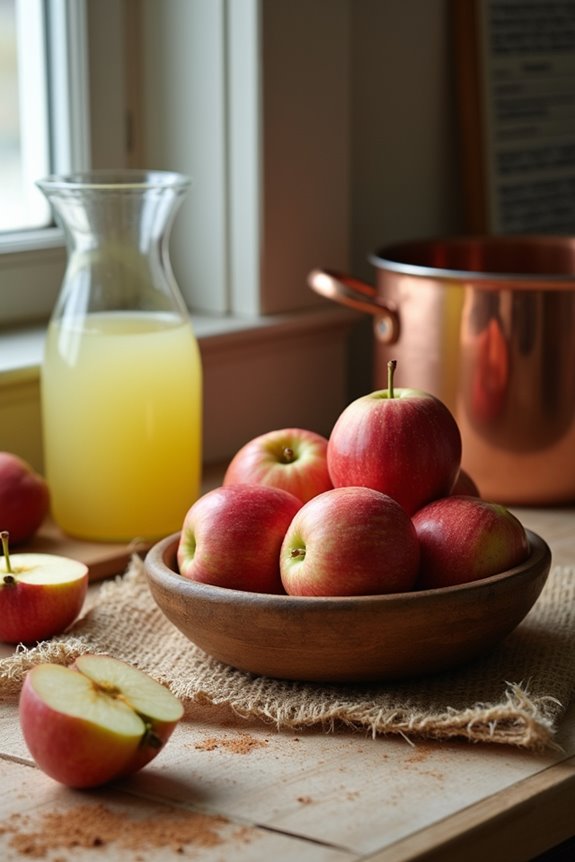
When you’re ready to bake with McIntosh apples, converting between whole apples and cup measurements requires a bit of planning—you’ll get roughly 1 cup of sliced apples per medium apple once you’ve peeled and cored it, which means a standard 9-inch pie needs about 5–6 apples depending on their size. Before you measure, prep your apples by peeling, coring, and slicing them consistently, since how thinly or thickly you cut them affects the final cup count; this prep work also helps you see exactly how much volume you’re working with. Keep in mind that McIntosh apples are softer and break down more easily than firmer varieties, so your yield might vary slightly—but knowing that 3 medium McIntosh apples give you roughly 4 cups of prepared fruit provides a solid baseline for any recipe.
Weight To Volume Conversion
Ever found yourself staring at a recipe that calls for “2 cups of chopped apples” while you’re holding a bag of whole McIntosh apples and wondering if you’ve got enough?
I’ve been there. Understanding weight to volume conversion for McIntosh apples removes the guesswork from baking. Here’s what I’ve learned: one cup of chopped McIntosh apples weighs about 4 to 4.5 ounces. Two cups equals roughly half a pound of fruit. Working backward, two to 2.5 medium apples yield one cup when chopped.
For slicing, expect one medium apple to give you about one cup. One large apple produces around 1 to 1.25 cups chopped. These conversions help me measure confidently without a scale, so my baked goods turn out as intended every time.
Preparing Apples For Measurement
Getting your McIntosh apples prepped and measured correctly is important in baking, and I’ve found that a little planning upfront saves you headaches later. Start by washing your apples thoroughly, then peel, core, and chop them to your desired size. Here’s what I’ve learned: one medium McIntosh yields about 2 to 2.5 cups when chopped. If your recipe calls for 4 cups of sliced apples, grab two medium apples and add another variety if needed. Keep in mind that McIntosh break down quickly during cooking, so if you want chunkier texture in your filling, cut them larger. This measurement awareness helps you get consistent results every time you bake.
Yield Per Apple Variety
Now that you’ve got your apples washed and ready to go, let’s talk about how many cups you’ll actually get from them—because McIntosh apples are a bit different from other baking varieties. Here’s what I’ve found:
- Standard conversion: Expect roughly 2 to 2½ cups of chopped or sliced McIntosh per pound (about 4 medium apples)
- Pie filling amounts: You’ll need about 5–6 sliced McIntosh apples to fill a 9-inch pie completely
- Moisture factor: McIntosh yield fewer cups per pound than firmer varieties due to their higher water content and softer flesh
The yield per apple variety matters because McIntosh apples have that medium yield. Their naturally softer texture means you’re getting less usable fruit than you’d expect from heartier options. Keep this in mind when measuring!
Scale Any McIntosh Recipe to Your Needs
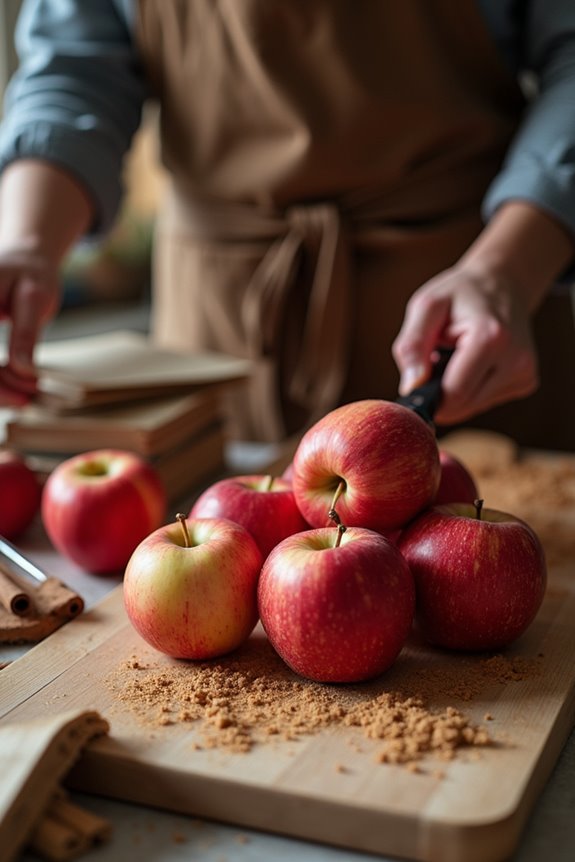
Since McIntosh apples break down into sauce-like mush when baked whole, you’ll want to adjust recipes by cutting them into pieces and potentially mixing in firmer varieties—but first, you’ve got to know how to scale the amounts to match what you’re making.
Here’s the math that’ll save you: roughly 2 to 2.5 cups chopped apples equal about 3 medium McIntosh apples. Use this conversion when adjusting pie fillings and crisps to your preferred pan size. When scaling recipes, maintain those essential apple-to-sugar-to-spice ratios—they’re what keep your dessert balanced and flavorful. Recompute your total filling weight to preserve moisture levels and flavor intensity. Pair McIntosh with firmer varieties like Empire or Braeburn for texture, and you’ll achieve consistent results every time.