Apples do help clean your teeth, but they’re not a replacement for brushing and flossing. Their fibrous texture acts like a natural brush, and chewing stimulates saliva that neutralizes acids and rinses away particles.
However, apples also contain sugars and acids that can erode enamel if you’re not careful.
The real benefit comes when you combine them with proper hygiene habits.
Want to know the best way to enjoy apples without damaging your teeth?
Do Apples Really Clean Teeth?
Have you ever wondered if that crisp apple you’re munching on is actually doing your teeth any good? Well, apples do help clean your teeth, but they’re not a cure-all. Here’s how it works. When you bite into an apple, its fibrous texture acts like a natural brush, scrubbing away plaque buildup. As you chew, you’re also stimulating saliva production, which rinses away food particles and neutralizes acids. This combination supports your mouth-cleaning efforts and overall oral health. However, here’s the catch—apples contain natural sugars and acids that can contribute to enamel erosion if you eat them constantly without proper dental hygiene. So yes, apples help, but they can’t replace brushing, flossing, and regular checkups for true enamel protection.
How Apples Damage Enamel (And Why It Matters)
While apples offer some dental benefits, they present a trade-off for your tooth enamel. Apples contain acids and natural sugar that can damage enamel over time. When you eat an apple, the acidity softens your enamel temporarily, making it vulnerable. If you brush immediately after eating, you’re grinding that softened enamel away—not ideal. Waiting 30 minutes allows your enamel to re-harden before brushing. The sugar feeds bacteria that cause tooth decay, so maintaining good oral hygiene matters. Rinsing with water after eating helps wash away acids and sugar, reducing enamel erosion risk. Apples require smart snacking habits to keep your teeth healthy.
Safe Ways to Snack on Apples Without Eroding Enamel
So you’ve learned that apples can damage your enamel—does that mean you should skip them altogether? Not at all! I’ve found that you can enjoy apples safely by following a few smart steps. First, leave the skin on to get maximum fiber for cleaning. Then, rinse your mouth with water right after eating to wash away sugar and acidity. Here’s the important part: wait thirty minutes before brushing. Why? The acidity temporarily softens your enamel, so brushing immediately risks erosion. During that waiting period, your saliva naturally neutralizes acids and protects your teeth. Pair apple snacking with regular brushing and flossing for complete oral hygiene. This approach lets you gain all the dental health benefits without compromising your enamel. You’re protecting your smile while staying healthy.
Why Apples Can’t Replace Brushing and Flossing
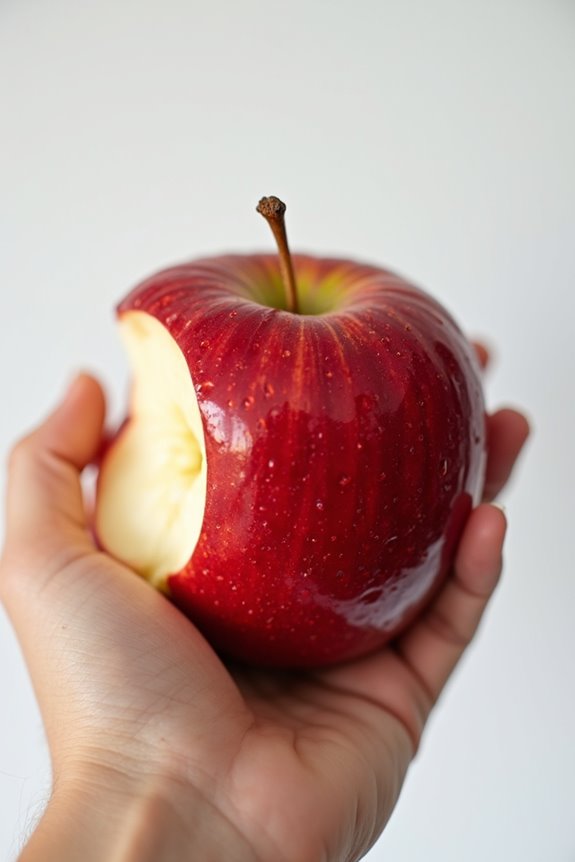
Can an apple really do the job of a toothbrush? Not quite. While an apple’s fibrous texture does stimulate saliva production and mechanically clean some plaque, it can’t replace brushing or flossing. Here’s why: apples don’t reach between your teeth, where flossing cannot be skipped. They also contain natural sugars and acids that contribute to tooth decay if you’re not careful. Apples offer supplementary benefits for your dental hygiene—the ADA confirms they lower cavity and gum disease risk—but only when combined with brushing and flossing. Think of apples as a helpful sidekick, not your main defense. To minimize enamel wear, rinse with water after eating apples and wait thirty minutes before brushing. Your teeth need the complete routine.
Apples Alone Won’t Replace Brushing and Flossing
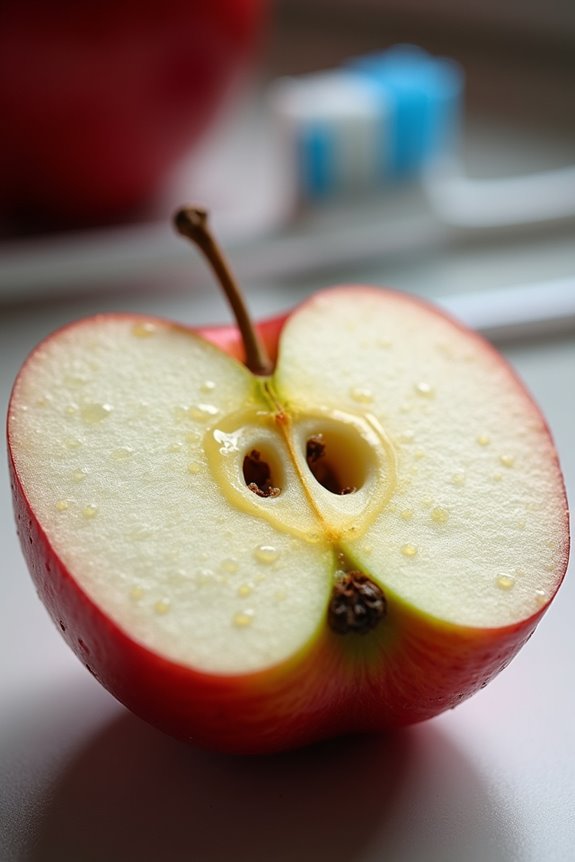
apples are good, but they’re not your toothbrush’s replacement. The idea that munching an apple cleans your teeth might seem appealing. However, saliva production from chewing can’t remove plaque like brushing does. Apples act as natural scrubbers, removing some food particles, yet they fall short where it counts.
| Dental Method | Plaque Removal | Bacteria Control | ADA Approved |
|---|---|---|---|
| Apples | Partial | Saliva only | No |
| Brushing with fluoride | Complete | Very effective | Yes |
| Flossing | Between teeth | Very effective | Yes |
| Routine dental care | Comprehensive | Professional | Yes |
What you need: brush twice daily with fluoride toothpaste, floss every day, and visit your dentist regularly. Since apples are acidic and contain natural sugars, they can cause enamel erosion without proper oral hygiene following consumption.