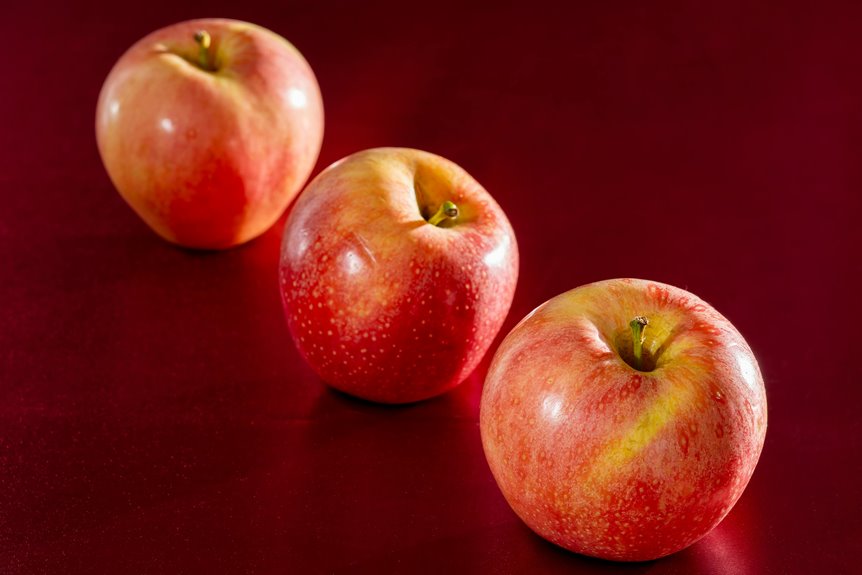
You can definitely eat apples with braces—just skip biting into whole ones. Instead, slice them into quarter-inch pieces before eating, then chew with your back molars to avoid putting that 70-pound biting force on your brackets.
Pre-cut apples also let you dip slices in lemon water to prevent browning, keeping them fresh for days in an airtight container.
If raw apples seem risky, applesauce or stewed apples work well too.
There’s plenty more detail on making this work smoothly.
Can You Really Eat Apples With Braces?
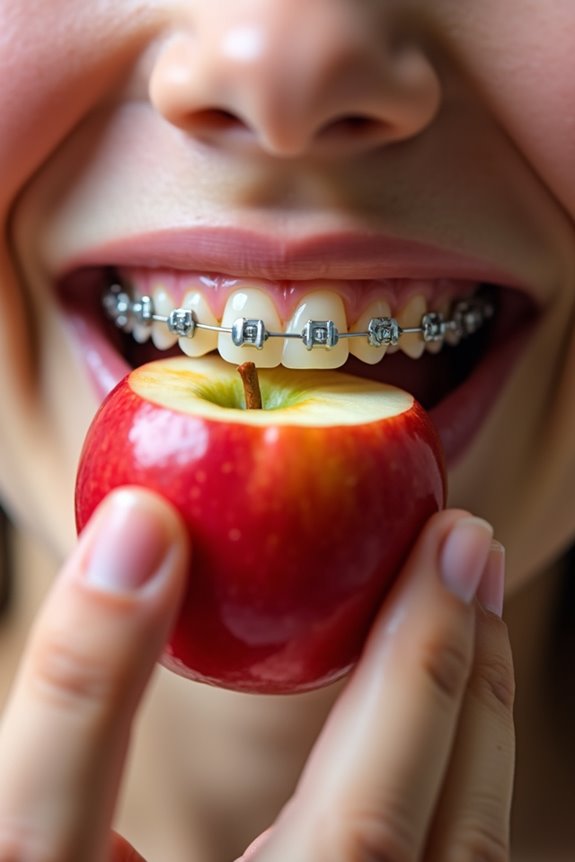
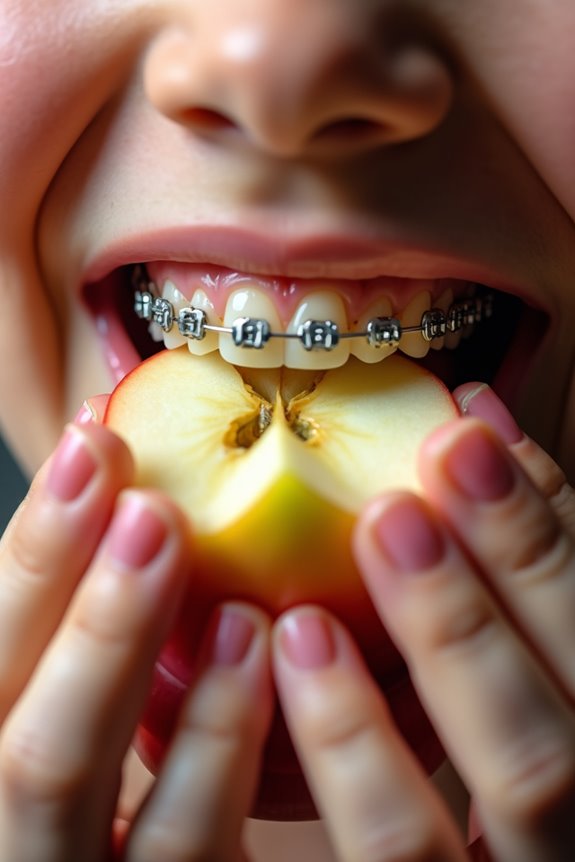
So, can you actually bite into a crispy apple when you’re wearing braces? The short answer is yes, but here’s the catch—biting directly into a whole apple puts serious pressure on your front teeth and brackets. That pressure? It’s a real risk for damage.
I get it. You want to eat normally like everyone else. The good news is you’re not locked out of apples entirely. You just need to be smart about how you approach them. The real solution is cutting apples into smaller, manageable pieces before eating. This reduces the stress on your brackets significantly. Alternatively, you can chew with your back molars instead of your front teeth. Either way, you’re protecting your braces while still enjoying apples.
Why Biting Into Whole Apples Damages Braces
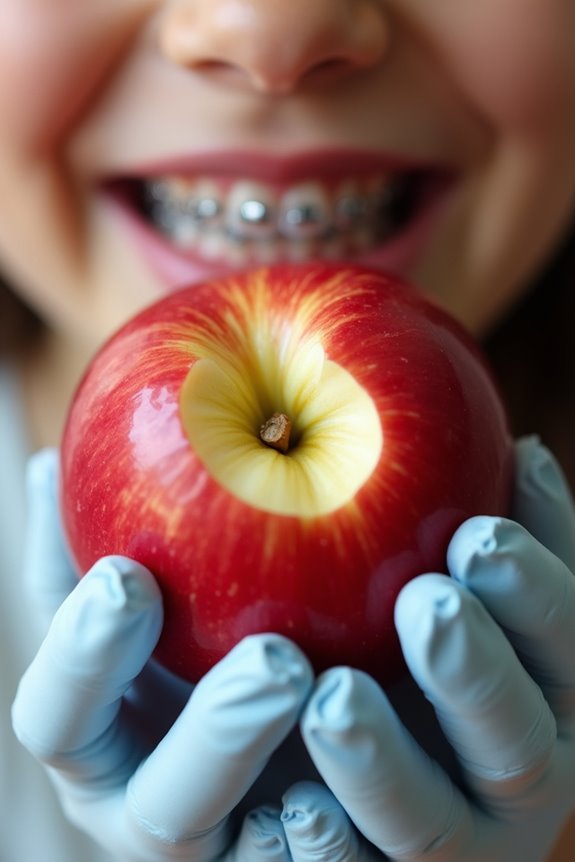
Ever wonder why your orthodontist gets that concerned look when you mention eating apples? Here’s the thing: when you bite into a whole apple, your front incisors exert roughly 70 pounds of force directly onto your braces. That’s enormous pressure concentrated right where your brackets live. Your front teeth transmit all that stress to your wires and brackets, which weren’t designed for that kind of impact. Hard, crunchy biting actions cause immediate damage or gradual weakening of orthodontic components.
| Apple Biting Damage | What Happens |
|---|---|
| Direct biting | Bracket loosening, wire damage |
| Pressure force | 70 pounds on front teeth |
| Braces safety risk | High stress on brackets |
| Back teeth chewing | Reduces bracket stress |
| Solution | Cut apples into pieces |
The smart move? Use your back teeth for chewing instead.
The Safe Way to Slice Apples for Braces
How do you actually slice an apple without wrecking your braces? Pre-cut apples work well for this. Start by cutting your apple into thin, quarter-inch slices—thin enough that you can easily chew them with your back molars. This matters because thinner pieces dramatically reduce the bite force needed, which protects your bracket safety and keeps your orthodontist happy.
Here’s my approach: I slice the apple lengthwise first, then cut each section into manageable strips. I place these toward the back of my mouth where my molars can handle them safely. The key is avoiding any front-tooth action—your incisors don’t need the stress. After eating, I brush and floss immediately to remove any lodged pieces. It’s simple, it works, and your braces stay intact.
Chewing vs. Biting: Which Method Protects Your Braces?
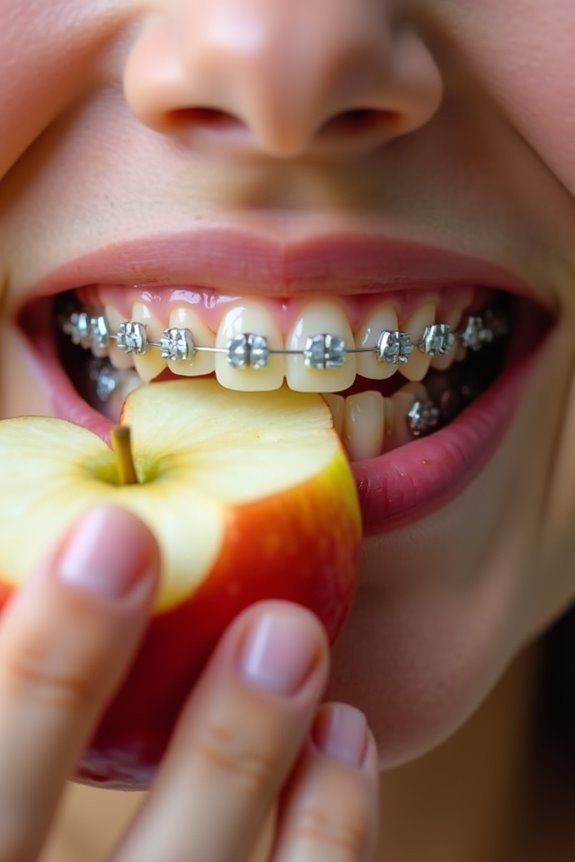
When you bite into an apple with your front teeth, your incisors can generate around 70 pounds of force, and that intense slicing pressure concentrates stress directly on your brackets and wires—not ideal when you’re trying to keep your braces intact. Instead, chew with your back molars, which distribute pressure evenly and keep that dangerous force away from your front braces. Here’s the simple rule: slice or cook your apples first, then use those back teeth to do the work, and you’ll protect your orthodontic investment while still enjoying your fruit.
Biting Creates Excessive Pressure
Your front teeth pack a significant amount of power—we’re talking around 70 pounds of force when you bite into a crisp apple—and that’s exactly the problem for anyone wearing braces.
When you bite with your front teeth, here’s what happens:
- Direct pressure hits your brackets head-on
- Wires bend under concentrated force
- Brackets loosen or pop off completely
- Brackets can crack or break
- Repairs mean extra orthodontist visits (and costs)
Your front teeth are slicers, not crushers. They’re designed for tearing, not handling heavy loads. With braces attached, they become vulnerable. That concentrated biting force goes straight to your brackets and wires, creating stress they’re not meant to handle. Skip the front-tooth approach entirely. Your brackets—and your wallet—will benefit.
Chewing Uses Back Molars
The key to eating apples with braces lies in shifting where the work happens—moving the action from your vulnerable front teeth to your powerful back molars. Here’s the deal: your back teeth are built for this job. They’re designed to handle serious pressure, and when you chew instead of bite, you’re using them exactly right.
When you chew an apple with your back teeth, the force distributes evenly across your molars. This even distribution keeps dangerous pressure away from your front brackets and wires. Your braces stay uninvolved, which means they stay safe. Unlike biting, which concentrates roughly 70 pounds of force on your incisors, chewing lets those molars do what they do best: process food without putting your braces at risk.
Safe Technique For Apples
Now that you know your back molars are your best friends, let’s talk about how to actually eat an apple without wrecking your braces.
Here’s your approach for eating apples with braces:
- Skip the bites. Don’t use your front teeth to bite into whole apples—those incisors can deliver 70 pounds of force that’ll stress your brackets.
- Slice it first. Cut apples into small, manageable pieces before chewing.
- Chew strategically. Use your back molars to process each piece thoroughly.
- Go soft if needed. Unsweetened applesauce requires zero biting or chewing—ideal when your mouth’s sore.
- Test the texture. Softer apple varieties work better than crisp ones.
With these simple adjustments, chewing apples becomes totally doable while keeping your braces safe and sound.
Prep Your Apple Slices to Prevent Browning
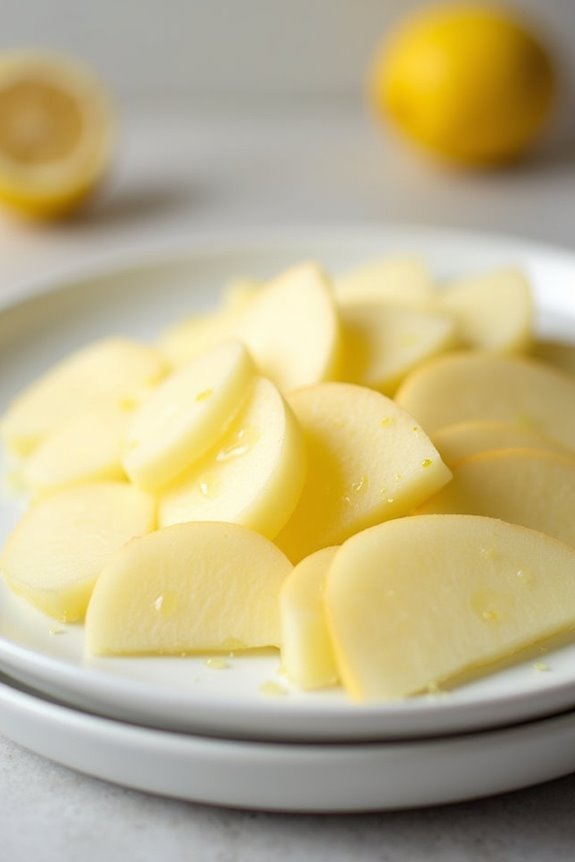
When you prep your apple slices ahead of time, you’ll want to stop that oxidation process that turns them brown, and I’ve found the easiest solution is a simple lemon-water dip using a 3:1 ratio—three parts water to one part lemon juice—which keeps your slices looking fresh throughout the day. Once you’ve dipped them, pat them dry and store them in an airtight container in your lunch bag or fridge, where they’ll stay crisp and brace-friendly for hours. This way, you’re not just protecting your braces from whole-apple biting, but you’re also making sure those pre-sliced pieces are ready whenever hunger strikes.
Lemon Water Dip Solution
If you’ve ever sliced an apple and watched it turn brown within minutes, you’ve witnessed enzymatic oxidation in action—and I have a simple fix for you.
I’m talking about a lemon water dip solution. Here’s what makes it work:
- Mix water and lemon juice in a 3:1 ratio
- The acid slows down the browning process considerably
- Submerge your apple slices for a few minutes
- Remove them and pat them dry lightly
- Store or eat them without worry
This lemon water dip is totally braces-friendly too. You’re not adding pressure or sticky situations—just dunking and drying. Your apple slices stay fresh-looking all day, and you’re protecting your braces simultaneously. It’s the easiest browning prevention hack I’ve found.
Storage Tips For Slices
So you’ve dipped your apple slices in that lemon water solution—what’s next? Now I store them properly to keep them fresh and safe for eating with your braces.
I pack my sliced apples in airtight containers or resealable bags immediately after the lemon water treatment. This minimizes air exposure and slows oxidation, which means your apples stay crisp longer. I always refrigerate them at or below 40°F (4°C) right away.
Here’s my storage plan:
| Step | Action | Why It Matters |
|---|---|---|
| 1 | Drain excess lemon water | Prevents mushiness |
| 2 | Use airtight containers | Stops browning faster |
| 3 | Refrigerate immediately | Maintains freshness |
| 4 | Label with today’s date | Tracks safety |
| 5 | Consume within 3–5 days | Maintains quality |
I label everything with the date because honestly, I forget what I prepped when. Eating your apples within three to five days keeps them safe and delicious for your braces-friendly meals.
How Small Should Apple Pieces Be With Braces?
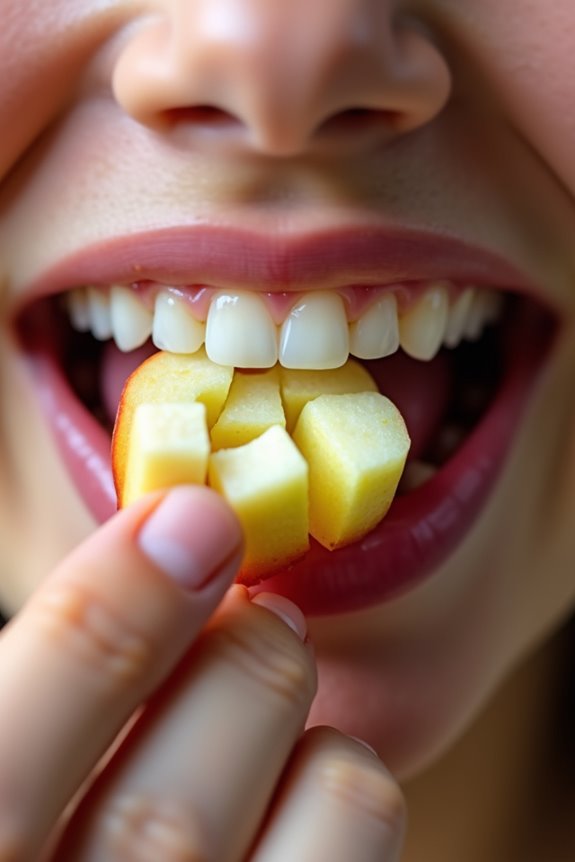
Why does size matter so much when you’re eating apples with braces? Smaller pieces mean less force on your brackets and wires—that’s just physics. Here’s what I’ve learned about apple, bite-sized portions for braces-compatibility:
- Cut apples into pieces no larger than a thumbnail
- Slice them thin enough to chew easily with your back teeth
- Aim for quarter-inch thickness to reduce bracket stress
- Pre-cut into cubes roughly the size of dice
- Consider applesauce when your teeth feel extra sensitive
I used to bite whole apples and regretted it every time. Now I slice mine beforehand, taking just a few extra minutes. Your brackets will thank you. Smaller pieces aren’t just safer—they’re easier to eat comfortably, and you’ll actually enjoy your apple more.
Cooked Apples: A Gentler Alternative to Raw Fruit
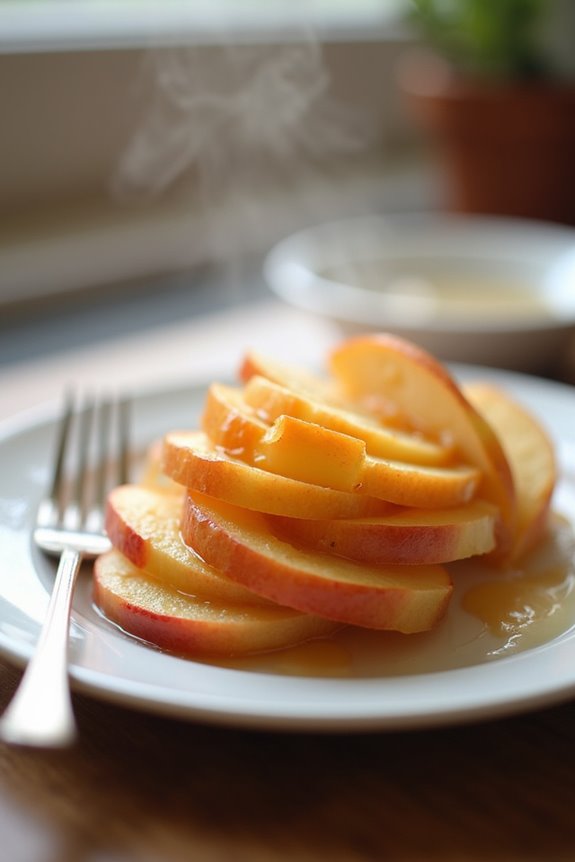
If you’re tired of worrying about every bite, here’s a practical solution: cooking your apples makes them a braces-friendly option that removes the stress from snack time. You can go with applesauce straight from a jar, stew apple pieces until they’re soft and easy to chew, or bake them until they practically melt in your mouth—all methods that keep your brackets and wires safe from damage. The key is choosing whatever cooked option works for you, then remembering to brush and floss afterward so you’re not leaving apple residue hanging around your braces.
Cooked Apple Options
When you’ve got braces, here’s the thing about cooked apples: they’re a practical solution you didn’t know you needed. I’ve found that cooking softens hard, risky fruit into something manageable. Here’s what works:
- Stewed apples: simmer chunks until they’re soft and spoon-friendly
- Baked apples: hollow them out, stuff with cinnamon, bake until tender
- Apple sauce: smooth, no chewing required, eat straight from a cup
- Boiled apple slices: break down completely, very gentle on brackets
- Slow-cooker apples: throw them in with a little water, forget about them
The benefit? You’re not just keeping your braces safe—you’re actually enjoying apples again. Pair them with yogurt or soft cheese for added protein and moisture. Your brackets stay intact, your wires stay straight, and you get that apple goodness you’ve been missing.
Brace-Safe Preparation Methods
Cooking apples is an effective approach for eating them with braces. Softened apples reduce stress on your brackets and wires. When you cook apples until they’re tender, you’re doing the hard work for your teeth.
| Preparation Method | Chewing Technique |
|---|---|
| Stewed apples | Back teeth chewing only |
| Applesauce | Small spoonfuls |
| Baked apples | Bite-sized pieces |
| Apple desserts | Soft, folded portions |
Here’s my brace-safe preparation approach: start with small, bite-sized portions. Cook your apples until they’re soft—not just warm. Back teeth chewing keeps pressure off your brackets. Afterward, rinse thoroughly with water.
The benefit? You’re protecting your orthodontic investment while still enjoying apples. That’s a practical solution.
When to Choose Applesauce Over Fresh Apples
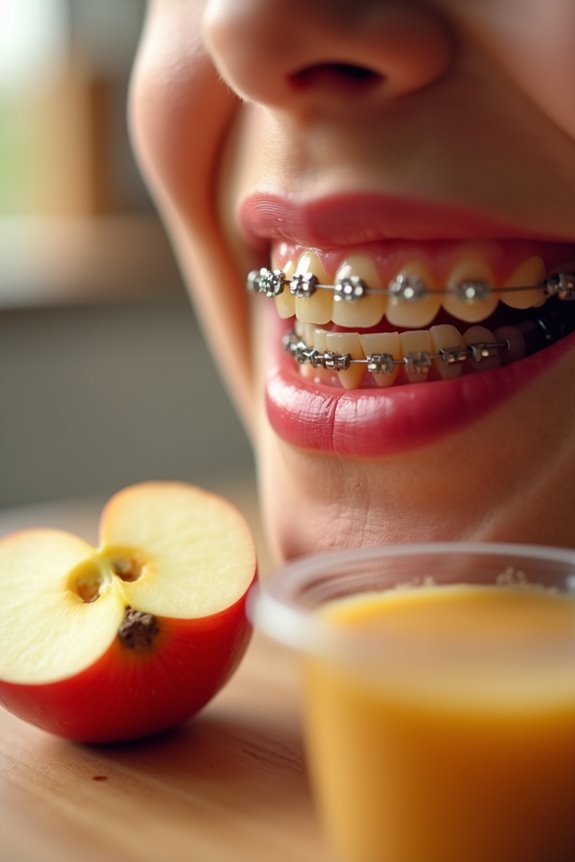
Shortly after you get braces, you’ll probably notice your teeth feeling sore and tender, which is totally normal—your mouth’s just adjusting to all that new hardware. This is the perfect time to swap fresh apples for applesauce and give your teeth a break.
Here’s when applesauce becomes your best friend:
- When soreness makes chewing painful or uncomfortable
- During the first week after getting braces tightened
- If you’re worried about brackets or wires getting damaged
- When you want to protect your braces from front-to-brace pressure
- If you’re craving something apple-flavored without the commitment
Unsweetened applesauce delivers all the nutritional benefits without requiring any chewing. You’ll avoid unnecessary stress on your braces while still enjoying apples. Just remember: brush and floss afterward to keep your braces in good condition.
Cleaning Your Braces After Eating Apple Pieces
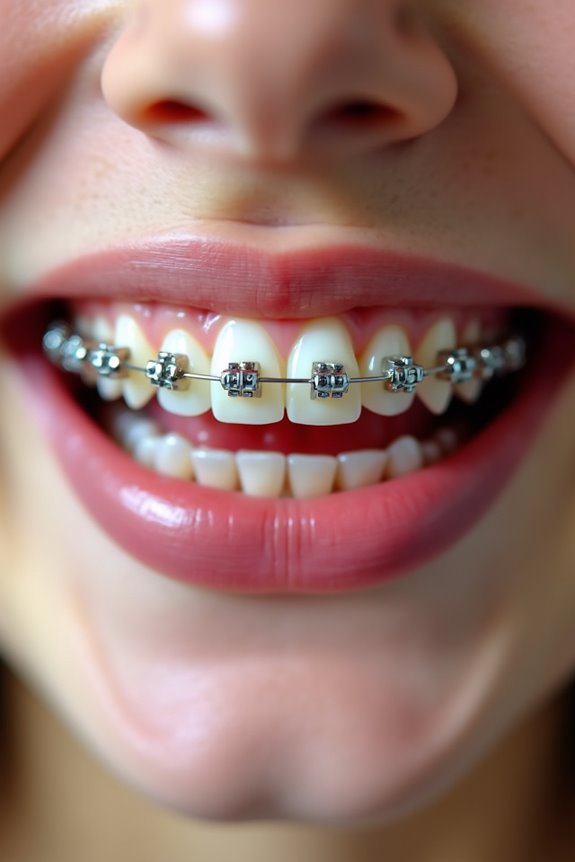
How do you keep apple pieces from turning into plaque-trapping problems around your brackets and wires? You need to act fast with brushing and flossing right after eating. Here’s your plan:
| Step | Action | Timing |
|---|---|---|
| 1 | Wait briefly for saliva | 2-3 minutes |
| 2 | Brush thoroughly | Immediately after |
| 3 | Floss between teeth | Next step |
| 4 | Check brackets closely | Before closing mouth |
| 5 | Rinse with water | Final step |
Start by brushing around every bracket and wire, getting into those tight spaces where fragments hide. Use an interdental brush for debris removal under wires. Floss between your teeth carefully, then rinse with water or mouthwash to catch tiny bits and neutralize acidity. Double-check each bracket before you move on. This routine prevents decay and staining, protecting your smile’s progress.
Damaged Your Braces Eating Apples? Here’s What to Do
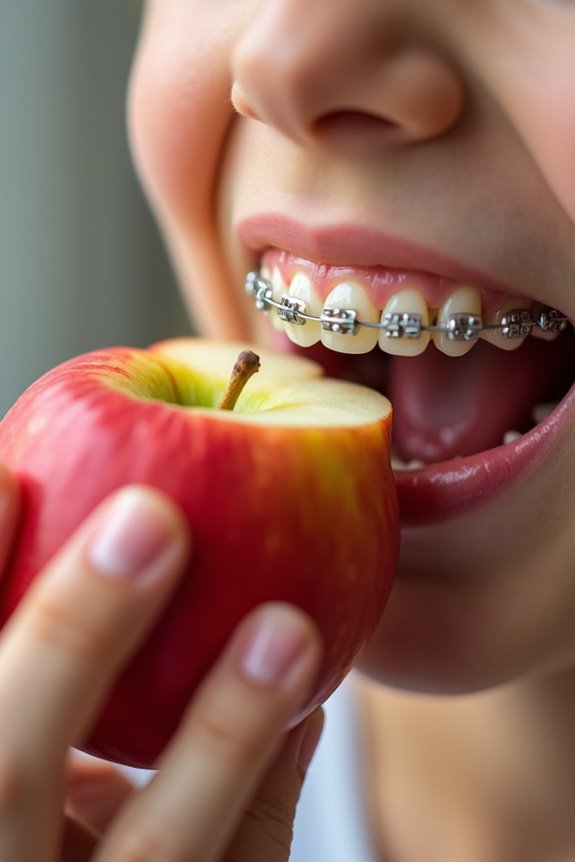
Sometimes despite your best efforts, that crispy apple can catch a bracket or bend a wire—and yeah, it happens to lots of people wearing braces. Here’s what you should do next:
- Contact your orthodontist immediately for a professional assessment of the braces damage
- Save any loose pieces you find and avoid chewing on that side until checked
- Rinse gently with water to remove apple remnants and prevent irritation
- Skip hard apples temporarily and switch to sliced, cooked, or soft alternatives
- Don’t attempt DIY fixes—reattaching brackets yourself can cause bigger problems
Apple safety during braces means knowing when to ask for help. Your orthodontist needs to evaluate the damage and keep your treatment on track. After-eating care matters, but professional care matters more when something goes wrong.
How Soon After Getting Braces Can You Eat Apples?
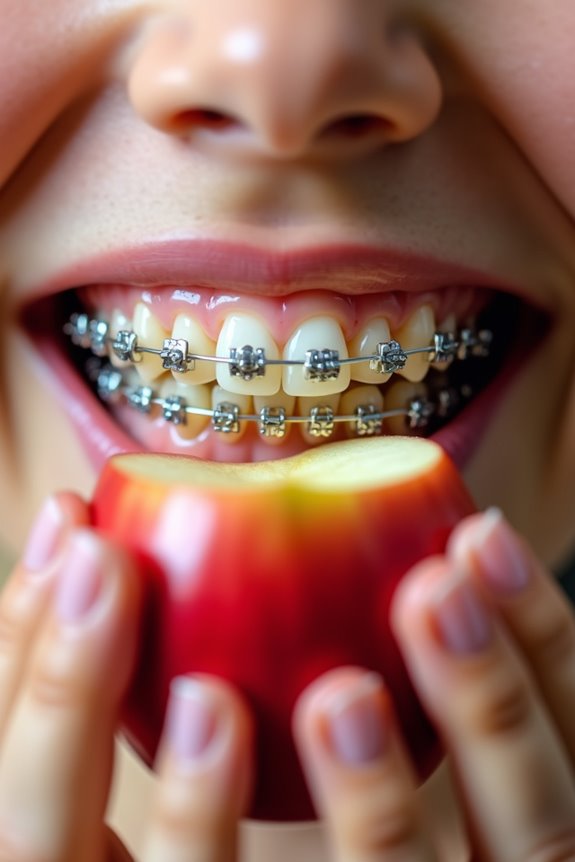
Now that you know how to handle apple-related bracket mishaps, you’re probably wondering when you can actually start eating apples again after getting braces put on in the first place. Here’s the deal: you’ll want to wait a few days to a week after your braces are placed. During this time, your teeth feel sore and sensitive—totally normal, by the way. Once that initial discomfort decreases, you can introduce apples back into your routine. Start with bite-sized pieces or sliced apples instead of whole ones. This approach reduces pressure on your brackets and wires while you’re adjusting. Think of it as easing back in gradually. After eating, rinse thoroughly and maintain good oral hygiene.
Other Hard Fruits and Vegetables to Avoid With Braces
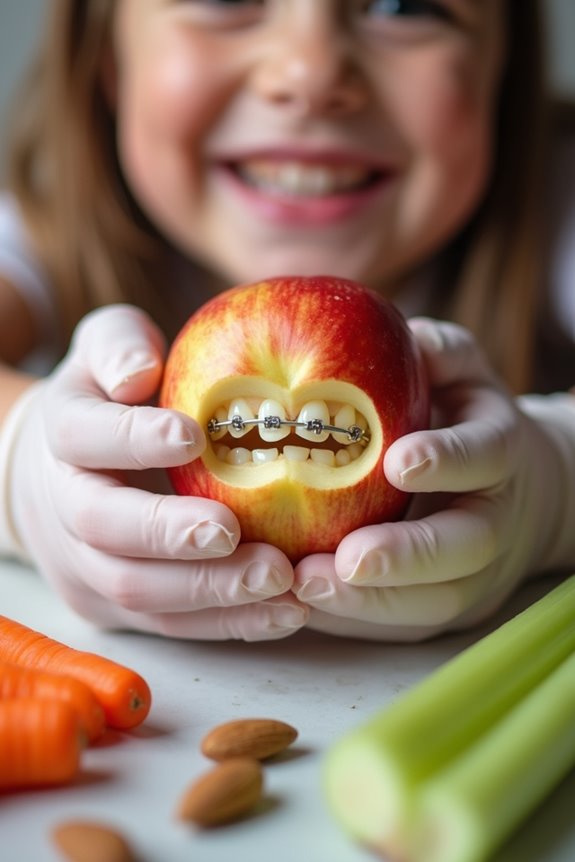
While apples get all the attention, you’ve got to watch out for other hard fruits and veggies too—raw carrots, whole corn on the cob, and nuts can all damage your brackets or bend your wires just as easily. The good news is that crunchy vegetables like carrots and dense items such as hard pretzels become totally safe when you slice them into smaller pieces or cook them soft, so you’re not giving up these foods, just changing how you eat them. I’d recommend asking your orthodontist specifically which hard foods concern them most with your braces, since every setup’s a little different.
Hard Fruits to Avoid
Why do hard fruits and vegetables cause so much trouble for braces? They place excessive pressure on your brackets and wires, risking damage that’ll cost you extra orthodontist visits. I’ve learned which fruits to skip or modify:
- Whole apples – bite into one with your front teeth, and you’re asking for bent wires
- Pears – dense and crunchy, they’re bracket-loosening hazards
- Stone fruits – peaches and plums have hard pits that’re easy to bite down on
- Pomegranates – those seeds require serious biting force
- Grapes – okay whole, but seedless varieties are safest
Here’s my strategy: I cut hard fruits into bite-sized pieces or slices before eating. Cooking or pureeing works too. Chewing with your back teeth instead of biting with your incisors reduces pressure on your braces dramatically.
Crunchy Vegetables Damage Braces
Just when you think you’ve mastered the apple situation, crunchy vegetables like carrots, celery, and corn on the cob throw another wrench into your eating routine. Here’s the thing: when you bite down hard on these vegetables, you’re putting intense, localized pressure directly on your brackets and wires. That pressure can bend wires or loosen brackets, which means extra orthodontist visits and delayed progress toward your smile goals.
The good news? You don’t have to give up vegetables entirely. Cut carrots and celery into bite-sized pieces, then chew with your back teeth instead of biting with your front teeth. Alternatively, steam or boil your vegetables to soften them. Talk with your orthodontist about which vegetables are safest for your specific braces setup.
Safe Preparation Methods Work
So here’s how it works: you don’t actually have to banish apples and other hard produce from your diet when you’re wearing braces—you’ve just got to prep them differently.
What works:
- Slice apples thinly into manageable pieces instead of biting whole
- Cook apples by baking or stewing to soften them completely
- Cut carrots into small, bite-sized chunks rather than crunching raw
- Remove corn from the cob before eating to eliminate pressure points
- Chew with molars, not front teeth, when eating any tough produce
I know it sounds like extra work, but these simple preparation methods protect your brackets and wires from damage. The key is reducing the force on your front teeth. When you slice apples thinly or cook them, you’re taking control of your braces safety. You’re not missing out—you’re just eating smarter.
Soft Fruits You Can Eat Without Prep
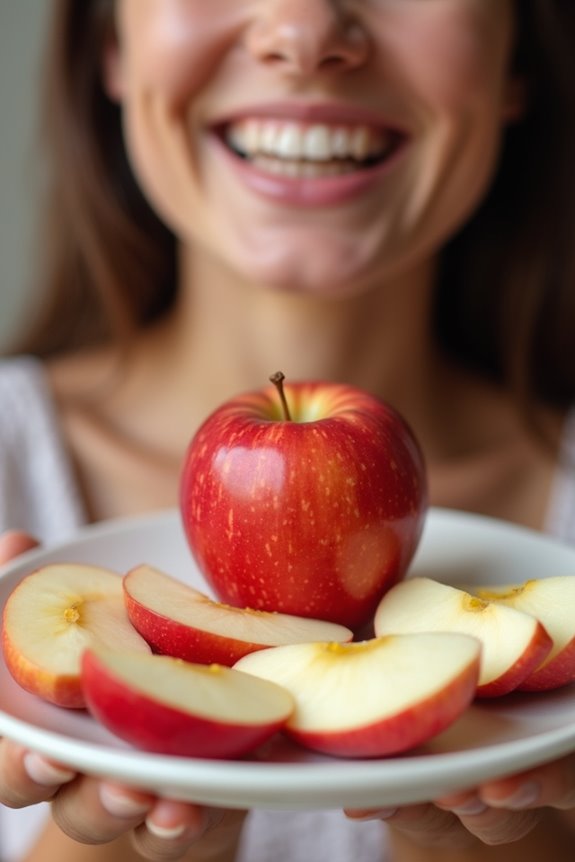
When you’re wearing braces, here’s the good news: you don’t have to give up fruit entirely, and you definitely don’t need to spend hours prepping everything.
| Fruit | Why It Works | Eating Tips |
|---|---|---|
| Bananas | Naturally soft, mash easily | Peel and bite into chunks |
| Blueberries | Tiny, require minimal force | Eat by the handful |
| Avocados | Creamy texture | Scoop with a spoon |
Soft fruits are braces-friendly because they won’t stress your brackets and wires. You can grab a banana straight from the peel without worrying. Blueberries slip right past your brackets without fuss. Even ripe pears work great when they’re truly soft.
The benefit? No prep required. Just eat and enjoy. Remember to brush afterward though—fruit sugars stick around, and you’re part of the braces community now, so keep those teeth protected.
Additional Braces-Safe Foods Beyond Fruit
What’re you eating for dinner tonight—and will it work with your braces?
Beyond fruit, I’ve found plenty of braces-friendly options that taste good. Here’s what I’m rotating into my meals:
- Scrambled eggs and fish – soft proteins that don’t require aggressive chewing
- Pasta and rice – gentle carbs that won’t stress your brackets
- Steamed vegetables – carrots and broccoli cooked until tender, then cut bite-sized
- Yogurt and cottage cheese – creamy dairy that supports your braces-friendly routine
- Meatballs and tofu – satisfying proteins shaped to minimize back-bite pressure
I’ll cut anything crunchy into small pieces or cook it soft. This approach keeps my brackets safe while I’m actually enjoying meals with friends. You’re not missing out—you’re just eating smarter.
Daily Habits for Safe Apple Snacking With Braces
Once you’ve got the slicing technique down, the real work is building habits that keep your braces safe during snack time. I’ve learned that consistency matters more than perfection when eating apples with braces.
Here’s what I do: I always chew with my back teeth, never biting with my front teeth. When I pack bite-sized pieces for lunch, I dip them in a lemon-water mix (three parts water, one part lemon) to prevent browning.
The most effective approach? My post-snack routine. I brush and floss immediately after eating apples. Those tiny bits love hiding between brackets and wires, and plaque builds up fast if I’m not careful.
These small daily habits—strategic cutting, mindful chewing, quick cleanup—keep my braces protected while I enjoy apples without concern.