
Most traditional cookies contain gluten from wheat flour, which creates that chewy texture and helps them hold together. Without gluten, cookies tend to crumble or turn dense because the protein network that traps air and moisture falls apart. The good news? You can make gluten-free cookies using flour blends with xanthan gum, cream cheese, and egg yolks—though they’ll spread differently and need extra chilling time. Want to know the exact techniques for making them similar to regular ones?
Most Traditional Cookies Do Contain Gluten
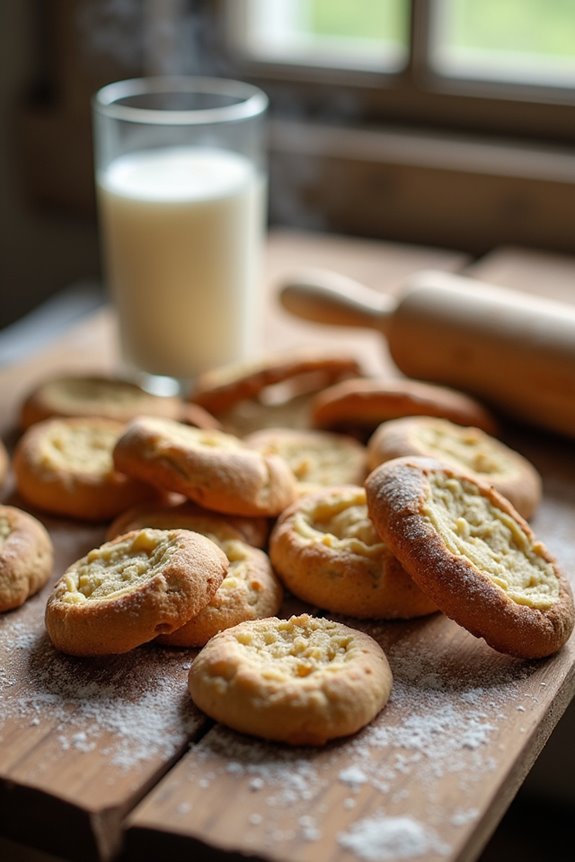
Most cookies you’ll find in bakeries, grocery stores, and grandma’s kitchen contain gluten—and there’s a straightforward reason why. When bakers mix wheat flour into cookie dough, they’re using gluten’s key property: creating structure and chewiness. This protein forms elastic networks during mixing and baking, giving traditional cookies that satisfying texture people expect.
All-purpose flour blends, the backbone of classic recipes, deliver this gluten naturally. It strengthens the crumb, controls spreading, and helps cookies retain moisture longer. Without gluten, traditional cookies would crumble apart or turn out flat and dense.
If you’re avoiding gluten, gluten-free alternatives exist. They won’t replicate that exact texture, but they’ll get you close enough to enjoy a cookie that still tastes good.
Where Gluten Hides in Standard Cookie Recipes
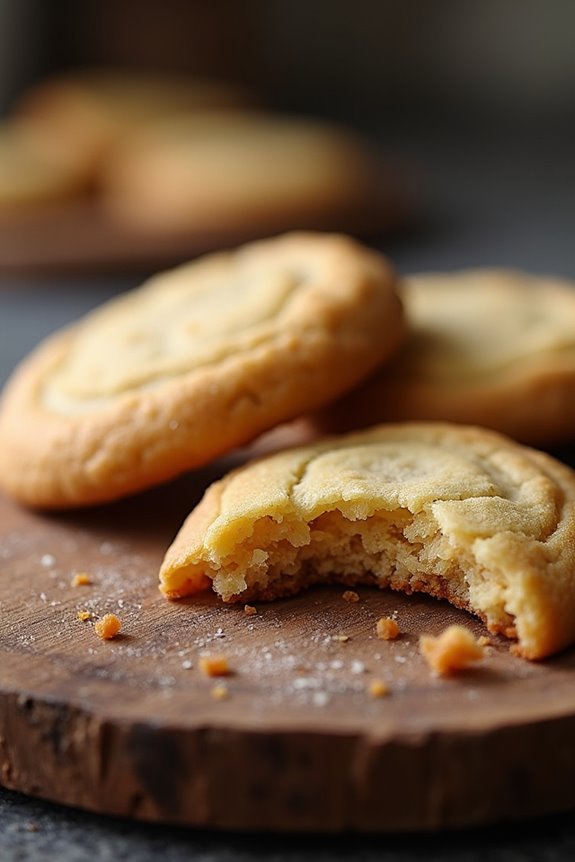
Wheat flour isn’t the only culprit hiding gluten in your cookies—though it’s definitely the main one. I’ve learned that gluten sources lurk in unexpected places throughout standard recipes. You’d think checking the ingredient list would cover it, but there’s more to uncover.
Wheat flour hides gluten, but unexpected sources lurk in flavorings, additives, and shared equipment throughout your kitchen.
Here’s where gluten hides:
- Wheat flour provides the elasticity and structure your dough needs
- Barley and rye derivatives sneak into flavorings and additives
- Shared baking equipment transfers gluten through cross-contamination
- Mixing bowls and utensils retain gluten particles from previous batches
- Even “gluten-free ingredients” can contain trace amounts without certified labeling
The tricky part? Traditional cookie dough relies on gluten development for that perfect chew and rise. Without understanding these gluten sources, you might accidentally include them. That’s why checking for certified gluten-free ingredients matters—it’s your safety net.
What Gluten Actually Does in a Cookie
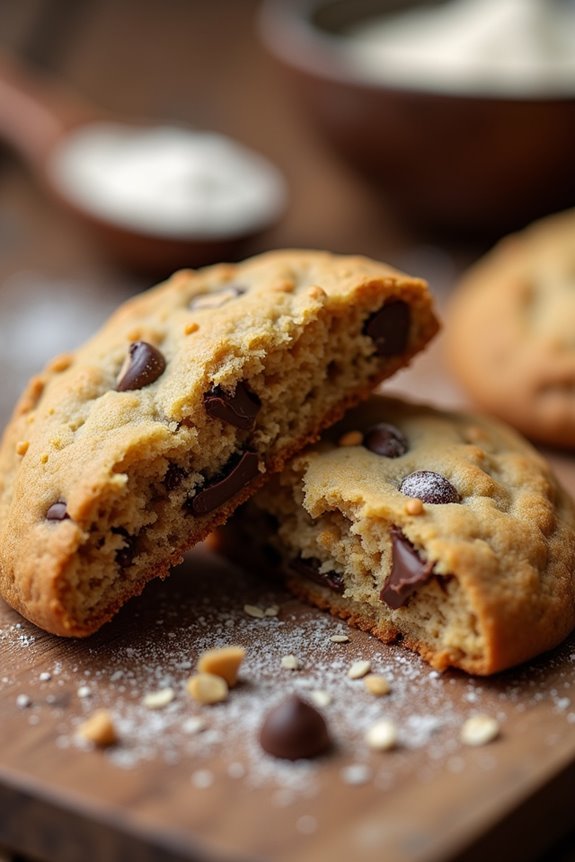
So what’s the big deal with gluten anyway—why does it matter so much in cookie baking? Here’s the thing: gluten creates elasticity and structure. When you mix your dough, gluten proteins trap air and water, forming a cohesive network that helps your cookies rise and develop that chewy texture we love. This binding action supports even spreading and creates that golden-brown crust.
Without gluten, your dough becomes shorter and more fluid, spreading faster and turning crumbly. That’s why gluten-free flours need help—bakers add xanthan gum and starches to mimic what gluten naturally does. The catch? Fats, sugars, and mixing time either boost or inhibit gluten development. Understanding this gives you control over texture, whether you’re chasing chewy or crispy perfection.
What Happens to Cookies Without Gluten: The Texture Problem
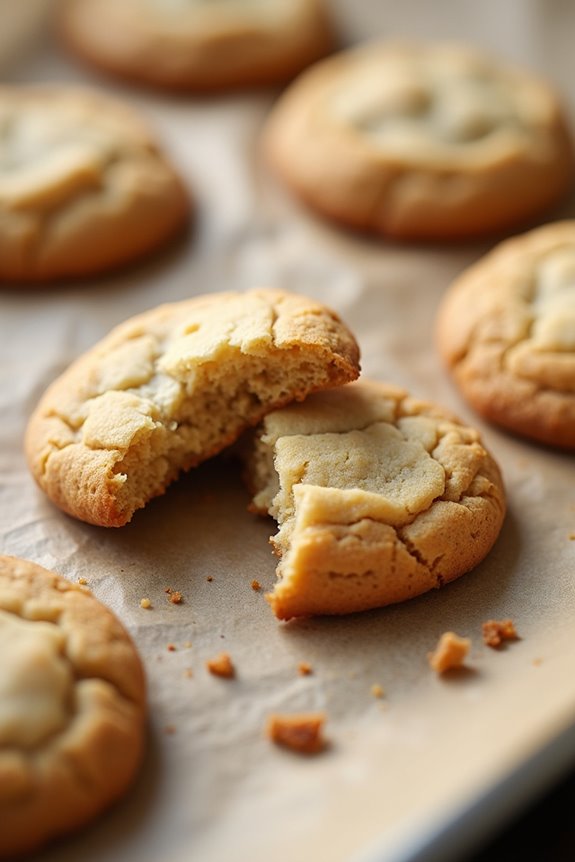
- Your dough spreads differently, sometimes less, sometimes unpredictably
- Cookies turn crumbly unless you add cream cheese or extra egg yolks
- Moisture retention suffers since gluten-free flour lacks gluten’s binding power
- Chewiness requires deliberate choices: melted butter, full-fat ingredients, proper chilling
- You’ll get either crispy or chewy results depending on your flour blend and bake time
The good news? I’ve found that quality gluten-free flour blends, careful hydration, and controlled baking deliver texture that rivals traditional cookies. It’s not a matter of luck—it’s understanding what gluten did, then replacing it strategically.
Common Gluten-Free Flour Blends and Their Role
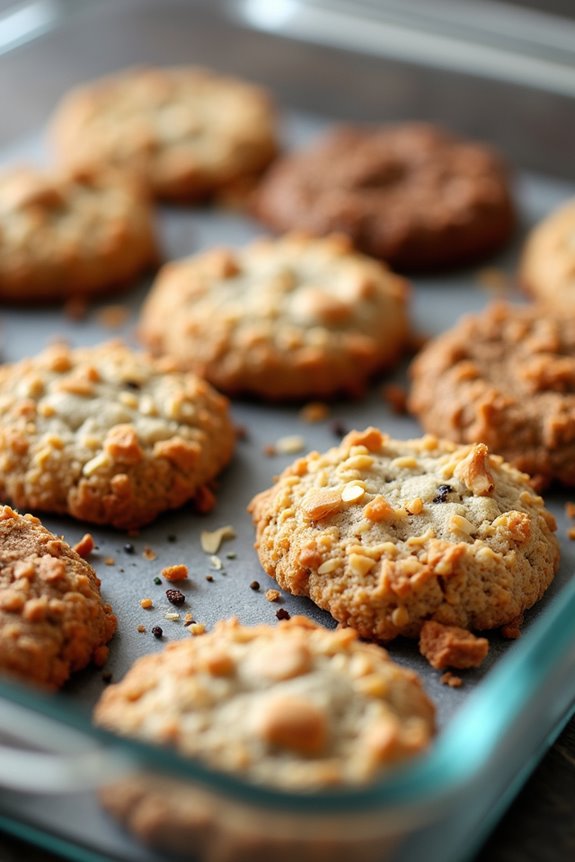
Once you understand what gluten does—binding, supporting structure, creating chew—you’re ready to pick a flour blend that’ll do the work for you. I’ve found that trusted gluten-free flour blends like Cup4Cup, Authentic Foods Multi-Blend, and BakeGood Almond Blend each bring something different to the table. These blends typically combine rice flours with tapioca starch and almond flour to mimic gluten’s job without the protein. Here’s the catch: check if your blend already contains xanthan gum. If it does, skip adding more—you’ll end up with dense, gummy cookies instead of the chewy texture you’re after. The blend you choose directly affects how your dough handles and how your cookies bake, so choosing wisely matters.
What Replaces Gluten: Binders and Additives That Actually Work
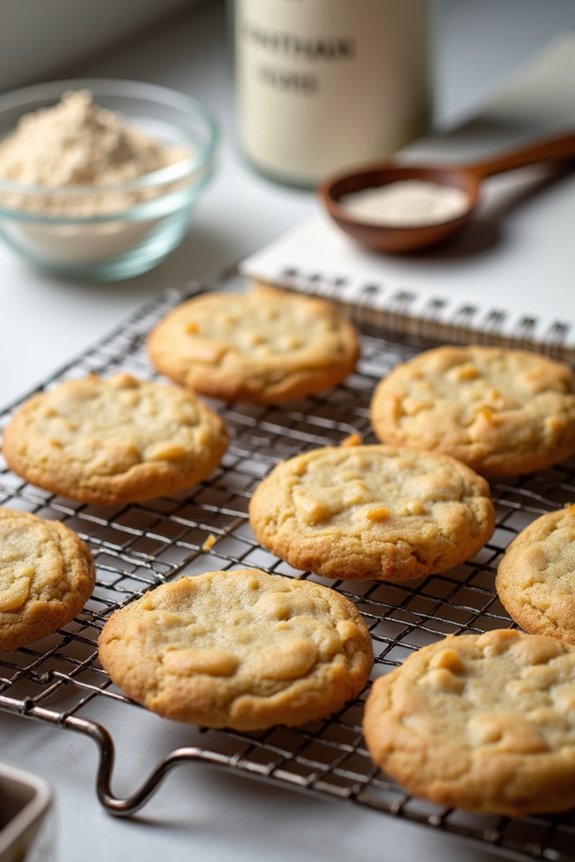
When you’re baking gluten-free cookies, you’ve got to replace what gluten does—hold everything together and give your dough structure—and that’s where flour blends and starches come in. I’ve found that combining rice flour, tapioca starch, and cornstarch creates a foundation that mimics gluten’s stretchy, binding properties, while xanthan gum acts as a binder, helping bind the ingredients so your cookies don’t crumble apart. The trick is getting the ratio right: too much starch and your cookies become gritty, too little and they fall flat, but hit that sweet spot and you’ll have cookies that hold their shape and taste good.
Flour Blends And Starches
So the key about gluten-free cookies: you can’t just swap regular flour for gluten-free flour and call it a day.
I’ve learned that successful gluten-free baking requires thoughtful flour blends and starches working together. You’ll want to combine multiple flours—rice flour, almond flour, or certified gluten-free blends—rather than relying on one source. Starches like tapioca add chewiness, while xanthan gum provides the structure gluten normally gives you.
Here’s what actually works:
- Rice flour (white or brown) as your base
- Tapioca starch for texture and chew
- Xanthan gum for elasticity and cohesion
- Almond flour for richness and moisture
- Resistant starch for improved mouthfeel
The results come from balancing these components. I’ve found that blending flours prevents that gritty texture, while xanthan gum mimics gluten’s binding power, keeping your cookies tender instead of crumbly.
Binding Agents For Structure
they need help staying together, and that’s where binders and additives step in. I’ve found that xanthan gum works well, though it’s optional depending on your gluten-free flours blend. Cream cheese and melted butter? They’re effective for chewiness, tightening the dough matrix when gluten isn’t around to do the job. Egg yolks deserve special attention—they provide fat and emulsification that prevents crumbly results. I also lean on a high fat-to-flour ratio with brown sugar, which helps retain moisture effectively. The combination of these binding agents creates structure that holds up during baking, giving you cookies that won’t fall apart when you bite into them.
Creaming, Mixing, and Chilling: Gluten-Free Cookie Technique
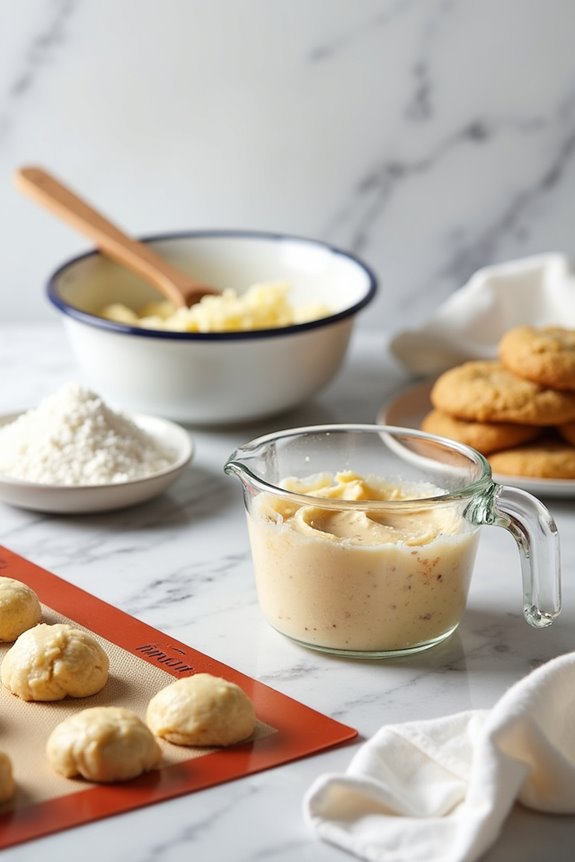
Because gluten-free doughs behave differently than traditional ones, the mixing method becomes your advantage for getting that perfect chewy texture.
I’ve found that creaming softened butter with both brown and white sugars until fluffy creates the foundation for success. Then I beat in eggs and vanilla just until combined—no more. Here’s where technique matters:
- Cream butter and sugars until light and fluffy, about 2-3 minutes
- Add eggs and vanilla, mixing only until incorporated
- Fold in dry ingredients gently to avoid overworking the gluten-free dough
- Fold in chocolate chips, then chill the dough for at least 2 hours
- Portion with a 2 tablespoon scoop for uniform, evenly-baked cookies
Chilling controls spreading and gives you that bakery-quality texture you’re after. This method works.
Cross-Contamination Risks When Baking Gluten-Free
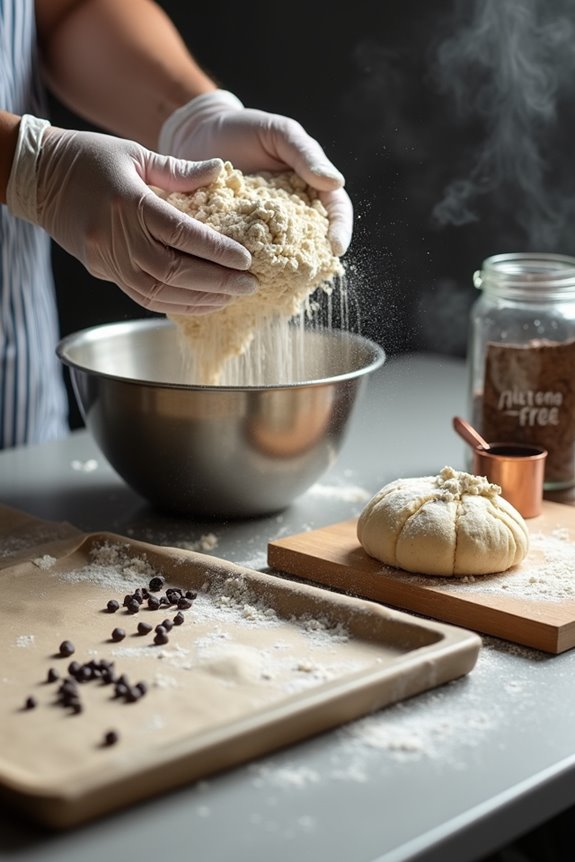
Even if you’re using certified gluten-free flour and ingredients, one tiny crumb of regular bread or a shared measuring spoon can undo all your work. Cross-contamination happens when gluten sneaks into your cookies through shared kitchen tools or prep areas.
I keep dedicated surfaces and clean utensils separate for gluten-free baking. Use parchment liners on baking sheets, wash your hands between handling regular and gluten-free doughs, and never let that flour bag sit next to yours. Check packaged gluten-free products for warnings about shared facilities—sometimes trace gluten hides there anyway. Store your gluten-free cookies in sealed containers, away from crumbs. These steps matter because they protect your baking and help people with celiac disease stay safe.
Gluten-Free vs. Regular Cookies: Spread and Texture
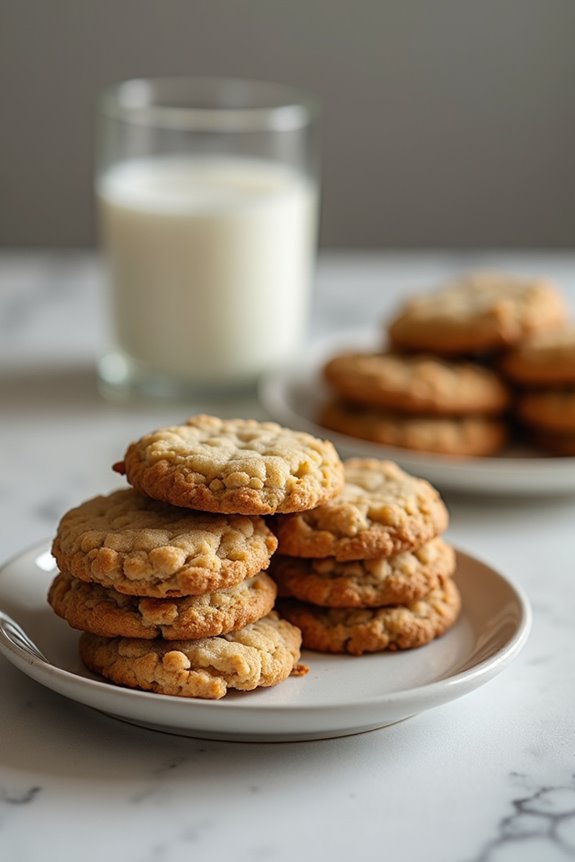
When you bake gluten-free cookies, you’ll notice they spread differently than regular ones—chilling the dough for 4 hours to 4 days helps control that spread and gives you a structure that actually holds up. The texture changes too: while regular cookies get their chewiness from gluten’s stretchy protein network, gluten-free versions rely on higher butter and sugar ratios, plus ingredients like egg yolks and cream cheese to create that same satisfying bite without the grittiness that starches can leave behind. With the right flour blends, fats, and baking conditions, you can create gluten-free cookies that taste and feel very similar to wheat-based ones.
Spread Differences and Factors
Why do gluten-free cookies spread differently than their regular counterparts? I’ve found that alternative flours and starch blends absorb water uniquely, changing how your dough behaves in the oven. Here’s what I’ve learned makes a real difference:
- Dough chilling for 2 hours sets structure before baking
- Sheet type matters—mid-range thickness controls spreading best
- Baking soda amount affects spread (I use just 1/2 teaspoon, or 1/4 for thicker cookies)
- Temperature consistency keeps results predictable
- Cooling time continues firming, so patience pays off
I use a 2 tablespoon scoop on parchment-lined sheets, baking at 350°F for 10–14 minutes. These specifics balance crispy edges with chewy centers. Gluten-free cookies aren’t harder—they’re just different. Once you understand your dough’s personality, you’ll nail them every time.
Texture Variations Explained
Once you’ve mastered controlling the spread, you’re ready to tackle what really sets gluten-free cookies apart from regular ones—the actual feel and bite. I’ve learned that chewy texture comes down to specific ingredients: egg yolks (not whites), melted butter, and brown sugar create that tender center you’re after. Adding cream cheese? That helps prevent grittiness. Your cookie dough needs time too—chilling it for four hours to four days improves the results. The longer rest helps your dough hold together better, yielding thicker cookies with softer middles. I use a gluten-free flour blend with xanthan gum, keeping the chocolate chip content high. These details matter. They’re what separates disappointing, crumbly gluten-free attempts from cookies that match traditional versions.
Making Gluten-Free Cookies Taste Identical to Regular Ones
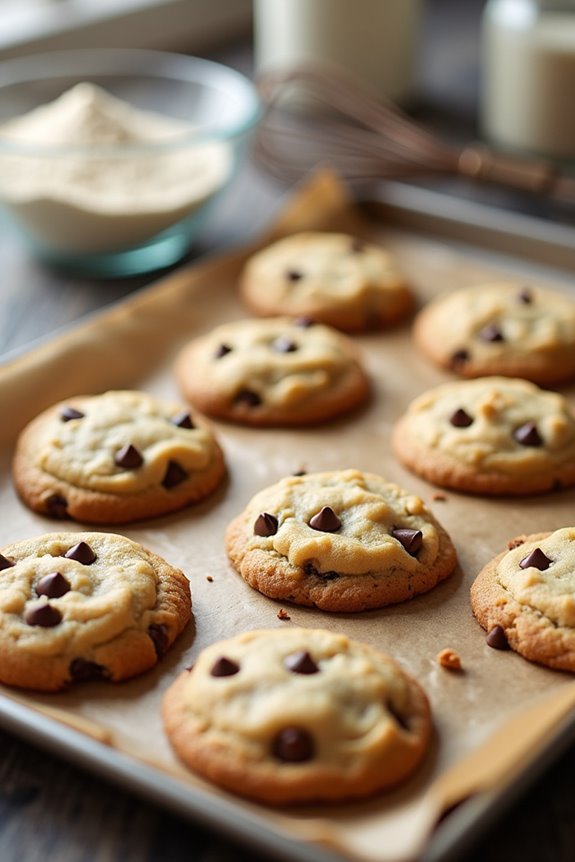
How do you make a gluten-free cookie that tastes just as good as the regular version? It’s entirely possible when you use the right ingredients and techniques.
Making gluten-free cookies taste as good as regular versions is entirely possible with the right ingredients and techniques.
- Use a quality gluten-free flour blend with xanthan gum to replace wheat flour’s structure
- Melt your butter and chill dough for 4 hours to 4 days to control spread
- Add cream cheese and egg yolks for moisture, richness, and that signature chewiness
- Bake at 350°F for 10–14 minutes on parchment paper for ideal texture
- Use high chocolate content to mask any gluten-free taste differences
The key factor is dough chilling. You’ll get a dense, chewy center without gritty starches. Cream cheese boosts moisture while maintaining that familiar mouthfeel you’re seeking. The results will be indistinguishable from traditional cookies.