
Yes, you can eat cookies with braces—just pick soft varieties like oatmeal or chocolate chip instead of hard, crunchy ones. Break them into bite-sized pieces and chew with your back teeth to avoid damaging brackets and wires. Skip sticky toppings like caramel or toffee since they trap around your braces. After eating, rinse your mouth, then brush and floss carefully to remove crumbs. Stick with these strategies, and you’ll keep your smile safe while satisfying your sweet tooth—though there’s definitely more detail to explore here.
Can You Eat Cookies With Braces?
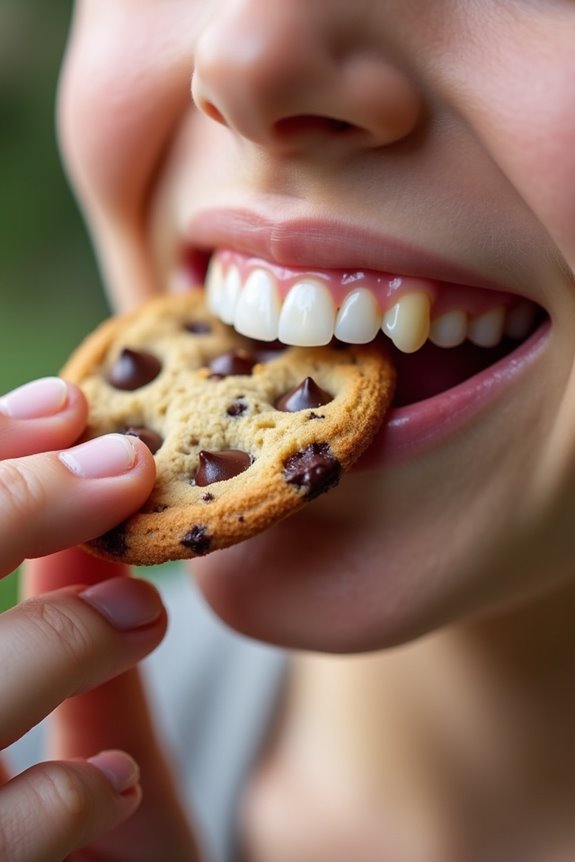
So, can you actually enjoy cookies when you’re wearing braces? The good news is yes—you’re not banned from cookies forever. The trick is choosing soft cookies instead of hard, crunchy ones that’ll wreck your brackets and wires. I’d recommend soft-baked varieties without nuts or fillings that could get stuck.
Here’s my strategy: break cookies into bite-sized pieces before eating. This move reduces stress on your braces. Chew with your back teeth, not your front ones. Avoid hard cookies, brittle treats, and anything super sticky—they’re trouble waiting to happen.
When you’re unsure about a cookie’s safety, go softer or cut it smaller. After you finish, thoroughly brush around your braces and floss to remove trapped particles. This braces care keeps your appliance in good shape and protects your teeth long-term.
Soft Cookies vs. Hard Cookies: What’s Safe

When you’re wearing braces, texture matters way more than you might think—soft cookies won’t stress your brackets and wires like hard, crunchy ones will, so you’ll want to know the difference between what’s safe and what could damage your appliances. I’ll walk you through how to assess the actual risk, figure out which cookies you can safely enjoy, and show you how to pick the right treats so you don’t end up at your orthodontist’s office explaining what happened to your wire.
Texture Matters For Safety
Texture Matters For Safety
Why does the texture of a cookie matter so much when you’re wearing braces? Here’s the thing—your brackets and wires need protection from unnecessary pressure.
- Soft, chewy cookies like oatmeal or chocolate chip varieties won’t crack your brackets or bend your wires, making them your safest option for snacking.
- Hard or crunchy cookies require intense bite force, putting stress directly on your braces and risking serious damage that means expensive orthodontist visits.
- Sticky textures from caramel or toffee can get lodged around your brackets, potentially loosening components and derailing your treatment progress.
I’d recommend chewing with your back teeth and breaking cookies into smaller pieces anyway. You’re not just protecting your braces—you’re protecting your investment in that future smile you’re working toward.
Damage Risk Assessment Guide
Understanding which cookies won’t damage your braces means knowing how different textures affect your brackets and wires. I’ll break down what’s actually safe for you.
Soft cookies work well with braces. Soft chocolate chip, oatmeal, or sugar cookies put minimal pressure on your braces because they crumble easily without requiring intense chewing. Chewy cookies work too, as long as they don’t have hard nuts or caramel mixed in.
Hard cookies pose real risks. Biting down on brittle varieties can bend your wires or crack brackets, which means expensive orthodontist visits. The same applies to crunchy cookies.
Here’s a practical approach: if you’re unsure about a cookie’s texture, choose soft varieties. When in doubt, grab soft-baked options or break them into smaller pieces. Your braces will benefit from this caution.
Choosing Your Cookie Wisely
The texture of your cookie is basically your braces’ best friend or worst enemy—there’s not much middle ground. I’ve learned the hard way that what you choose matters.
Here’s what works:
- Soft cookies like oatmeal or soft chocolate chip are your safest bets—they won’t stress your brackets or wires
- Chewy cookies feel good and won’t cause damage if you’re careful with how you eat them
- Avoid hard cookies, twice-baked varieties, or anything with nuts, caramel, or toffee that’ll stick to your brackets
When you’re unsure about a cookie, cut it into small pieces. Chew with your back teeth using less bite force. This simple move protects your appliance while you still get to enjoy what you’re eating.
Best Cookie Varieties for Braces Wearers
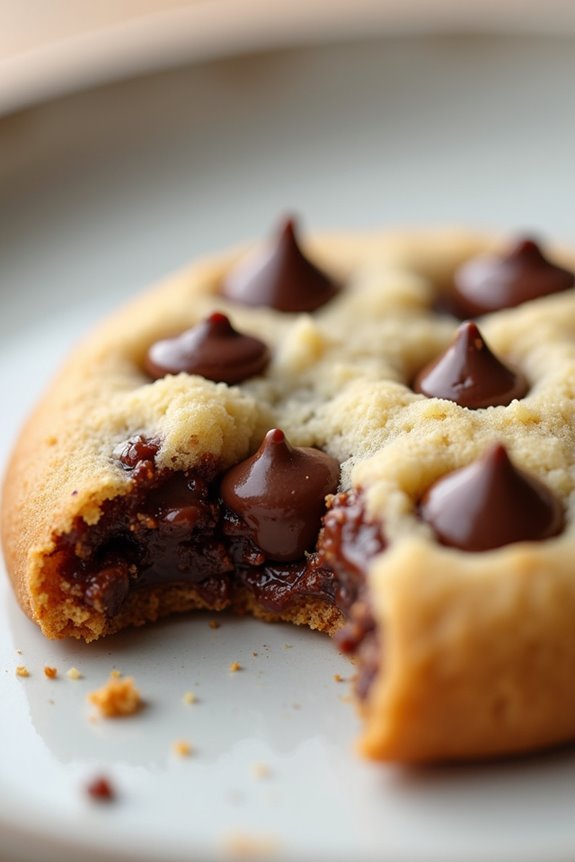
Not all cookies are created equal when you’re wearing braces, and honestly, that’s the good news—it means you’ve got plenty of delicious options that won’t damage your brackets and wires. Oatmeal raisin, soft-baked sugar, and chewy chocolate chip cookies are your best friends right now. These varieties give you that satisfying bite without the risk of damage. I’d recommend steering clear of anything with hard nuts, caramel, or toffee since those can stick or snap your wires. Here’s my tip: homemade cookies typically yield softer, chewier textures than store-bought versions. When you’re unsure about a cookie’s safety, break it into small pieces first. Your orthodontist will appreciate your caution, and you’ll still get to enjoy the treats you love.
Cookie Ingredients and Toppings to Avoid

What makes a cookie dangerous for your braces? Certain ingredients and toppings can seriously mess with your braces care. Here’s what you’ll want to skip:
- Hard, crunchy cookies – These damage brackets and wires, so avoid crunchy varieties like biscotti or hard-baked snickerdoodles that’ll snap right off.
- Sticky toppings – Caramel, toffee, and thick frosting trap between your braces and teeth, pulling on wires and making cleaning nearly impossible afterward.
- Nuts and brittle pieces – Whether mixed into the dough or sprinkled on top, hard add-ins crack brackets faster than you’d think.
The alternative: soft cookies work well for your braces. Choose underbaked chocolate chip or oatmeal raisin varieties instead. They’re delicious and won’t damage your orthodontia.
How to Eat Cookies Safely With Braces
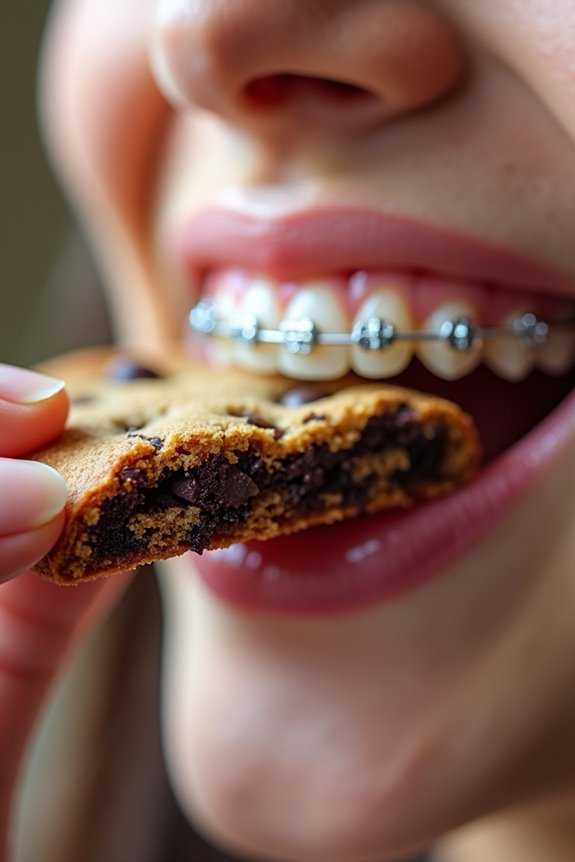
Now that you know which cookies to skip, let’s talk about the actual eating part—because yes, there’s a technique to this. First, break soft cookies into bite-sized pieces before eating. This simple step reduces pressure on your brackets and wires. Next, chew with your back teeth, away from your braces’ front brackets. You’ll avoid accidentally damaging anything while still enjoying your treat.
Here’s the important part: avoid hard cookies entirely. They’ll snap brackets faster than you can say “orthodontist appointment.”
After you finish eating, brushing becomes necessary. Grab your toothbrush and floss, getting between brackets and wires carefully. This removes cookie crumbs stuck around your appliances. Skip this step, and you’re inviting plaque buildup and potential damage.
Follow these habits, and you’ll eat cookies confidently with braces.
Break Cookies Into Bites and Chew Carefully
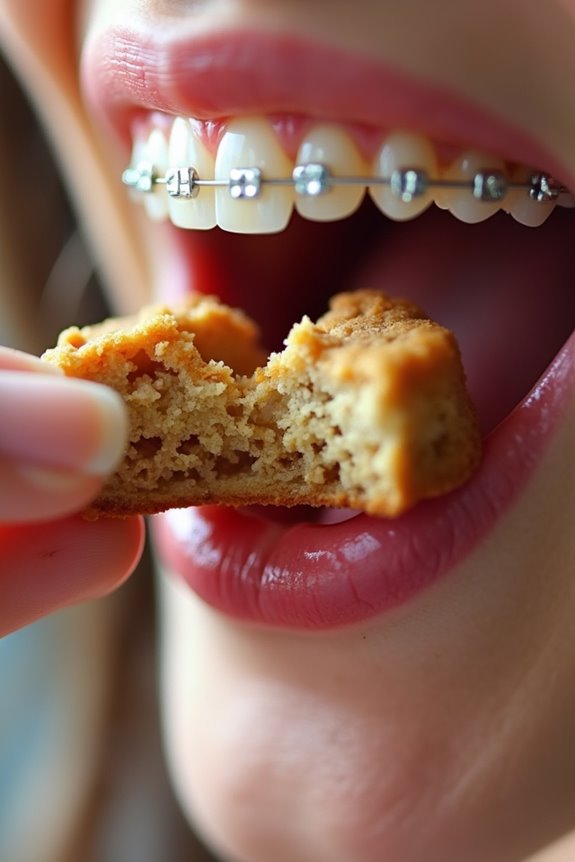
The golden rule for eating cookies with braces is simple: break them into bite-sized pieces before you even think about putting them in your mouth. Here’s why this matters for your braces safety:
- Breaking cookies reduces the force on your brackets and wires, protecting your orthodontic investment.
- Smaller pieces let you chew carefully with your back teeth, minimizing pressure on the front where most damage happens.
- Bite-sized chunks eliminate the temptation to bite down hard, which can bend wires or pop brackets off.
I know it takes an extra minute, but the effort is worth avoiding emergency orthodontist visits. When you chew carefully and methodically, you’re not just protecting your braces; you’re joining the smart cookie-eating crew who actually gets to enjoy treats without the risk of costly repairs.
Why You Need to Clean Your Teeth After Treats
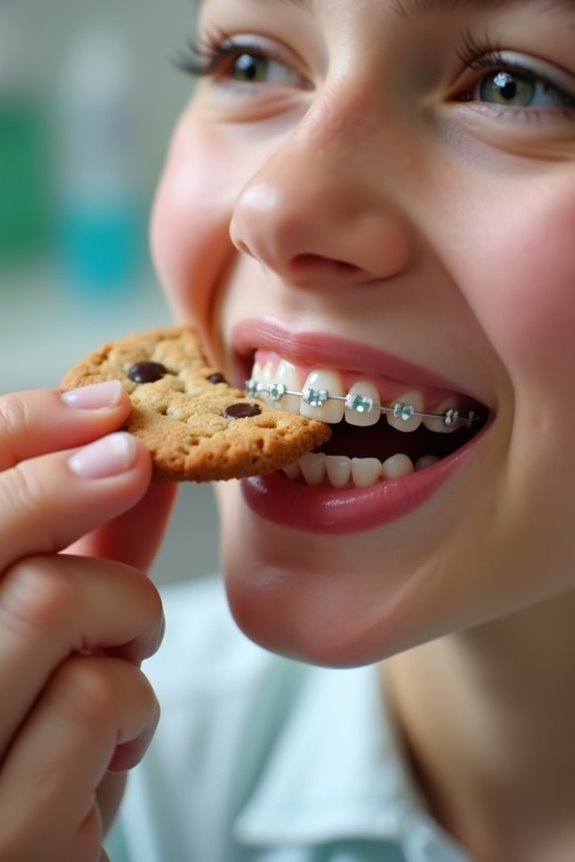
When you eat cookies with braces, sugar and crumbs stick around your brackets and wires, creating the perfect setup for cavities if you don’t clean them out quickly. I know it’s tempting to skip brushing after a treat, but those food particles can hide in spots your toothbrush normally reaches and weaken the tooth enamel right where your brackets are attached. Rinsing right after eating and brushing within an hour prevents decay from developing and protects both your teeth and your appliances.
Food Particles and Decay
Why do cookies and braces seem like such a troublemaking pair? When you eat cookies with braces, food particles get trapped around brackets and wires, creating the perfect environment for plaque buildup and decay. Here’s what happens:
- Cookie crumbs lodge in tight spaces your toothbrush can’t reach, feeding harmful bacteria
- Plaque accumulates on tooth surfaces, weakening enamel and causing cavities
- Decay develops faster around braces because cleaning becomes more challenging
I know it’s frustrating, but understanding this connection helps you protect your teeth. Those sneaky particles don’t just disappear—they sit there, multiplying problems. That’s why rinsing immediately after eating cookies matters. You’re not being overly cautious; you’re being smart. Regular brushing, flossing, and dental cleanings combat these risks, keeping both your teeth and braces in good shape.
Preventing Bracket Damage
Now that you understand how particles wreak havoc on your teeth, let’s talk about protecting your braces themselves—because brackets and wires can’t handle all cookies equally. I’ve learned that soft cookies and chewy cookies are your braces-safe friends, while hard or sticky varieties spell trouble.
| Cookie Type | Safety Level |
|---|---|
| Soft-baked cookies | Safe |
| Homemade chewy cookies | Safe |
| Hard/crunchy cookies | Avoid |
| Cookies with nuts | Avoid |
Here’s my strategy: break cookies into bite-sized pieces and chew with your back teeth. This reduces bracket damage significantly. Skip cookies with brittle pieces, hard nuts, or sticky fillings like caramel—they trap around your braces and cause serious problems.
Choosing soft cookies protects your investment. Your orthodontist will appreciate it.
Brushing and Flossing After Eating Cookies
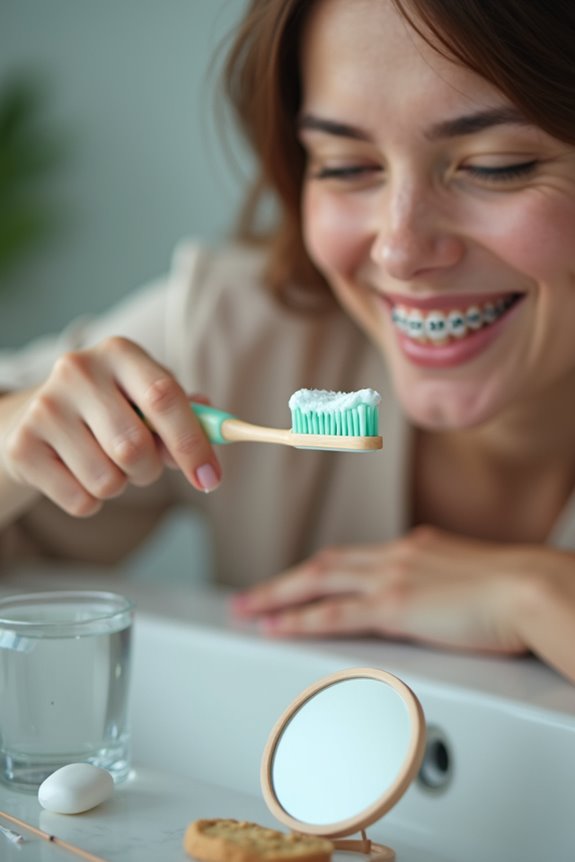
After you’ve enjoyed your cookies, your braces need a little extra attention to stay clean and healthy. The cleanup requires effort, but it keeps your smile on track.
- Rinse first. Swish water around your mouth to loosen food particles stuck around your brackets and wires before brushing.
- Brush carefully. Use a soft-bristled toothbrush, angling it toward your gum line where cookies love to hide. Spend extra time on brackets and wires, working methodically around each one.
- Floss diligently. Thread floss between teeth to grab particles brushing misses. An interdental brush helps reach tight spaces around your braces where stubborn cookie residues hang out.
These steps keep plaque from building up and protect your teeth during treatment.
When Should You Seek Your Orthodontist’s Guidance?

If you’re unsure whether a cookie is safe for your braces—maybe it’s got chunks you can’t identify or a texture that seems risky—reach out to your orthodontist before taking a bite. When you damage a bracket or wire, you’re looking at an emergency appointment, extra costs, and potentially longer treatment time, so it’s worth asking first. Your orthodontist knows your specific appliances inside and out, and they’d rather answer a quick question than fix preventable damage.
Uncertain Cookie Choices
What happens when you spot a cookie that doesn’t fit neatly into the “safe” or “avoid” categories? That’s when I get strategic about braces safety. Here’s my approach:
- Cut it into small pieces – I break uncertain cookies into tiny bits and chew with my back teeth to minimize bracket stress.
- Test the texture first – I gently bite a small piece. If it’s soft cookie material, that works. If it feels hard, I know to avoid it entirely.
- Ask your orthodontist – When I’m unsure, I reach out for personalized guidance on that specific cookie.
Don’t gamble with your orthodontic care. Soft cookies are generally your friends, while hard cookies invite problems. When doubt creeps in, your orthodontist can provide the support you need.
Appliance Damage Concerns
Despite your best efforts to choose wisely, sometimes cookie damage happens—and that’s exactly when you need to know whether it’s time to call your orthodontist. If you notice a bracket has loosened, a wire’s bent, or something feels off after eating, don’t panic. Small issues might seem minor, but they can affect your treatment timeline. Here’s the thing: avoid hard cookies altogether, but even soft, chewable ones occasionally cause problems. Contact your orthodontist if you spot visible bracket damage, experience sharp wire poking, or notice increased discomfort. They’re your team, and they’ve seen it all before. Quick action prevents bigger problems down the road, keeping your braces working properly toward that smile you’re working toward.
Habits That Crack Brackets and Bend Wires
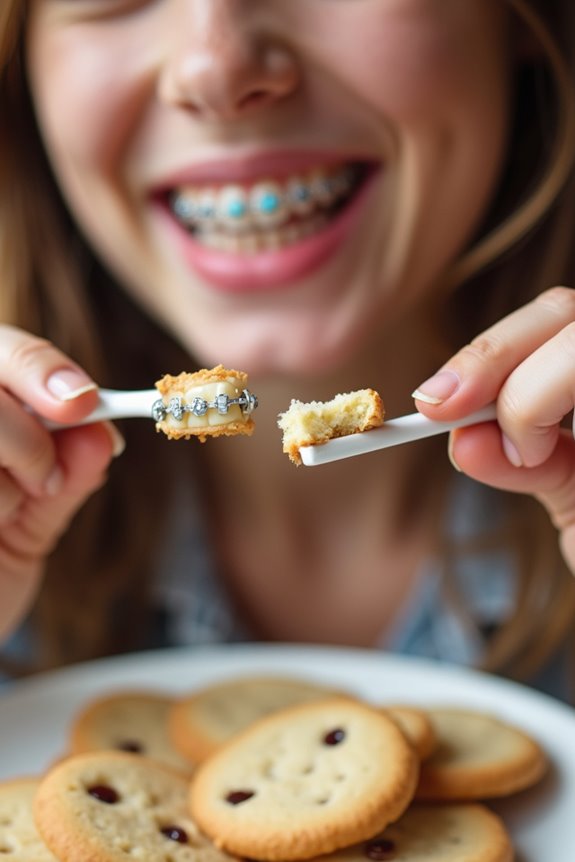
How you eat your cookies matters just as much as which ones you choose, because even a soft cookie can damage your braces if you’re not careful with your habits.
I’ve learned that certain eating patterns wreck brackets and wires faster than you’d think. Here’s what I avoid:
- Biting down hard – I never clench my teeth when eating, since excessive force snaps wires and fractures brackets instantly.
- Chewing with front teeth – I always shift cookies to my back teeth, where pressure distributes more evenly across your braces.
- Ignoring the snap test – I skip cookies that crack loudly; that sound signals they’ll damage your appliance.
Breaking cookies into small pieces before chewing? That’s your best defense. Protecting your braces now saves serious headaches later.
Enjoy Your Treats While Protecting Your Smile
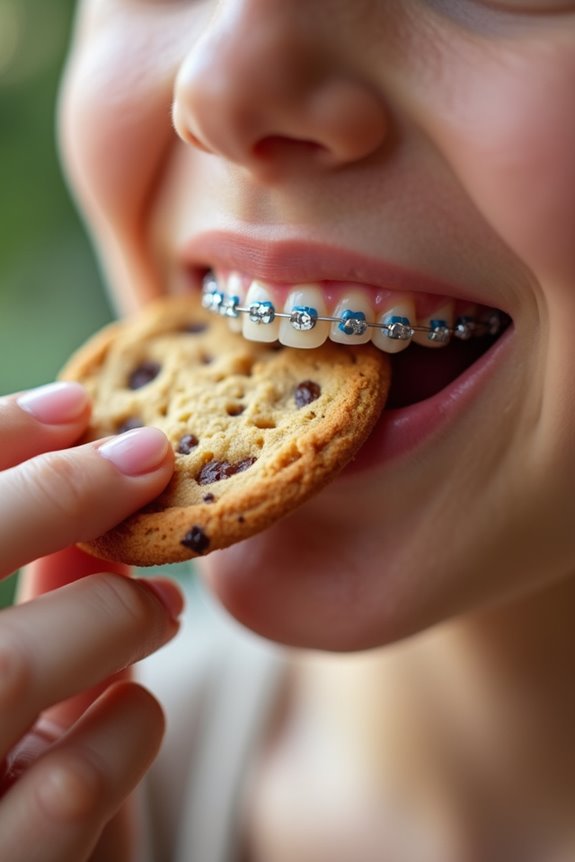
Now that you know which eating habits wreck your braces, the positive news is you can still enjoy cookies—you just need a solid plan. I’ve found that soft cookies like oatmeal or chewy chocolate chip varieties are braces-safe options. Here’s my strategy: I break them into bite-sized pieces and chew with my back teeth to minimize pressure on my brackets. After eating, I rinse my mouth, brush carefully around my brackets, and floss to tackle any hidden particles. This dental hygiene routine takes maybe three minutes total. When I’m unsure about a cookie’s safety, I simply cut it smaller or reach for softer varieties instead. You’re not missing out—you’re just being smart about protecting your smile while enjoying treats.