

Baking soda is a gentle abrasive that whitens teeth and neutralizes mouth acids, making it effective for plaque removal. Here’s the limitation: it can’t protect your teeth from cavities on its own—that’s fluoride’s job.
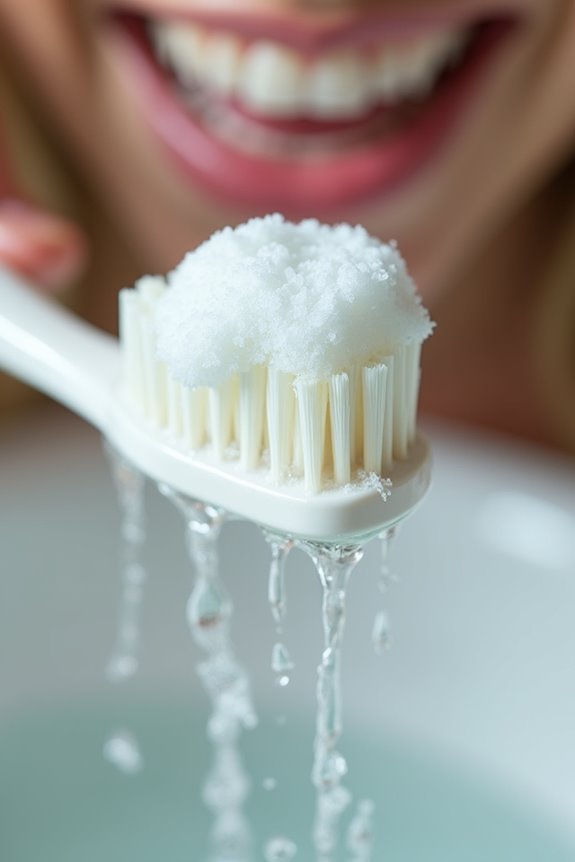
Use it a few times weekly by dampening your toothbrush, dipping it in baking soda, and brushing for two minutes, then follow with fluoride toothpaste.
Skip acidic mixtures like vinegar, and chat with your dentist about whether this approach fits your smile’s specific needs.
What Is Baking Soda and How Does It Work?
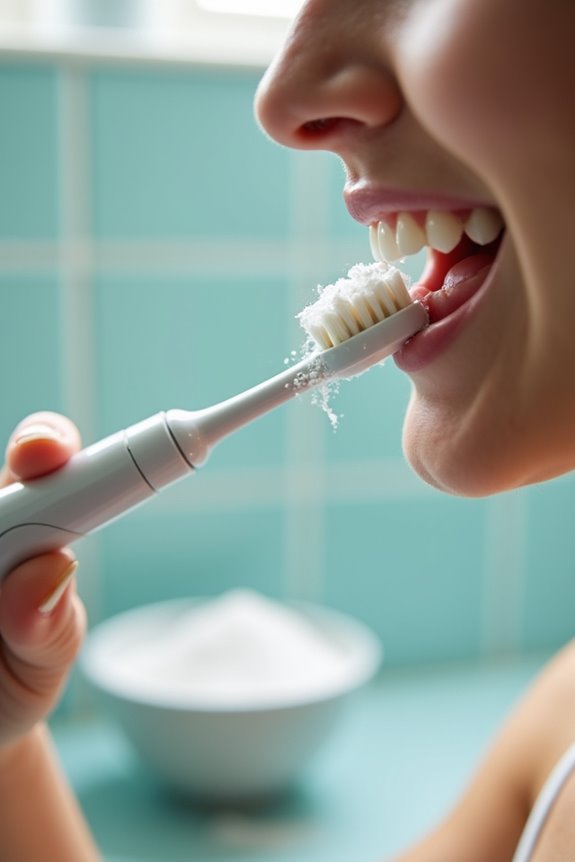
Ever wondered why baking soda shows up in so many toothpaste formulations? It’s sodium bicarbonate, a mild abrasive that gently cleans your teeth without harsh damage. This common kitchen ingredient works in your mouth by being naturally alkaline, which means it neutralizes acids that build up after eating and drinking. This alkaline quality helps protect your enamel while you’re tackling surface stains through gentle abrasion. Baking soda also supports plaque disruption, breaking apart buildup that can lead to problems. However—and this matters—it’s not a complete fluoride alternative on its own. That’s why you’ll often see it paired with fluoride in toothpaste formulations. It works best alongside other ingredients for whitening purposes.
Does Baking Soda Actually Whiten Teeth?
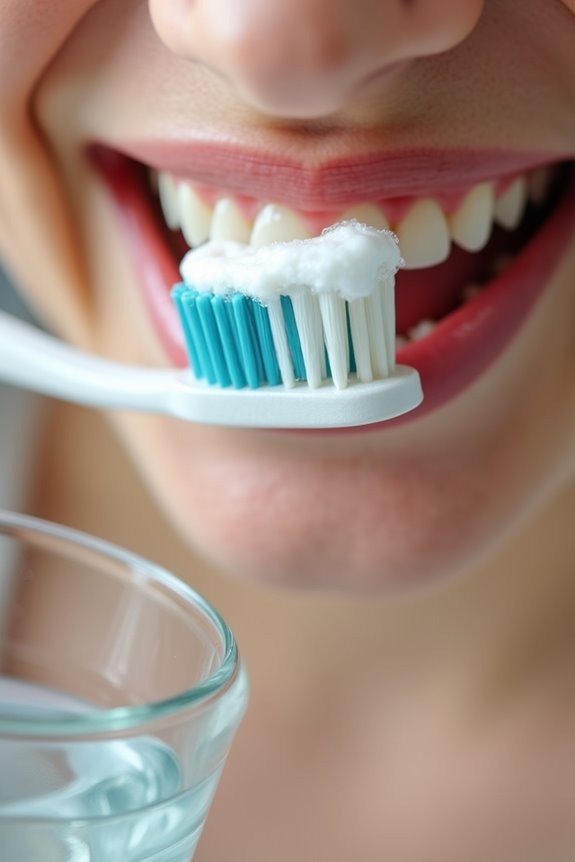
So here’s the thing about baking soda and whitening—it actually does work, but maybe not in the way you’re imagining. The mild abrasive nature gently scrubs surface stains away without damaging your enamel protection, which is beneficial. What really helps is that baking soda toothpaste alkaline neutralizes acids in your mouth, reducing stains from your favorite drinks and foods. Baking soda whitening effectiveness is real, but it’s gentler than peroxide treatments you’d get professionally. You won’t see dramatic results overnight like some products promise. Here’s my honest take: use baking soda as an adjunct whitening option alongside fluoride toothpaste for solid dental hygiene. It’s perfect for maintaining brightness gradually while keeping your teeth and gums healthy. That’s the real benefit.
Baking Soda vs. Fluoride Toothpaste: Which Is Better?
When you’re standing in the toothpaste aisle, you’ve probably noticed that most tubes contain fluoride, while baking soda options sit right next to them promising a “natural” alternative. Here’s the real deal: baking soda excels at plaque disruption, pH neutralization, and acting as a mild abrasive to tackle surface stains. However, it doesn’t offer fluoride toothpaste’s targeted cavity protection—that’s fluoride’s specialty. Think of it this way: baking soda handles cleaning and whitening, while fluoride fortifies your dentition against decay. The best approach for your dental hygiene is to choose formulations combining both ingredients. You’ll get enamel safety, effective plaque removal, and genuine cavity prevention. Neither option beats the other alone, but together, they form your optimal combination for good oral health.
Baking Soda’s Real Benefits: What It Does (and Doesn’t) Do
Now that you understand baking soda’s place alongside fluoride, let’s get specific about what this pantry staple actually accomplishes in your mouth. Baking soda works as a gentle abrasive that tackles surface stains and delivers whitening effects without damaging your enamel—that’s the enamel safe part we’re after. It neutralizes acids, raising your mouth pH balance and creating an environment where plaque struggles to form. You’ll also find it disrupts dental biofilms, reducing plaque and gingivitis effectively.
Here’s the catch: baking soda lacks fluoride for cavity protection. That’s why it works best as a fluoride toothpaste adjunct, not a replacement. Use it a few times weekly within your oral hygiene routine. Understanding these limits and cautions helps you maximize benefits while protecting your teeth long-term.
Baking Soda’s Real Drawbacks: Enamel Wear and Safety Gaps
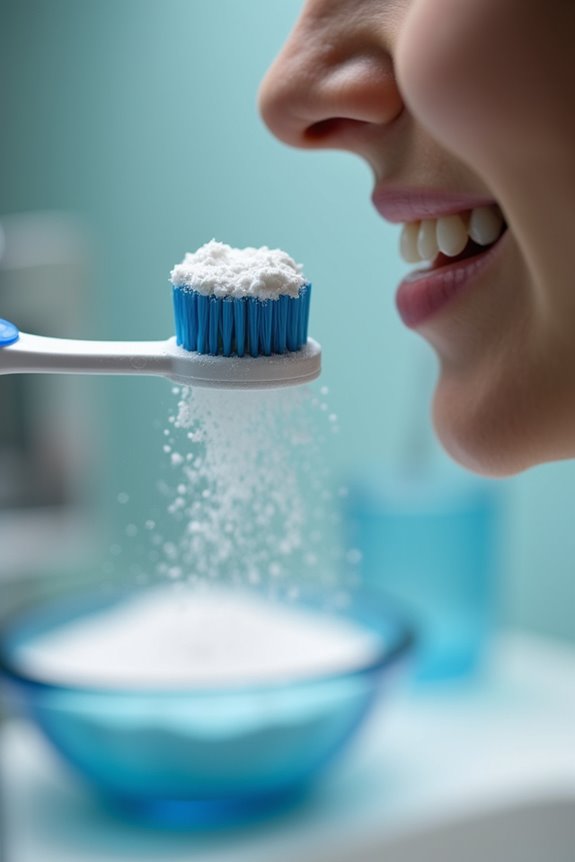
While baking soda does deliver some genuine benefits for your teeth, it has a serious flip side you need to know about. Here’s what concerns dentists:
- Enamel wear happens: Prolonged use wears down your tooth enamel, making teeth more sensitive and vulnerable to cavities
- Abrasion risk increases: Aggressive brushing with baking soda causes enamel abrasion, especially with hard-bristled brushes
- Fluoride deficiency is real: Baking soda lacks fluoride entirely, so it won’t protect against cavities when used alone
- Overuse creates problems: Regular, heavy use accelerates enamel damage over time
- Safety gaps exist: Without professional guidance, you’re missing thorough cavity prevention
The bottom line? Baking soda’s abrasive nature means it’s not a complete solution. Your tooth enamel doesn’t regenerate, so protecting it matters. We recommend pairing any baking soda use with regular fluoride toothpaste and professional dental care for real protection.
How to Use Baking Soda Safely and How Often
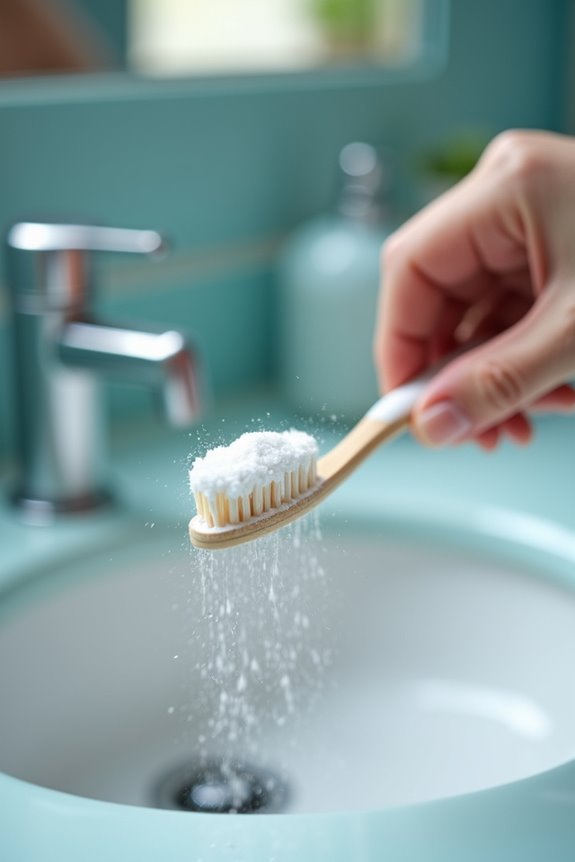
So you’re convinced baking soda might help your teeth—but how do you actually use it without turning your smile into a sandpaper experiment? Here’s the deal: use baking soda only a few times weekly to protect your enamel. Dip a damp toothbrush into baking soda and brush for two minutes, then rinse thoroughly and follow with fluoride toothpaste for extra protection. Skip acidic foods, lemon juice, and vinegar—they’ll wreck your enamel faster than you can say “ouch.” Want better flavor? Add a tiny drop of peppermint oil, but don’t overdo it. The key point? Talk to your dentist first. They’ll give you personalized guidance on brushing frequency and technique that works for your mouth specifically.
Store-Bought vs. Homemade: Which Works Better?
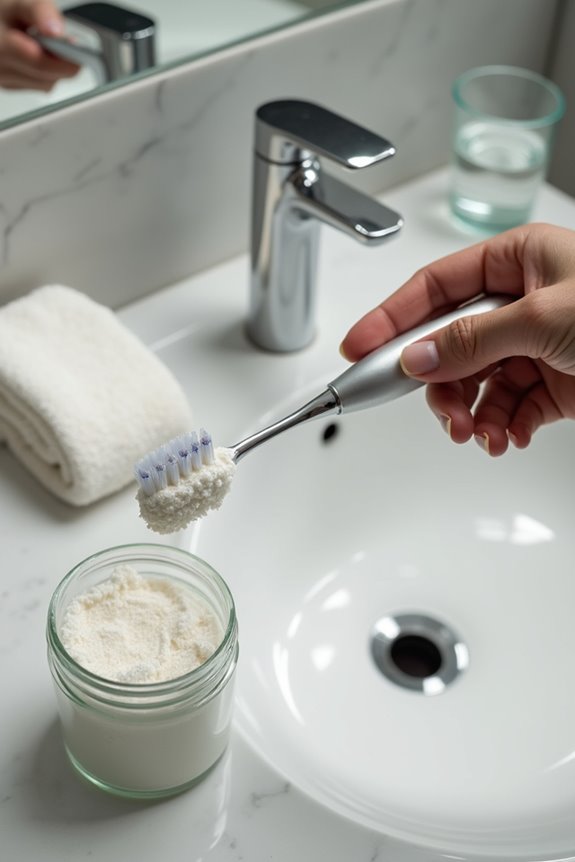
When you’re standing in the oral care aisle comparing products, you’ve got two main paths: grab a commercial baking soda toothpaste or mix your own at home.
Store-bought options win on convenience and safety. They’ve undergone testing, contain fluoride protection, and include whitening agents plus anti-plaque properties. You’re getting consistent composition every time, plus better mouthfeel and flavor.
Store-bought toothpaste offers tested safety, fluoride protection, and consistent whitening benefits your homemade mix simply can’t match.
Homemade pastes? They’re budget-friendly but require caution. Mix equal parts baking soda and water, then use alongside your regular fluoride toothpaste—not instead of it.
Here’s what matters most:
- Store-bought products offer ADA-accepted whitening claims
- Homemade mixes risk enamel abrasion if overused
- Commercial formulas provide guidance for brushing benefits
- DIY pastes work best as occasional boosters
- Safety testing backs store-bought consistency
Choose what fits your lifestyle, but prioritize protecting those teeth.
Does It Work for Sensitive Teeth?
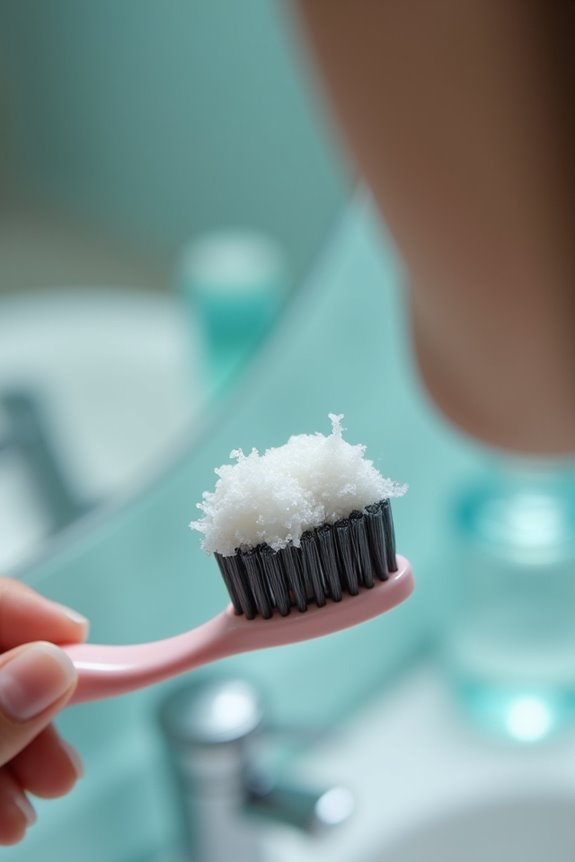
If you’ve got teeth that zing when you sip coffee or cringe at ice cream, you’re probably wondering whether baking soda’s your answer. Here’s the honest truth: baking soda sensitivity relief works, but with important caveats. The mild abrasive properties help polish surface stains and reduce plaque disruption that causes gum irritation, which helps some people feel better. However—and this matters—overuse risks enamel wear and dentin exposure, actually worsening sensitivity long-term. I’d recommend using baking soda toothpaste in moderation, not as your daily driver. Keep fluoride toothpaste as your primary source for cavity protection and toothpaste safety. Think of baking soda as a helpful occasional tool, not your main solution. Your sensitive teeth deserve consistent, evidence-based care.
What Your Dentist Wants You to Know About Baking Soda
Why do dentists get excited about baking soda, yet still pump the brakes on using it as your main toothpaste?
Your dentist sees real value in baking soda’s cleaning power, but they’re also protective of your smile’s long-term health. Here’s what they want you to understand:
- Baking soda as an adjunct works best alongside fluoride toothpaste, not replacing it
- pH neutralization happens, but cavity protection requires fluoride’s reinforcement
- Enamel erosion risks increase with overuse and aggressive brushing frequency
- Surface stains fade, yet plaque control needs consistent professional guidance
- Enamel safety depends on balanced approaches combining both products
Think of baking soda as your smile’s helpful sidekick, not the main character. Professional guidance helps you whiten smartly without sacrificing enamel or cavity protection long-term.