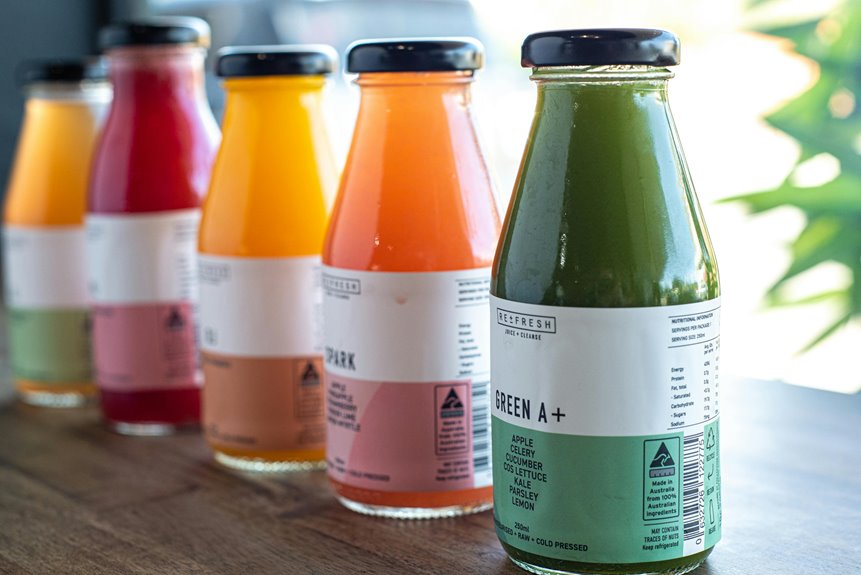
After wisdom teeth removal, you’ll want room-temperature water, clear broths, and cool herbal teas for hydration. Apple juice works if it’s pasteurized, served cool (not cold), and sipped from a cup—never a straw. Skip carbonated drinks and alcohol; they interfere with clot formation and increase the risk of dry socket. Coconut water and electrolyte solutions help replenish lost fluids. The first 48 hours are critical, so small, frequent sips are better than big gulps. There’s a lot more strategy to managing your recovery timeline ahead.
Safe Drinks for the First 48 Hours: Your Hydration Blueprint
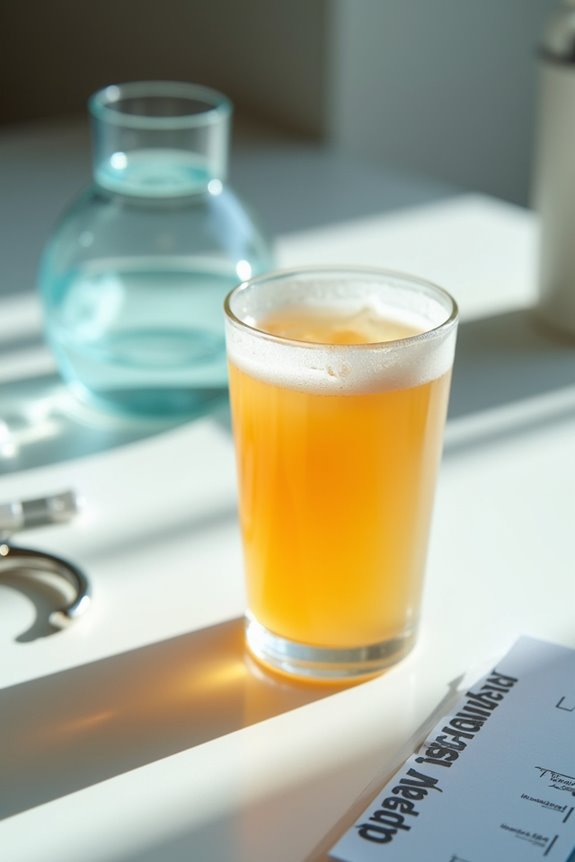
What matters most after your wisdom teeth come out? Smart hydration. Your mouth is under significant stress, and many people navigate this recovery period successfully.
For the first 48 hours after wisdom teeth removal, prioritize non-hot, non-carbonated beverages. Think room-temperature water, clear broths, and cool herbal teas. These safe drinks support healing without triggering irritation at extraction sites.
Sip frequently in small amounts. Avoid straws, hot drinks, and anything carbonated or sugary—they increase dry socket risk. Instead, try coconut water for electrolytes or oral rehydration solutions.
Apple juice works too, just serve it cool and pasteurized. Your body is working hard to heal, and consistent hydration supports that recovery process.
Water, Broths, and Electrolytes: The Recovery Foundation
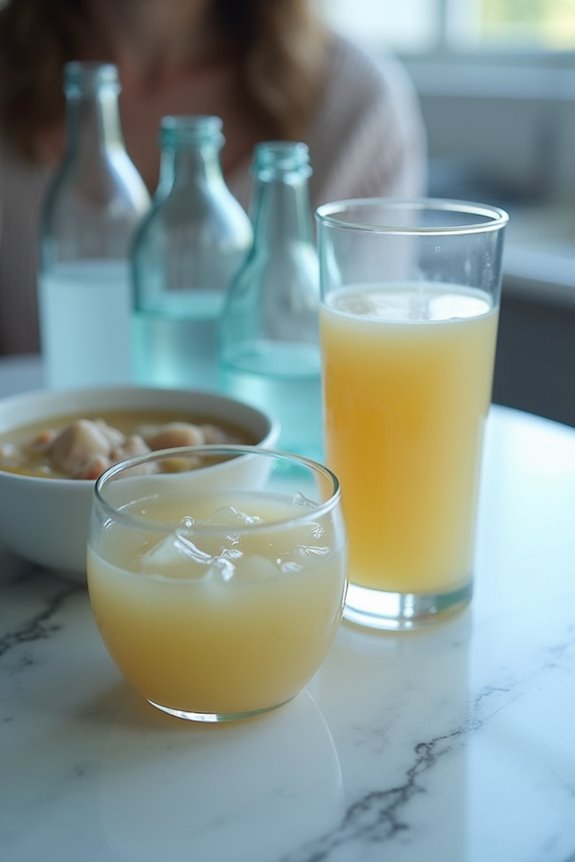
Now that you know which drinks to reach for in those critical first 48 hours, let’s focus on the foundation of your recovery: water, broths, and electrolyte solutions.
Water is your best friend right now. It hydrates your body, flushes out toxins, and supports healing without irritating your extraction sites. Aim for room temperature or cool water—nothing too hot.
Clear broths deserve serious attention too. They’re nutritious, soothing, and won’t bother sensitive areas where teeth were removed. Think chicken or vegetable broth.
Electrolyte drinks are also important. They restore fluid and mineral balance your body loses during recovery. They hydrate effectively without excess sugar or acidity that could cause problems.
These three beverages form your recovery foundation, working together to keep you comfortable and healing strong.
Is Apple Juice Safe After Extraction? When and How to Include It
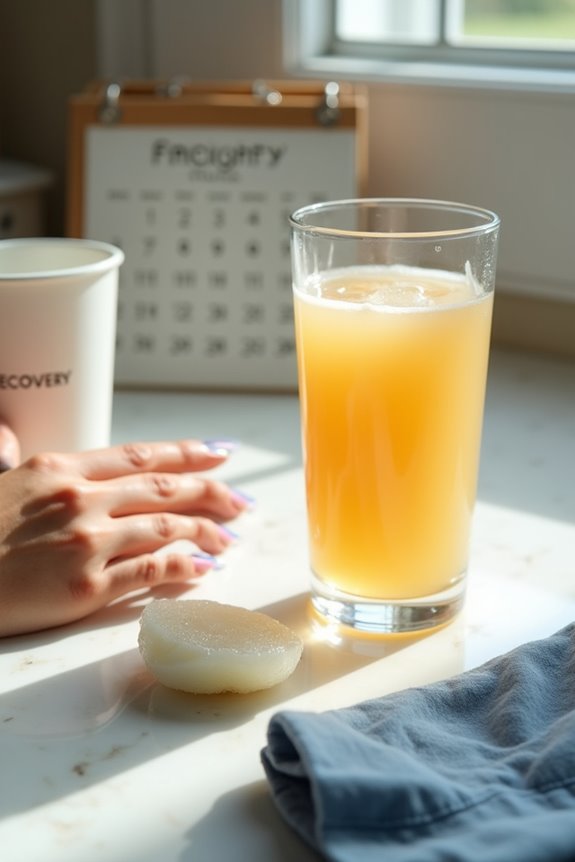
You’re probably wondering if that cold glass of apple juice is really off-limits during recovery, and the answer is: it doesn’t have to be. Apple juice can support your hydration efforts, but timing and technique matter. Drink it at room temperature or slightly cool—extreme temperatures irritate healing sites. Here’s the important part: skip the straw entirely. That suction can dislodge blood clots and cause dry socket, which nobody wants. Instead, sip slowly from a cup. Keep portions small and monitor how you feel. If swelling increases or discomfort worsens, stop immediately and call your dentist. Pair apple juice with water as your primary drink and low-acid alternatives.
Cold Beverages Are Safest: Why Temperature Matters for Healing
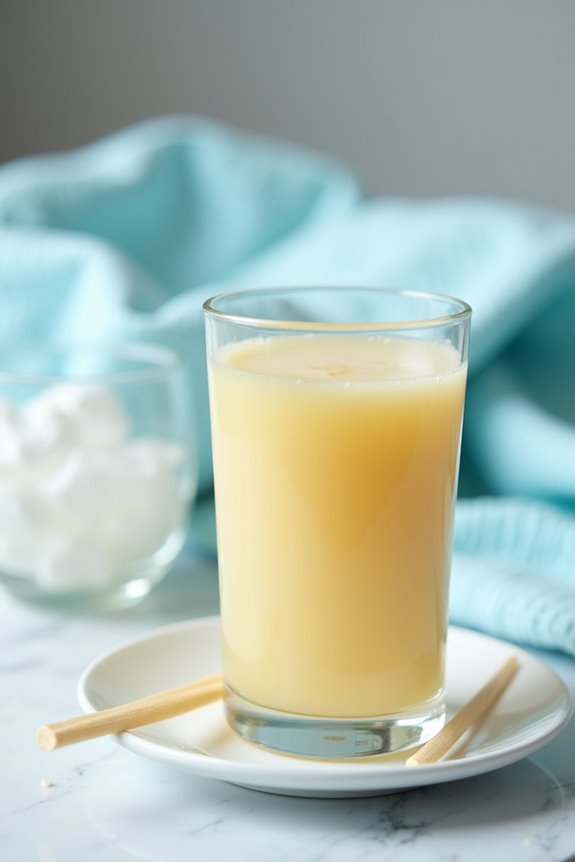
I’ve learned that temperature plays a significant role in your healing process after wisdom teeth removal, and here’s why: cold beverages constrict blood vessels around the extraction site, which reduces swelling and inflammation that’d otherwise make your face puffy and uncomfortable. When you drink something cold—think ice water, chilled electrolyte drinks, or even room-temperature broths—you’re giving your body a natural anti-inflammatory tool, whereas hot drinks can actually increase blood flow and make swelling worse. Stick to cold or cool temperatures for at least 24 to 48 hours post-surgery, and you’ll notice a real difference in how you feel.
Temperature’s Impact On Healing
Why does temperature matter so much when you’re recovering from wisdom teeth extraction? Here’s the thing: temperature directly affects your healing timeline. Hot drinks? They’re your enemy for the first 24–48 hours because heat irritates your gum tissue and increases swelling. Cold beverages, though, work differently. They reduce inflammation, soothe the extraction site, and support hydration—all important for recovery.
I’d recommend keeping drinks at room temperature or cooler. This sweet spot minimizes irritation while keeping you hydrated without stressing healing tissues. That said, extremely cold drinks can trigger sensitivity at the surgical site, so adjust based on what feels comfortable.
Think of temperature as your recovery ally. Choose cool, non-carbonated, non-sugary liquids. Your mouth will thank you.
Cold Drinks Reduce Swelling
Cold beverages are your best friend during those first couple days after extraction, and here’s why: when you sip something cool, it works like a natural pain reliever for your mouth.
Here’s what happens when you choose cold drinks for your recovery:
- Numbs the area: Cold temperatures create a soothing sensation that reduces discomfort naturally
- Constricts blood vessels: This slows bleeding and minimizes swelling around your extraction site
- Supports hydration: You’re getting fluids your body needs without adding heat that slows healing
- Promotes comfort: Room temperature or cool drinks prevent tissue irritation better than hot beverages
Stick with non-carbonated, non-sugary options like water or cooled broths for the first 24–48 hours. Sip slowly to avoid sensitivity. This approach gives you relief while supporting your recovery journey without unnecessary complications.
Skip Soda and Booze: Why Carbonated Drinks and Alcohol Slow Recovery
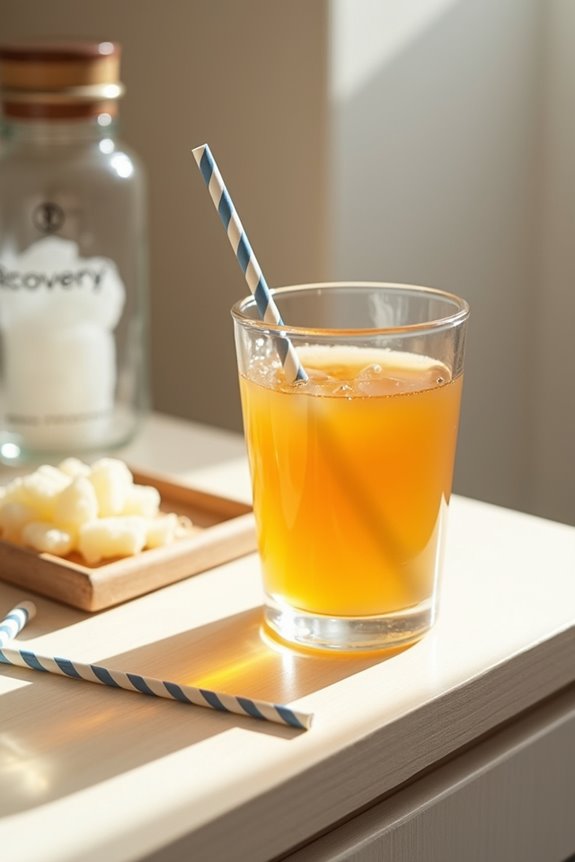
I know you’re probably thinking about cracking open your favorite soda or having a celebratory drink after your extraction, but here’s the thing—carbonation irritates your healing socket and slows down recovery, while alcohol actually prevents your blood clot from forming properly and increases your risk of painful complications like dry socket. Instead of reaching for those tempting beverages, you have plenty of better options: water, clear broths, electrolyte drinks, and non-acidic juices like apple juice all support healing without sabotaging your recovery. If you really want soda or alcohol later in the healing process, wait for your dentist’s approval and stick to non-carbonated, low-acid choices consumed sparingly.
Carbonation’s Impact On Healing
How tempting is it to crack open a cold soda after dental surgery?
I get it—but here’s what happens when carbonation meets your extraction site. Those bubbles don’t just taste refreshing; they create pressure and gas that irritate your wound and slow healing. The carbonation actually erodes the protective clots your body’s building, which increases your dry socket risk.
Here’s why you’ll want to skip carbonated drinks during recovery:
- Bubbles introduce air into the wound, causing swelling and discomfort
- Carbonation destabilizes clots needed for tissue repair
- Sugary sodas feed bacteria, elevating infection risk
- Alcohol in carbonated beverages compounds healing problems
Instead, stick with water, clear broths, or room-temperature drinks. Your extraction site needs calm, supportive care—not fizzy interference. Skipping soda now means faster recovery and fewer complications later.
Alcohol And Clot Formation
When you’re recovering from wisdom teeth removal, alcohol might seem like a comforting escape—but it’s actually working against your body’s healing process. Here’s why: alcohol thins your blood, which interferes with the blood clot forming in your extraction site. That clot is essential protection. Without it, you risk dry socket, a painful condition that derails recovery.
Alcohol also increases bleeding and swelling, making everything hurt more. Plus, if you’re tempted to sip through a straw while drinking, you’re creating suction that can dislodge that important clot entirely.
I know skipping alcohol feels tough, especially if you’re stressed about the procedure. But waiting just a few days—really, until you’re fully healed—helps significantly. Your mouth will benefit, and you’ll recover faster overall.
Safer Beverage Alternatives Available
Temptation strikes hard when you’re stuck at home recovering, and I get it—you want something that actually tastes good, not just plain water for the hundredth time. Lucky for you, plenty of options support your wisdom teeth recovery without sabotaging healing.
Here’s what actually works:
- Water – your extraction site’s best friend, hydrating without irritation
- Clear broths – warm, soothing, and packed with nutrients for faster healing
- Diluted apple juice – a healing fruit option that’s low-acid and gentle
- Herbal teas – served cool or room temperature for non-carbonated comfort
Skip anything fizzy or alcoholic. Carbonated beverages irritate extraction sites while alcohol slows gum healing considerably. These safer alternatives support clot formation and reduce bacterial growth. You’re not settling for boring—you’re choosing smart recovery.
Non-Sugary Options That Prevent Infection Risk
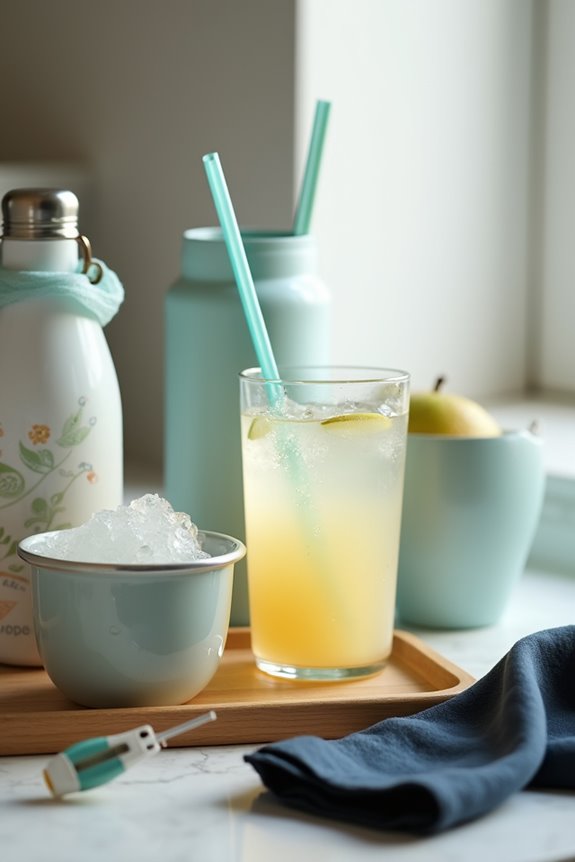
Why do sugary drinks spell trouble after your wisdom teeth come out? Sugar feeds the bacteria in your mouth, basically throwing them a party while you’re trying to heal. That’s where non-sugary drinks come in as your recovery option.
I’d recommend reaching for coconut water first. It’s packed with electrolytes that keep you hydrated without the sugar that invites infection. Herbal teas work well too—they’re soothing, and you can drink them cold to minimize irritation. Kefir and other probiotic drinks help maintain healthy mouth bacteria, giving your body support during healing.
Clear broths and diluted fruit juices served cold round out your options. The key? Skip carbonation and sweeteners. These non-sugary drinks protect your healing sites while keeping you properly hydrated. That’s the effective formula for a smoother recovery.
Cold Herbal Tea, Coconut Water, and Kefir: What Works and Why

Among the non-sugary drinks I mentioned, three stand out as your best recovery options: cold herbal tea, coconut water, and kefir.
Here’s why I’m recommending these three:
- Cold herbal tea soothes your extraction site while fighting inflammation—no irritation included
- Coconut water replenishes electrolytes your body needs, supporting gum healing
- Kefir delivers probiotics that keep your oral microbiome healthy during recovery
- Hydration from all three helps your body repair itself faster
The key? Keep them cold or room temperature, and skip anything sweetened. Bacteria love sugar, and your healing gums don’t need that. I’ve found that rotating between these options keeps recovery interesting while protecting your extraction site. You’re building a recovery routine that works with your body, not against it.
Drinking Without a Straw: Safe Techniques for Healing Gums

You’ll want to sip directly from a cup instead of using a straw, since that suction can actually dislodge your blood clot and interfere with your healing. When you’re drinking, take small, gentle sips and hold the liquid in your mouth for a moment before swallowing—skip the vigorous rinsing action that might irritate your extraction sites. I know it feels weird at first, but these careful techniques do help your gums recover.
Sipping Directly From Cups
Drinking straight from a cup might seem like the simplest choice after wisdom teeth removal, and it’s often the safest one too. When you avoid a straw, you’re protecting those healing extraction sites from unnecessary suction that can dislodge blood clots. I’ll walk you through the technique that works best for hydration and recovery.
Here’s what I recommend:
- Hold your cup at a comfortable height, around chest level
- Take slow, steady sips without creating strong suction in your mouth
- Skip swishing or aggressive rinsing while drinking
- Wait a few minutes between drinks to limit continuous pressure
Sipping from cups gives you control. You’re managing how much liquid enters your mouth and how gently it flows. This approach keeps you hydrated while protecting your healing gums, so you’re supporting your recovery journey.
Protecting Your Blood Clot
Now that you’ve got the cup-sipping technique down, let’s talk about why it matters—that blood clot forming at your extraction site is your mouth’s natural bandage, and it’s doing important work to protect the bone and nerve underneath. Straws create suction that can dislodge this clot, leading to dry socket, which is painful and delays healing. When you skip the straw and sip directly from a cup, you’re minimizing those harmful forces.
| Days Post-Extraction | Drink Type | Temperature | Hydration Goal |
|---|---|---|---|
| 1–2 | Water, clear broth | Cold or room temp | Maintain fluids without sugar |
| 3+ | Coconut water, diluted juice | Cool | Support healing gradually |
This simple choice protects your clot and keeps you on track for smooth recovery.
Gentle Drinking Techniques Matter
How’s your mouth feeling as those first few days pass? I’m ditching the straw habit right now, and you should too. Here’s why gentle drinking matters for your recovery:
- Sip slowly from a cup instead of using straws, which create suction that dislodges protective blood clots
- Choose room-temperature or cool beverages to minimize irritation while your gums heal
- Avoid hot drinks for 24–48 hours since heat increases swelling and slows recovery
- Pick non-sugary, non-carbonated options like water, clear broths, or diluted juice to protect healing sites
I’m taking small sips and pausing whenever discomfort increases. This hydration approach works alongside soft foods, letting me recover properly. Patience with gentle drinking techniques now means faster healing and avoiding complications like dry socket.
When to Move Beyond Drinks: The Week-by-Week Transition

When you’re ready to graduate from your apple juice diet depends on how your mouth’s healing—and that’s different for everyone. During week one, you’re keeping things liquid-focused. Your hydration matters most, so stick with drinks while your recovery kicks into gear.
By week two, you can test soft foods alongside your liquids. Think yogurt, mashed potatoes, scrambled eggs. Week three? You’re probably eating closer to normal, though you’ll want to skip crunchy or spicy stuff still.
Here’s the thing: progression isn’t a race. Some people feel ready faster than others, and that’s totally okay. Listen to your mouth. If something causes pain or bleeding, pull back. You’re building confidence one meal at a time, and that matters more than hitting some arbitrary timeline.
Long-Term Oral Health: Beverages That Support Lasting Recovery
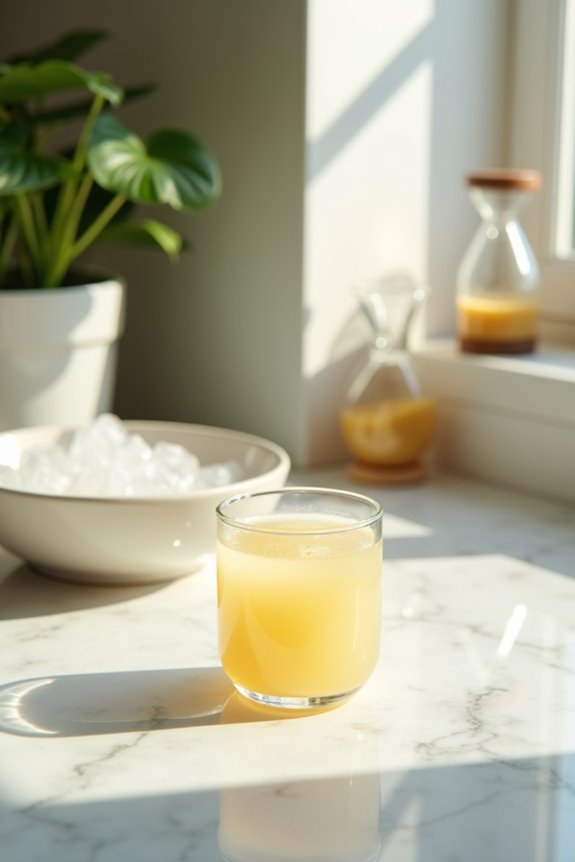
As you move past those first few weeks and your mouth starts feeling more like itself again, your drink choices don’t stop mattering—they actually become even more important for protecting your recovery.
I’ve found that shifting toward long-term hydration means ditching the temporary fixes. You’ll want beverages that support healing without causing setbacks.
- Water remains your MVP—boring but bulletproof for sustained hydration
- Clear broths and electrolyte drinks replenish minerals your body needs
- Cooled herbal teas offer anti-inflammatory benefits without irritation
- Non-sugary smoothies (sipped, never through straws) provide nutrition safely
Skip carbonated drinks, alcohol, and anything acidic or hot—they’ll only complicate your recovery. Think of this phase as building better habits. You’re not just healing your mouth; you’re establishing routines that’ll keep your teeth and gums healthy long after extraction sites close up completely.