
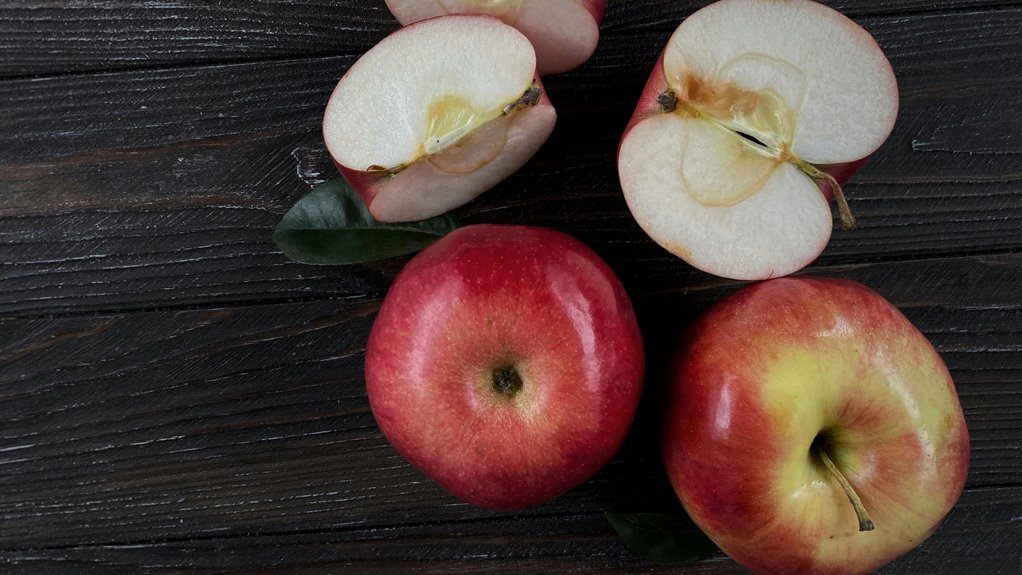
Apple seeds contain amygdalin, which releases cyanide when chewed—but here’s the thing: you’d need hundreds of crushed seeds to actually poison your dog. Swallowing seeds whole? Barely a concern since your dog’s body detoxifies cyanide quickly. The real risks are choking hazards and that dense core, especially for small breeds where a few chewed seeds matter more. Remove seeds and cores before serving, keep portions tiny, and your dog will be safe. Curious about what symptoms to watch for or the safest prep methods?
Why Apple Seeds Are Dangerous
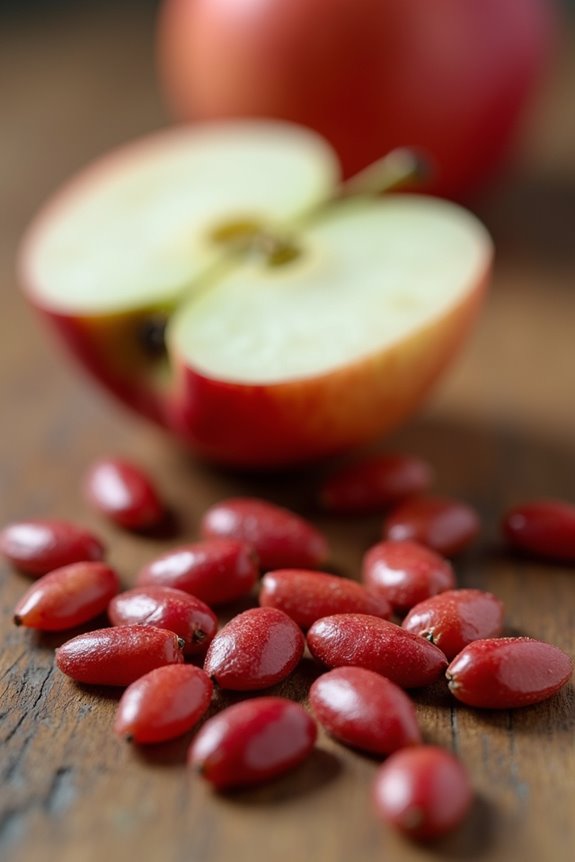
So here’s the thing: apple seeds actually contain a compound called amygdalin, which is a cyanogenic glycoside—basically a fancy name for something that can turn into hydrogen cyanide when your dog chews it up and your dog’s body metabolizes it. When your pup munches those seeds, the cyanide interferes with their ability to absorb oxygen at the cellular level. Now, here’s what matters: swallowed whole seeds? Pretty harmless. But chewed or crushed seeds? That’s when the toxins get released. Your dog’s risk depends on their size and how many seeds they’ve eaten. Smaller dogs face higher danger with larger quantities. Beyond poisoning, there’s also the choking hazard from the core itself—another reason careful supervision around apple snacks matters for your furry friend.
How Much Is Actually Risky?
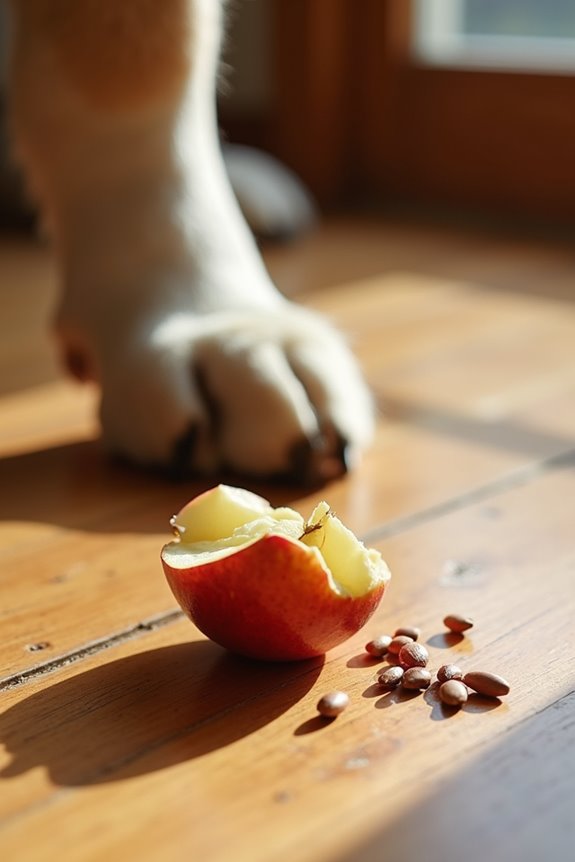
How many apple seeds would it actually take to poison your dog? Here’s the reassuring truth: you’d need seeds from roughly hundreds of apples to reach a toxic cyanide dose. Yeah, hundreds. That single apple core your pup snagged? Nowhere near dangerous. Even if your dog ate multiple seeds, the unsafe amount is quite high. Here’s what matters most: whether those seeds got chewed. Swallowing whole seeds means less cyanide release into your dog’s system. Chewed seeds? That’s when toxin exposure increases significantly. Plus, your dog’s body rapidly detoxifies cyanide—reports show it becomes undetectable within hours after small exposures. So while removing seeds when possible is smart practice, you can relax knowing typical apple consumption falls far below hazardous levels for dog toxicity.
Why Small Dogs Face Greater Risk

I need to tell you straight up: your tiny pup’s smaller body weight means that even a handful of apple seeds poses a bigger threat than it would to a large dog, since the amygdalin concentrates at a higher level relative to their size. Beyond toxicity, small breeds also struggle more with metabolic processing—their systems work harder to break down and eliminate toxins—while simultaneously facing choking risks that larger dogs simply don’t encounter with seeds. So when your Chihuahua or Yorkie gets curious about that apple core, the stakes are higher than they’d be for a Golden Retriever.
Body Weight and Toxicity
Why does your tiny Chihuahua face a bigger threat from apple seeds than a Golden Retriever eating the same snack? It’s all about body weight and how cyanide affects smaller bodies differently.
Here’s what you need to know:
- Cyanide toxicity scales with body weight—smaller dogs process the same dose more intensely
- A few seeds might barely register for a 70-pound dog but pose real risk for a 5-pound pup
- Crushed or chewed seeds release amygdalin faster, converting to cyanide more quickly in tiny systems
- Your dog’s weight determines the toxic threshold, guiding whether you need veterinary help
Metabolic Processing Challenges
While body weight gives us a starting point for understanding apple seed danger, the real story becomes more complex when you examine how a dog’s body processes cyanide.
Your dog’s liver works to detoxify amygdalin after chewed seeds release hydrogen cyanide. However, smaller dogs face a metabolic disadvantage. Their bodies process toxins relative to body weight, meaning the same poison affects them more severely. Here’s what you should know:
| Factor | Small Dogs | Large Dogs |
|---|---|---|
| Detoxification Speed | Same (10-30 min half-life) | Same (10-30 min half-life) |
| Dose Per Kilogram | Higher concentration | Lower concentration |
| Liver Burden | Proportionally heavier | Proportionally lighter |
| Chewing Seeds Risk | Significantly increased | Relatively decreased |
A Chihuahua chewing seeds faces greater metabolic stress than a Golden Retriever consuming identical seeds—that’s how biology works against tiny breeds.
Choking Hazard Vulnerability
Beyond the toxin concern, here’s a physical reality that hits smaller dogs harder: apple seeds and cores present a genuine choking hazard, and tiny breeds face disproportionate risk.
When you’re protecting your small dog, understand these key vulnerabilities:
- Less body mass means bigger proportions—a few seeds represent a larger percentage of their weight
- Broken pieces lodge easily—cores splinter into chunks that fit perfectly in tiny throats
- Cyanide toxin release compounds danger—chewed seeds release amygdalin, creating dual hazards if inhaled while coughing
- Dense fibrous cores obstruct airways—the structure can block esophagus or stomach passages
Small dogs need close observation after apple snacking. That incidental seed ingestion will likely cause immediate distress requiring veterinary evaluation. Your vigilance about small dog safety here is warranted.
Symptoms Your Dog Ate Apple Seeds
If your dog has eaten apple seeds, watch for these symptoms: vomiting, rapid breathing, muscle tremors, lethargy, and anxiety. Your pup might seem restless or act differently than usual.
These symptoms occur because apple seeds contain amygdalin, which releases cyanide when chewed or crushed. The cyanide interferes with your dog’s oxygen absorption, which is why breathing changes are a red flag.
Severity depends on how many seeds your dog ate and their size—smaller dogs face relatively higher risk. If you notice any of these symptoms, contact your vet immediately. They’ll know exactly what to do.
First Steps if Ingestion Occurs
So your dog just ate apple seeds—what now? Stay calm. Here’s your action plan:
- Assess the situation – Did your pup chew the seeds or swallow them whole? How many did they eat?
- Contact your vet – Call immediately for guidance, especially if your dog’s small or ate many seeds
- Monitor closely – Watch for vomiting, rapid breathing, muscle tremors, or collapse
- Follow professional advice – Your vet may recommend inducing vomiting or administering charcoal
The amygdalin in apple seeds releases cyanide when metabolized, but one core rarely causes poisoning. However, ingestion of multiple seeds warrants veterinary care. Don’t panic if your dog swallowed seeds whole—they’re less dangerous. Your vet knows your dog’s size and health, so their guidance beats internet guesswork.
When to Call Your Vet
When should you actually pick up the phone and call your vet about apple seeds? Here’s the honest truth: if your dog ate just a few seeds, you’re probably fine. But I’d definitely reach out if your pup swallowed a bunch or if they’re a small breed. Unknown quantities? That’s your cue to call. During a seeds ingestion incident, your vet can assess the risk and guide you on what to watch for. They’ll help you decide whether your dog needs veterinary care or just monitoring at home. If you notice any symptoms—vomiting, rapid breathing, muscle tremors, or collapse—that’s an emergency requiring immediate attention. Don’t wait. These signs suggest possible cyanide poisoning, and quick action matters. When in doubt, call your vet or poison helpline.
How to Safely Serve Apples
Want to give your dog apples? Here’s how to serve them safely:
- Remove all seeds and cores first—they contain amygdalin, which releases cyanide when chewed
- Cut flesh into bite-size pieces to prevent choking and aid digestion
- Peel the skin if your dog has a sensitive stomach
- Use only plain, fresh apples with no added sugars, spices, or xylitol
Wash everything thoroughly to remove pesticides. Keep apple treats to 10% of your dog’s daily calories—they’re snacks, not meals. After introducing apples, watch for mild digestive upset. If vomiting or diarrhea happens, stop immediately and contact your vet. Following these steps allows you and your dog to enjoy this healthy treat with confidence.
Preventing Accidental Seed Ingestion
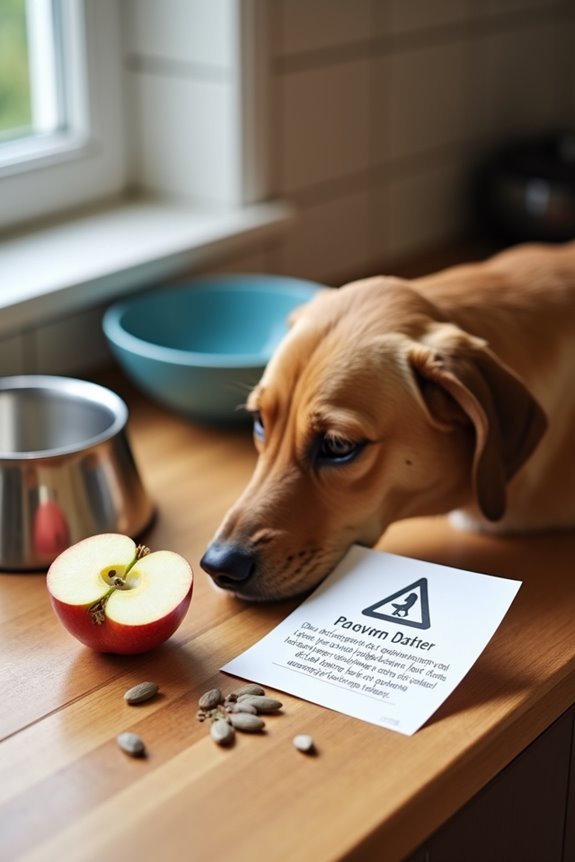
Now that you know how to prepare apples safely, keeping those seeds away from your dog in the first place is just as important—maybe even more so. I’ve learned that the amygdalin in apple seeds becomes dangerous when chewed, so prevention is your best defense. Here’s what I do: I always remove the entire core before serving apple slices, then dispose of it immediately in a sealed trash bin where curious dogs can’t scavenge. I keep apple scraps off counters and tables. Beyond poisoning risks, those seeds pose a real choking hazard, especially for small or senior dogs. By handling seed ingestion prevention seriously—it’s straightforward—you’re giving your dog the ability to enjoy apples without worry.
Apple Cores, Stems, and Skin: Other Hazards
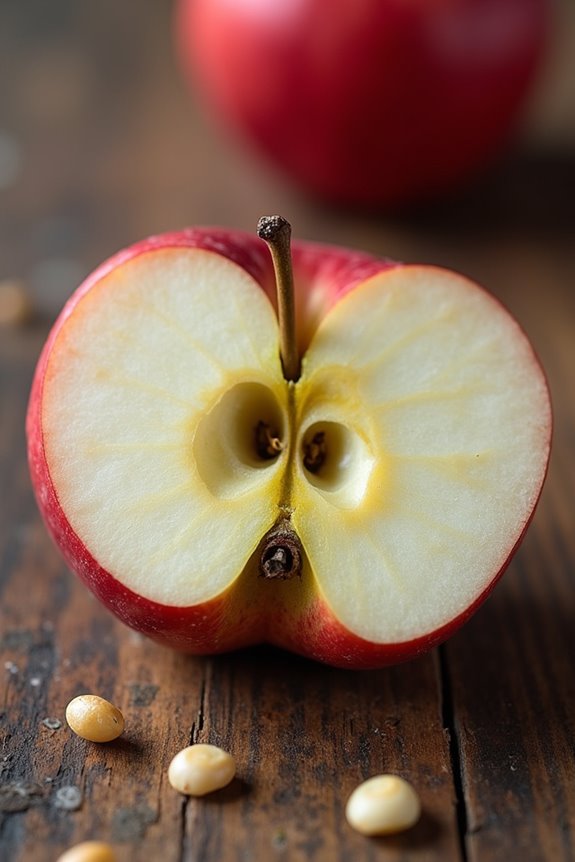
While apple seeds get most of the attention, I’ve found that the core and other parts of the apple present their own set of problems you’ll want to know about. The dense, hard core poses a real choking risk—especially for small dogs who might try to swallow it whole—and the stems, though generally non-toxic, can cause digestive upset if your pup eats too much of them. Even the skin is usually safe, but I recommend washing apples thoroughly and removing the core entirely before offering apple flesh to your dog.
Choking Hazards and Prevention
Beyond the cyanide concern, here’s something I’ve seen trip up dog owners: apple cores, stems, and skin create their own set of problems. These woody parts pose serious choking hazards, and I want to help you keep your pup safe.
Here’s what I recommend:
- Remove all seeds, cores, and stems before offering apple flesh to your dog
- Cut the fruit into bite-sized pieces that won’t lodge in your dog’s throat
- Dispose of apple cores promptly so your dog can’t scavenge discarded pieces
- Supervise your dog during fruit intake to prevent accidents with fallen fruit
Even without cyanide toxicity, larger amounts of cores and seeds cause digestive upset. The prevention strategy? It’s simple: prep your apples carefully, watch your dog closely, and you’ll eliminate choking hazards entirely.
Stem Toxicity and Skin Concerns
Apple cores and stems deserve attention for reasons beyond the cyanide issue—they’re problematic in different ways. Here’s what I’ve learned: cores and stems create choking hazards, particularly for enthusiastic eaters who don’t chew thoroughly. While the cyanide risk comes primarily from crushed seeds rather than stems alone, I still recommend removing them entirely.
The skin? Generally safe for most dogs, though I’ve noticed some pups with sensitive stomachs prefer peeled apples to avoid GI upset. The safest approach is straightforward: cut apples into small, manageable pieces and remove all seeds, cores, and stems before offering them to your dog.
Watch your pup afterward for any signs of distress. If something seems off, contact your vet immediately.
Safe Alternatives to Apples
If you’re looking to give your dog a tasty, nutritious treat without worrying about seeds or cores, you have plenty of good options that’ll make your pup happy.
I recommend exploring these alternatives:
- Carrots – crunchy, low-calorie, and naturally clean teeth
- Bananas – soft, sweet, and packed with potassium
- Blueberries – tiny antioxidant powerhouses dogs love
- Green beans – fiber-rich and completely safe raw or cooked
These options skip the apple seeds and cyanide concerns entirely, giving you peace of mind about safety. You’ll avoid the difficulty of removing cores while still offering nutritious snacks. Your dog won’t know the difference. They’re just happy getting treats. These alternatives fit perfectly into that 10% daily treat allowance, keeping your pup healthy and satisfied.
Vet-Approved Apple Safety Tips
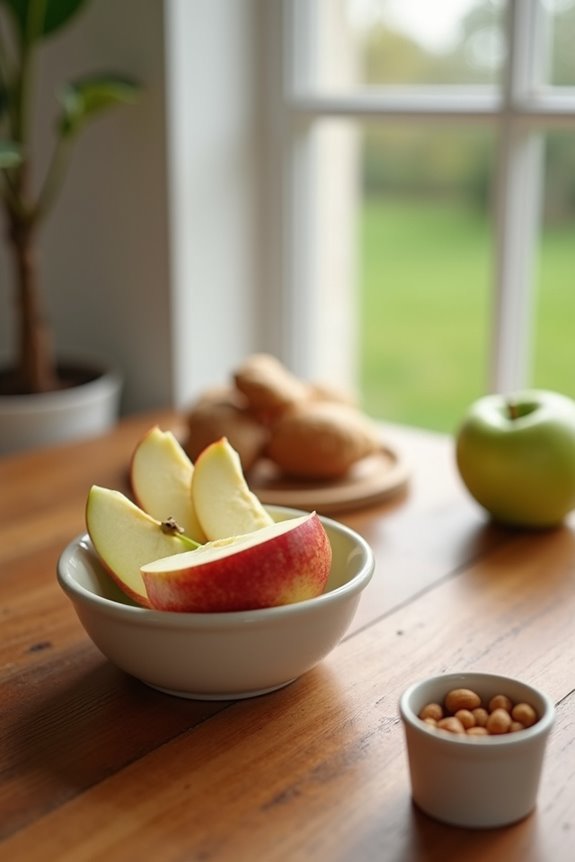
I’ll walk you through three essential practices that’ll help you serve apples safely to your dog: preparing the fruit properly by removing seeds and cores, offering appropriate portions based on your dog’s size (think apple slices, not whole apples), and watching for any unusual reactions like vomiting or rapid breathing. By taking these straightforward steps—slicing apples into bite-sized pieces and supervising snack time—you’re reducing any risk while still letting your pup enjoy this healthy treat. If you ever notice concerning symptoms after your dog eats apple seeds, don’t hesitate to contact your vet, since they can assess whether your specific dog needs attention.
Preparation Before Serving
How do you know if your dog’s snack is actually safe? I’ll walk you through prep steps that’ll make you feel confident serving apples to your pup.
Here’s what I do before offering any apple:
- Remove the entire core and all seeds—this eliminates cyanide risk completely
- Cut flesh into bite-sized pieces, roughly the size of your dog’s kibble
- Peel the skin if your dog has stomach sensitivity or digestive issues
- Skip any apples with added sugars, coatings, or xylitol products
I keep things simple by washing the apple first, then coring it lengthwise. The flesh alone is safe in moderation. Remember, treats should stay under 10% of daily calories. This straightforward approach keeps apple snacking worry-free for both of us.
Safe Portion Sizes
So what’s the right amount of apple for your dog? I recommend treating apples as occasional treats—they shouldn’t exceed 10% of your dog’s daily calories. For a typical medium-sized dog, that’s roughly a few small apple slices. If you’ve got a smaller pup, like a 12.5-pound dog, go even lighter.
Here’s my approach: remove all seeds and the core completely. Those seeds contain amygdalin, which converts to cyanide when chewed, so eliminating them reduces risk substantially. Cut the flesh into bite-sized pieces to prevent choking and minimize toxin exposure.
Start small when introducing apples. Offer just one or two pieces initially, then watch for GI upset or unusual behavior over the next day. Once your dog tolerates it well, you can gradually increase to a standard serving—but always within that 10% treat guideline.
Monitoring For Adverse Reactions
Monitoring For Adverse Reactions
Even though a single apple core rarely contains enough amygdalin to poison most dogs, that doesn’t mean you should ignore what happens after your pup eats one. I recommend keeping a close eye on your dog for the next few hours, watching for any changes that might signal cyanide exposure.
Here’s what to monitor:
- Behavior shifts – lethargy, restlessness, or unusual aggression
- Breathing changes – rapid or labored breathing patterns
- Digestive signs – vomiting, drooling, or loss of appetite
- Physical symptoms – muscle tremors or collapse
Note whether your dog chewed or swallowed seeds whole; chewed seeds pose greater risk. Track eating habits, energy levels, and breathing closely. Contact your vet immediately if any concerning symptoms develop.
Your Apple Safety Checklist
Want to give your dog apples without the worry? Follow this straightforward safety checklist. First, remove all seeds and the core—this eliminates the cyanide risk entirely. Second, cut the flesh into bite-sized pieces appropriate for your dog’s size. Third, keep portions modest, offering apples as treats within about 10% of your dog’s daily calories. Fourth, introduce apples gradually if your dog hasn’t eaten them before, watching for any digestive upset. Finally, store apples safely where your dog can’t access whole ones unsupervised. By checking off these boxes, you’re protecting your pup while still enjoying apple treats together. It’s straightforward prevention that gives you peace of mind.