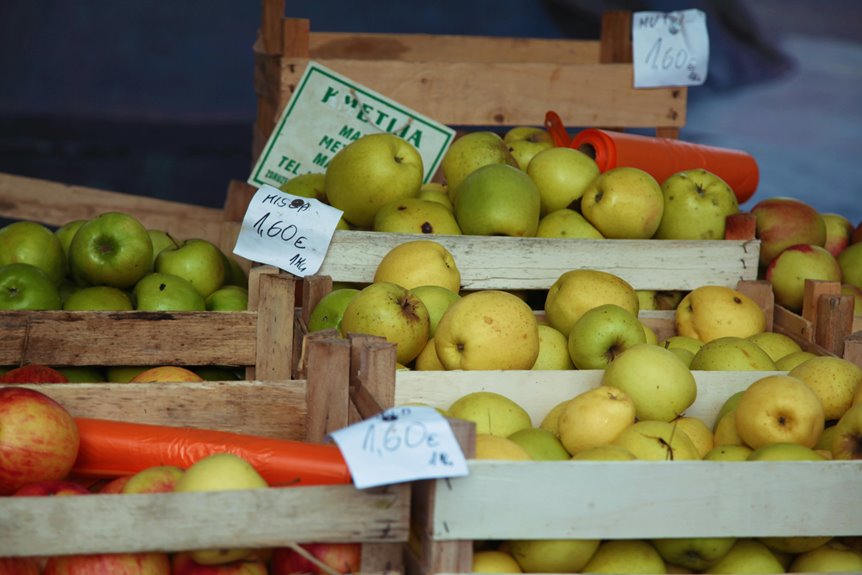
Apple prices depend on seven key factors you should know. Harvest season floods the market, dropping costs, while premium varieties like Honeycrisp cost more due to lower yields and longer maturity. Cold storage and transportation across hundreds of miles add hidden expenses. Regional labor shortages spike wages during peak seasons, inflating prices in high-wage areas. Organic certification requires strict practices and testing, commanding premiums. Finally, grocery store competition and seasonal demand shifts constantly reshape what you’ll pay per bushel. Continue reading to understand exactly how each one impacts your wallet.
When Apple Harvest Season Drives Prices Down
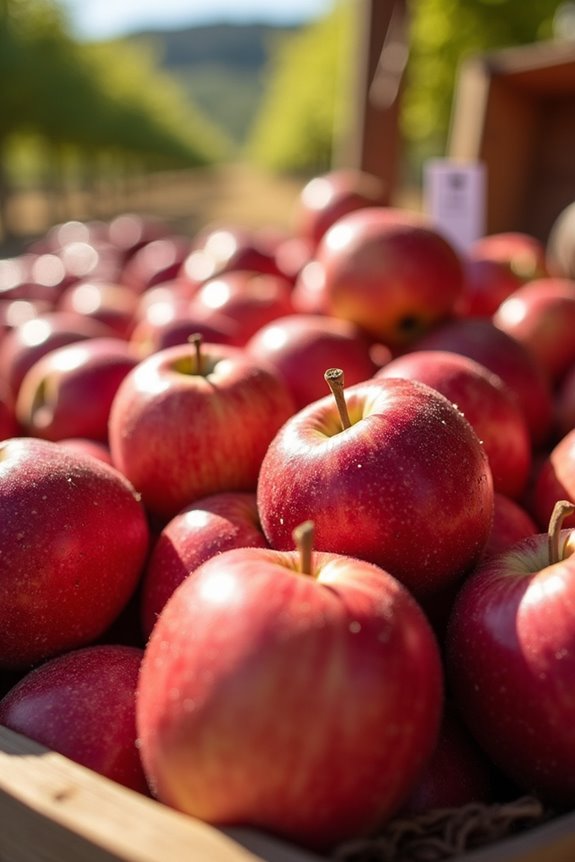
Ever wonder why apples seem cheaper in September than in February? I’ve noticed it too, and here’s what’s happening: seasonality. During harvest season, when apple production peaks, the market floods with supply. More apples means lower prices—sometimes $20 to $24 per bushel, depending on variety and location.
Here’s the thing about peak season: it’s when supply meets demand head-on. Farmers harvest tons of apples simultaneously, so prices naturally drop. Regional variations and seasonal promotions push those prices even lower as growers compete to sell quickly.
Now, variety premiums still matter. Premium varieties might stay pricier even during peak harvest because some folks specifically want them. But overall? Late-summer into early-fall brings the best deals. That’s when I stock up.
Why Premium Varieties Like Honeycrisp Cost More
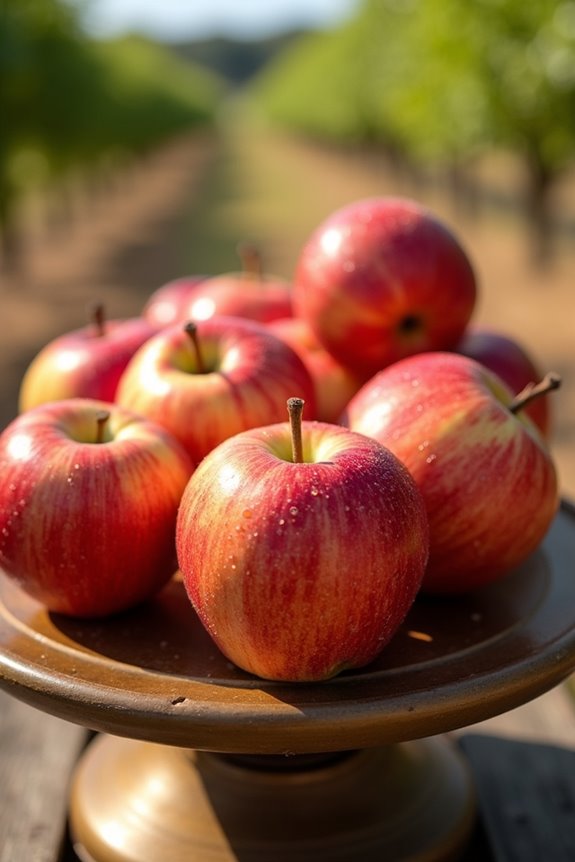
I’ve noticed that when you’re shopping for apples, premium varieties like Honeycrisp cost more than Red Delicious or Granny Smith—and there’s a real reason behind that price difference. Honeycrisp trees produce fewer apples per tree, demand more careful handling during growth, and require longer to mature, which means farmers spend more money and time getting them to market. In addition, consumers are willing to pay extra because Honeycrisp’s crispy texture and sweet flavor meet their preferences, so growers can charge more while still selling out their crop.
Lower Yields, Higher Costs
Why do Honeycrisp apples cost nearly twice as much as Granny Smiths at the grocery store? It’s all about lower yields and higher costs working together.
When I look at premium varieties, I notice growers face real challenges:
- Selective breeding requires special trees that produce fewer apples per acre
- Specialized orchard practices demand extra labor, equipment, and expertise
- Longer harvest times mean extended care and delayed profits
- Higher per-unit costs force retailers to charge more at checkout
- Production costs cut deeply into potential earnings
Premium varieties simply yield less fruit. That reduced output means growers must raise retail pricing substantially just to cover their overhead and maintain reasonable profit margins. The combination of lower yields and those higher cultivation costs explains why premium varieties command noticeably higher prices than standard options.
Consumer Demand and Preference
Now that we’ve covered why premium apples cost more to grow, let’s look at the other side of the equation—what’s actually driving customers to pay those higher prices in the first place.
The reality is straightforward: you’re willing to pay more for apples you actually want to eat. Consumer demand for premium varieties like Honeycrisp creates real market value that justifies higher pricing. When you bite into a crisp, juicy apple, you’re experiencing the quality that commands price premiums.
| Variety | Consumer Appeal | Price Point |
|---|---|---|
| Honeycrisp | Texture, sweetness | Premium |
| Red Delicious | Traditional, familiar | Standard |
| Granny Smith | Tartness, cooking | Standard |
Your preferences shape varieties demand directly. Orchards respond to what customers seek, sustaining higher prices even through seasonal fluctuations. Perceived quality drives your willingness to pay—and that consumer demand keeps premium apples thriving in the market.
Growing Difficulty and Labor
they’re finicky, demanding, and way more labor-intensive than standard varieties like Red Delicious. I’ll be honest—it costs considerably more to bring these premium varieties to market, and that’s reflected in what you pay at the store.
Here’s why labor costs hit hard:
- Careful pruning and training require skilled workers throughout the growing season
- Hand-thinning fruit so only the best apples develop properly
- Intensive pest control demands constant monitoring and intervention
- Selective harvesting means picking only ripe apples, often multiple times per tree
- Extra handling during packing reduces bruising but increases labor expenses
These production costs directly shape our pricing strategy. Lower yields combined with demanding cultivation means growers invest more per pound. When you understand the labor behind premium varieties, that higher price tag makes sense.
Cold Storage: The Hidden Expense That Keeps Apples Year-Round
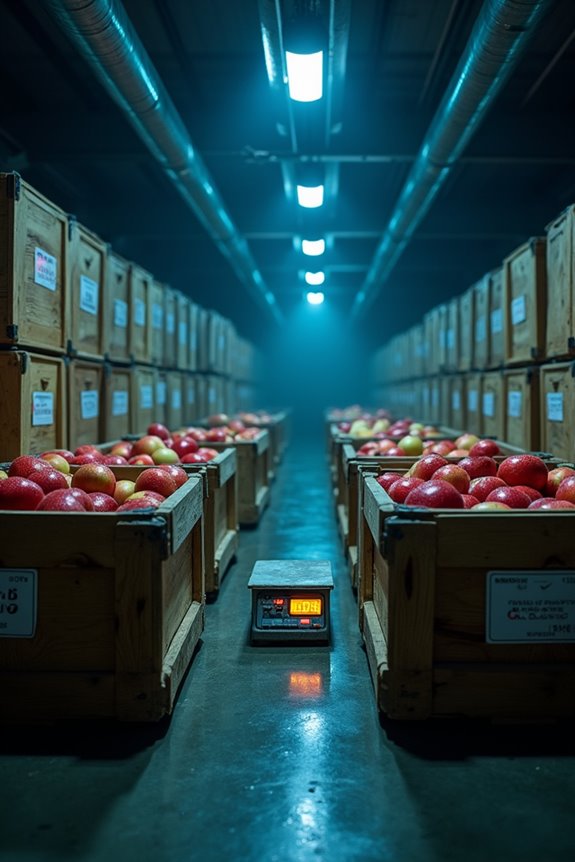
Ever wonder how you can bite into a crisp, juicy apple in February when harvest ended months ago? Cold storage is the answer, though it comes with a price tag we all pay. Producers invest heavily in controlled-atmosphere facilities that regulate temperature, humidity, and oxygen levels to preserve apples for months. These energy costs are substantial—refrigeration runs year-round, and handling expenses add up quickly. Controlled-atmosphere storage extends shelf life significantly, reducing spoilage, but that benefit comes with overhead costs producers pass directly to consumers. Storage helps stabilize volumes and pricing across seasons, preventing wide price swings. Regional price differences often reflect how much storage capacity exists locally. So that February apple? You’re paying for the infrastructure that made it possible.
Labor Shortages and Regional Wage Differences Raise Apple Costs
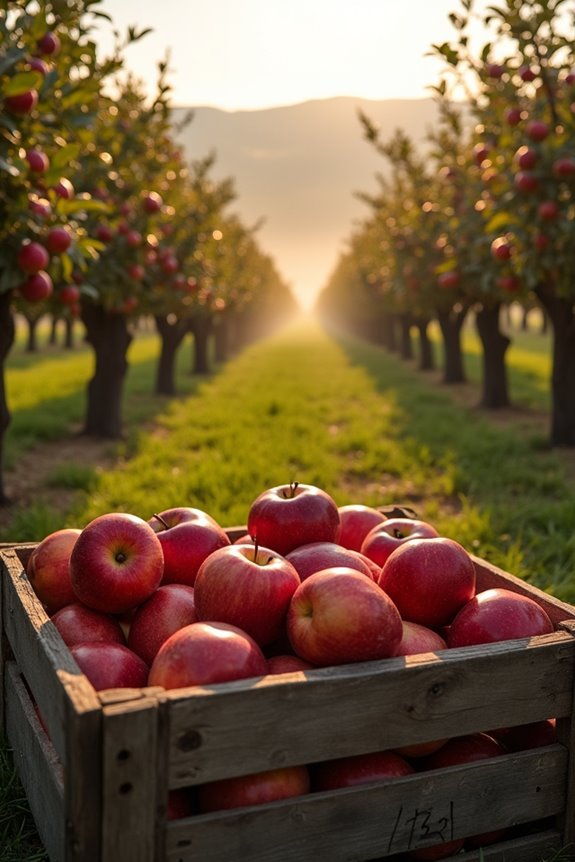
When you bite into an apple at the grocery store, you’re tasting the effects of labor costs that vary wildly depending on where that fruit was grown—and I’m talking about everything from seasonal worker shortages during harvest time to the fact that orchards in high-wage states like California pay their crews substantially more than those in lower-cost regions. These labor expenses don’t just disappear; they ripple through packing sheds, pruning operations, and pest control work, ultimately landing in that price tag you see at checkout. So here’s the thing: two nearly identical apples from orchards just across a state line can cost you different amounts simply because one farm’s workers earn higher regional wages than the other’s.
Seasonal Labor Availability Issues
Because apple harvesting demands a massive workforce during just a few weeks of the year, growers face a real challenge: finding enough workers willing to pick fruit when labor’s scarce and competition for employees is fierce.
Here’s what makes seasonal labor so tricky:
- Wage variability spikes during peak harvest months, forcing growers to pay premium rates
- Labor shortage extends harvesting costs as picking timelines stretch longer than planned
- Pruning and pest control crews become harder to find, delaying essential orchard maintenance
- Regional price variability emerges when some areas can’t recruit enough harvesters
- Labor timelines shift unpredictably, affecting when you’ll actually get your fruit picked
When seasonal labor gets tight, bushel costs climb. Growers must offer higher wages, provide temporary housing, and cover training expenses. These real expenses trickle down to what you pay at the store.
Regional Wage Rate Variations
The wage pressure we just covered doesn’t hit every apple-growing region the same way. Here’s the deal: regional wage differences create real cost variations that directly affect your final bushel price. In high-wage areas, picking costs, pruning costs, and packing costs all climb steeply. We’re talking about significant labor costs that ripple through the entire operation.
Think about it. Hand-picking premium varieties demands skilled workers, and those workers earn more in some regions than others. Seasonal wages fluctuate differently too, depending on local competition for workers and cost of living. These regional wage variations mean the cost per bushel can swing dramatically between neighboring states.
Understanding these differences helps you recognize why your local apples might cost more—or less—than your neighbor’s region. It’s simply economics meeting geography.
Impact On Retail Apple Pricing
Why do apples cost more at your grocery store now than they did five years ago? I’ll tell you—it’s mostly about labor costs hitting your wallet harder than ever.
When labor shortages hit, everything changes:
- Harvesting expenses skyrocket as fewer workers demand higher wages
- Packing labor costs add up quickly during peak seasons
- Transportation costs climb when you’re paying more for drivers and handlers
- Regional wages vary wildly, making apples pricier in high-wage areas
- Retail prices reflect all these combined expenses passing through to you
Here’s the thing: apple producers in regions with higher regional wages pass those costs directly to retailers. When packing labor and transportation costs rise together, your local grocery store’s apple prices climb too. Supply stays steady, but your bill doesn’t.
Transportation Miles and Supply Chain Networks Add Up Fast
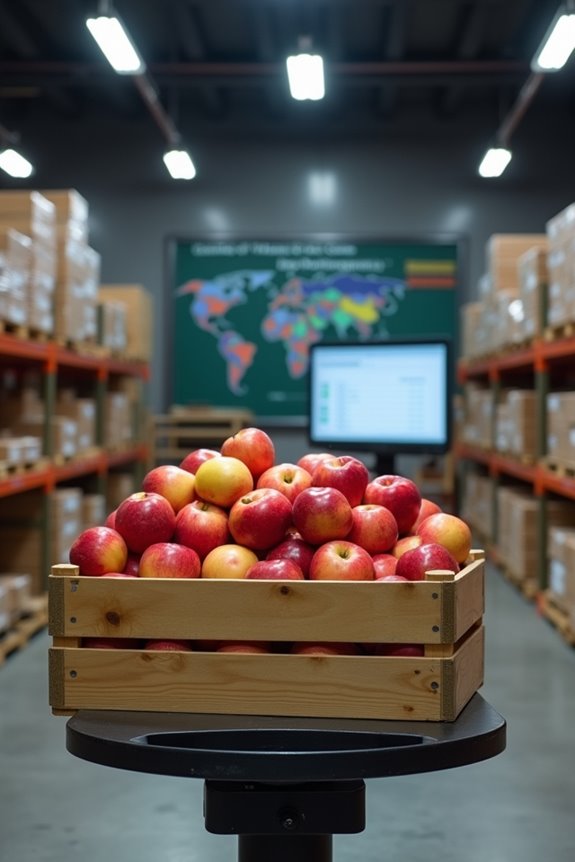
How far do you think your apples travel before they reach your kitchen? I’ll tell you—it’s often hundreds of miles. Your apples journey through a complex supply chain involving trucks, trains, and ships. Each transportation method adds freight costs that directly impact what you pay at checkout.
Here’s where it gets interesting: distance to market matters significantly. An apple grown near you costs less to distribute than one shipped cross-country. Storage costs compound these expenses too. Controlled atmosphere facilities keep apples fresh longer, but they’re expensive to operate and maintain.
Regional production differences mean logistics constantly shift. When apples come from farther away, those transportation miles stack up quickly. Packaging for protection during transit? That’s another line item. All these supply chain factors—transportation, distribution, storage—combine to influence your final price per pound.
Organic Apples: What the Premium Really Covers
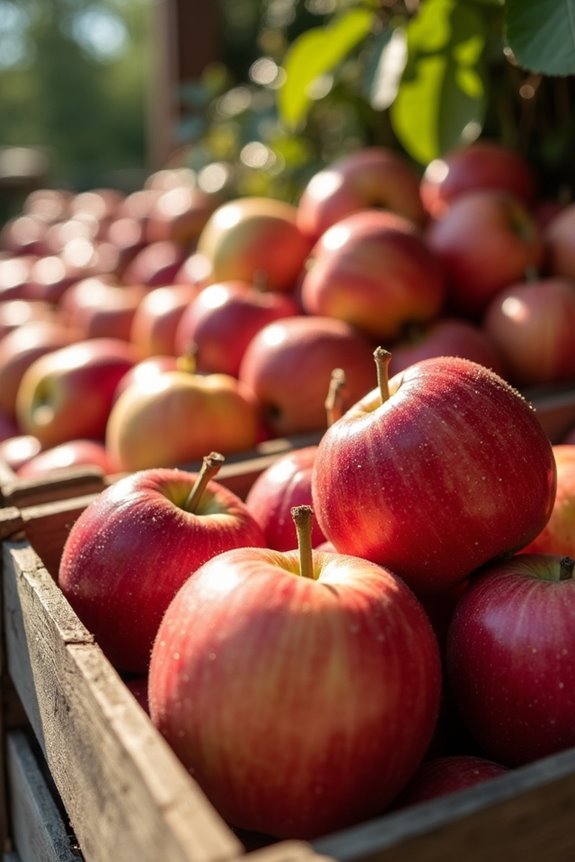
Ever noticed that organic apples cost nearly double what conventional ones do at the grocery store? I’ve wondered too. Here’s what you’re actually paying for:
The Premium Breakdown:
- Strict certification requirements that farms must meet yearly
- Higher production costs from avoiding synthetic pesticides and fertilizers
- Premium varieties like Honeycrisp command extra prices due to demand and superior texture
- Rigorous testing and documentation throughout the supply chain
- Consumer willingness to pay reflects perceived quality and health benefits
When I buy organic, I’m investing in farming practices that cost more upfront. Certification processes alone add significant expenses. Premium varieties yield less per tree, justifying their retail price. These factors combine to create that noticeable price gap—but they’re covering real, tangible costs that conventional apples don’t require.
How Grocery Store Competition and Seasonal Demand Move Prices
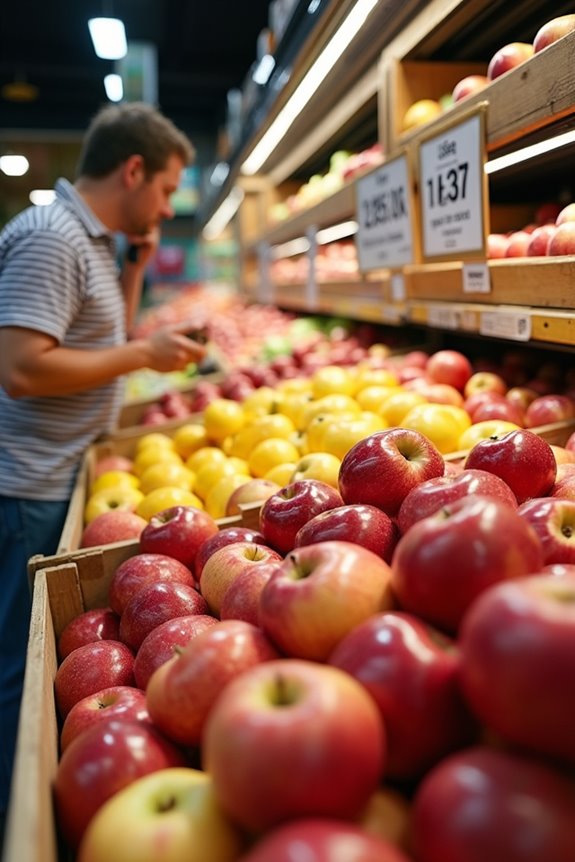
Grocery stores in your neighborhood are constantly battling each other to attract shoppers, and that competition directly affects what you’ll pay for apples at checkout. When stores compete, they keep per-pound prices steady in the mid- to high-$1 range—you’ll spot local listings around $1.29–$1.59. This grocery store competition shapes everything from selling units like bushels and pecks to actual price per bushel. Seasonal demand shifts hit hard during fall harvest when supply abundance crashes prices down. Off-season? Prices climb. Regional price variance matters too—Mutsu apples might run $20 per bushel in Tennessee while Red Delicious hits $24 elsewhere. Premium varieties demand higher prices due to limited yields, whereas common types stay cheaper. Understanding these forces helps you spot genuine deals and shop smarter.