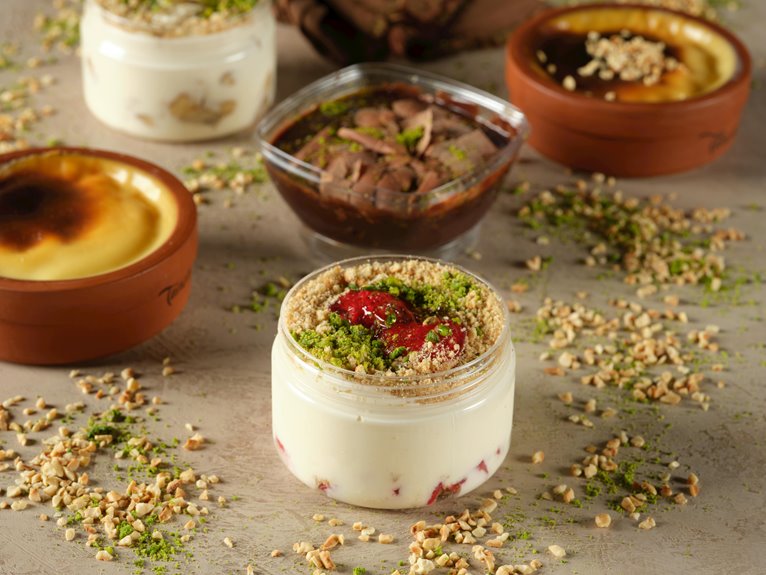
A sabayon is a French custard—just egg yolks, sugar, and wine whisked together over gentle heat until they transform into something light, foamy, and silky. The transformation occurs through constant whisking, which incorporates air while heat thickens everything to around 160°F. You’ll know it’s ready when it briefly holds its shape, then loosens into ribbons. It’s elegant yet simple, and there’s plenty more technique to master if you want to nail it every time.
Sabayon: A Custard From Simple Ingredients
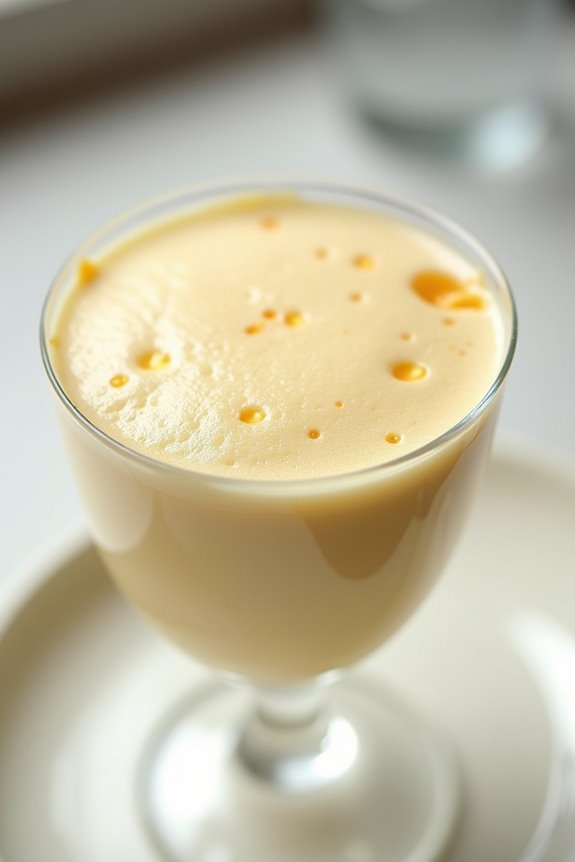
What makes a dessert taste elegant while using only three basic ingredients? Sabayon. This French custard comes together with just egg yolks, sugar, and wine. You whisk them over simmering water until the mixture becomes light, foamy, and creamy. That’s it. The transformation happens through heat and air. As you whisk, the egg yolks warm gently while trapping tiny bubbles, creating that characteristic airy texture. You’ll know it’s ready when it holds its shape briefly, then loosens into a silky sauce. This dessert is accessible—no fancy equipment needed, only patience and a whisk. You’re basically making clouds from ingredients you probably already have at home.
How Sabayon Differs From Zabaglione and Other Cousins
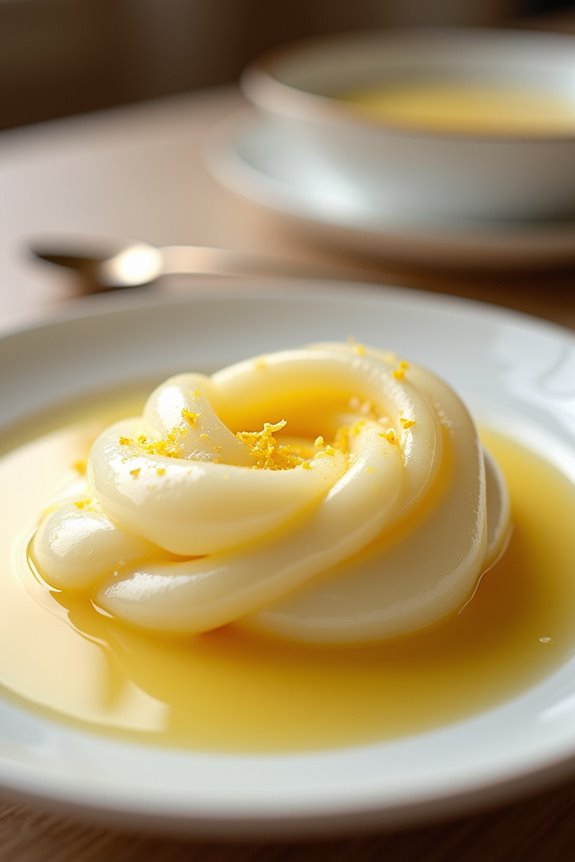
Sabayon and zabaglione are basically the same dessert with different names. The French call it sabayon, the Italians call it zabaglione, and they’re nearly identical custards made from egg yolks and sugar whisked together until frothy.
The real differences? Wine choice matters. Traditional zabaglione uses Marsala wine, while sabayon typically calls for white wine, champagne, or even non-alcoholic substitutes. That swap changes the taste slightly, giving each version its own character.
Here’s where texture comes in—this is important. Both should be light, foamy, and ribbony, holding their shape briefly when you lift your whisk. The key? Don’t overcook them, or you’ll end up with scrambled eggs instead of that silky custard you’re after.
Sabayon’s 1:1:1 Formula: Egg Yolks, Sugar, and Wine
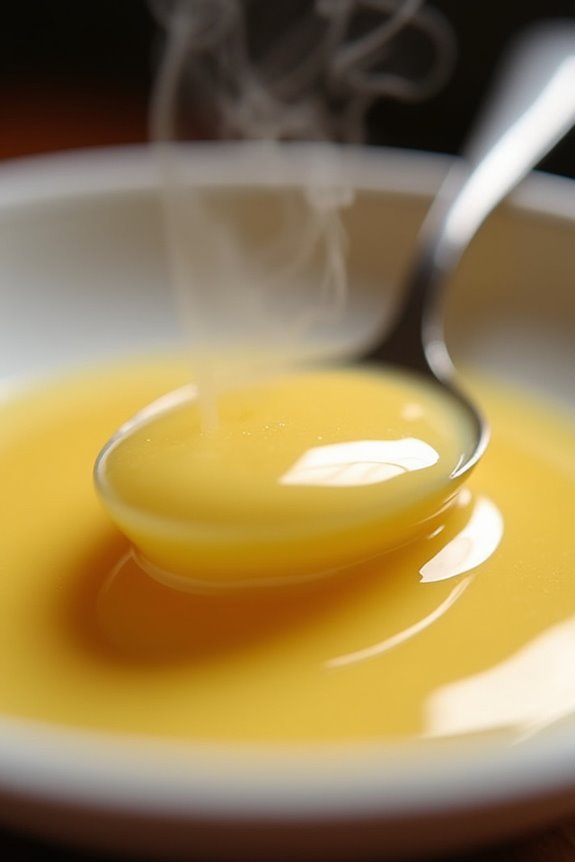
I’ll show you the simplicity of sabayon: it’s all about one elegant formula—equal parts egg yolks, sugar, and sweet wine by volume, so whether you’re making one serving or ten, you just multiply the same 1:1:1 ratio (like 1 yolk, 1 tablespoon sugar, 1 tablespoon wine per person). You’ll whisk this mixture over simmering water, watching it thicken into a foamy sauce as it climbs from room temperature to around 150–160°F, and that temperature range is your target for achieving the proper creamy texture without overcooking the eggs.
Simple Scaling Ratios
How do you make enough sabayon for two people without ending up with enough for ten? I’ll tell you: the 1:1:1 ratio makes scaling simple.
Here’s what I do:
- Start with one serving: 1 egg yolk, 1 tablespoon sugar, 1 tablespoon sweet wine
- Double it for two people: 2 yolks, 2 tablespoons sugar, 2 tablespoons wine
- Triple or quadruple by multiplying each ingredient equally
- Halve the recipe if you’re cooking solo
The advantage? I maintain the same proportional relationship no matter what. Whether I’m whisking for myself or friends, the sabayon develops that light, foamy texture because the ratios stay consistent. I’m not juggling different measurements or second-guessing myself. This scaling approach works with any sweet wine too—the formula adapts while keeping everything balanced and straightforward.
Temperature and Texture Guidelines
Getting the temperature right is where sabayon goes from soupy to silky, and honestly, it’s the part that makes or breaks the whole thing. You’ll want to whisk your egg yolks, sugar, and wine over simmering water, aiming for 160°F (71°C). This temperature creates a frothy and appealing mixture. Keep whisking continuously—don’t stop—until it forms ribbons when you lift your whisk. Want to burn off the alcohol? Push it to 173°F (78.3°C). Here’s where texture gets fun: whisk less for a lighter sauce, or keep going for a thicker, pudding-like consistency. The result comes when you find your sweet spot, creating sabayon that holds its shape beautifully on your plate.
The Double Boiler Method: How to Make Sabayon
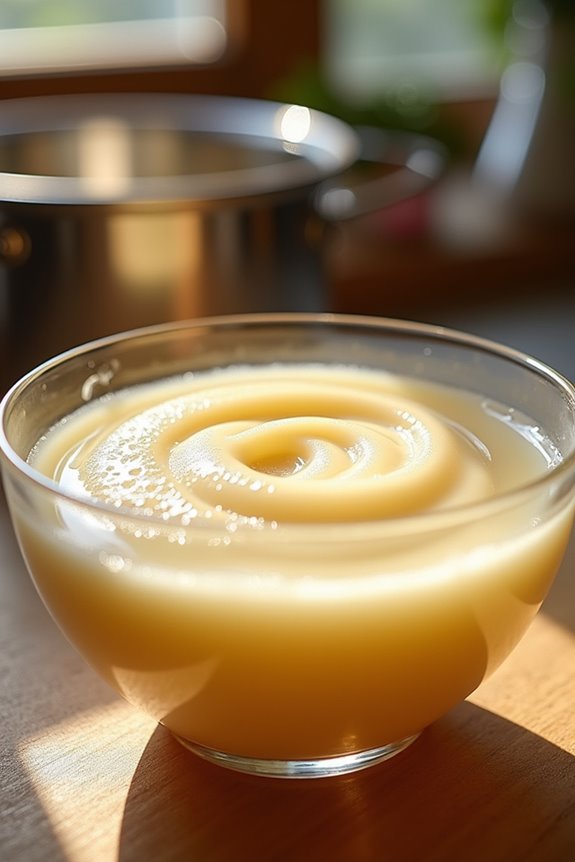
Since sabayon’s delicate texture depends on gentle, consistent heat, the double boiler method is your best bet for success. Here’s how I make it:
- Place a heatproof bowl over simmering water—never touching the water directly
- Whisk egg yolks and sugar until foamy and light
- Gradually add wine while whisking continuously to prevent curdling
- Keep whisking over heat until the mixture reaches 150°F and holds its shape for 15 seconds
The steam gently cooks your yolks while air beaten in creates that signature frothy, mousse-like texture. Continuous whisking is essential—it’s what keeps everything smooth and prevents scrambled eggs. I serve sabayon immediately after thickening, though you can prep it hours ahead and gently reheat before serving.
Why Sabayon Temperature Control and Whisking Technique Matter Most
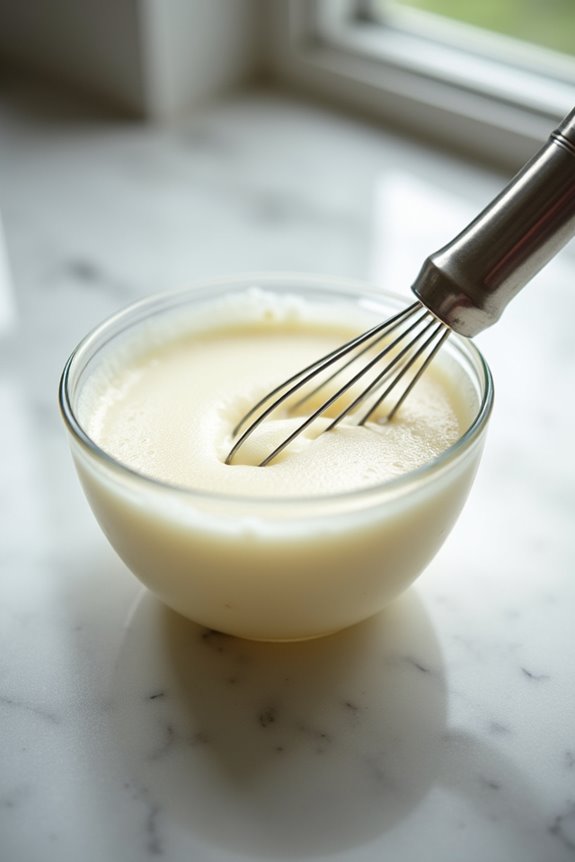
When you’re making sabayon, two things’ll make or break your dessert: nailing the temperature and keeping your whisk moving without pause. I’ve learned this the hard way—rushed whisking creates lumps, not clouds.
| Temperature | What Happens | Your Move |
|---|---|---|
| Below 150°F | Mixture stays thin, won’t hold shape | Keep whisking over heat |
| 150–160°F | Perfect thickening, ribbony texture | You’re at the target |
| Above 173°F | Alcohol burns off, eggs risk curdling | Pull back from heat |
Continuous whisking incorporates air into your sabayon, transforming it from liquid into that signature foamy mousse. Stop whisking, and you’re inviting curdled eggs to the party—nobody wants that. Keep your whisk steady, watch your thermometer closely, and you’ll achieve that smooth texture that holds shape for about fifteen seconds when dripped. That’s the sweet spot.
Serving, Storing, and Pairing Sabayon
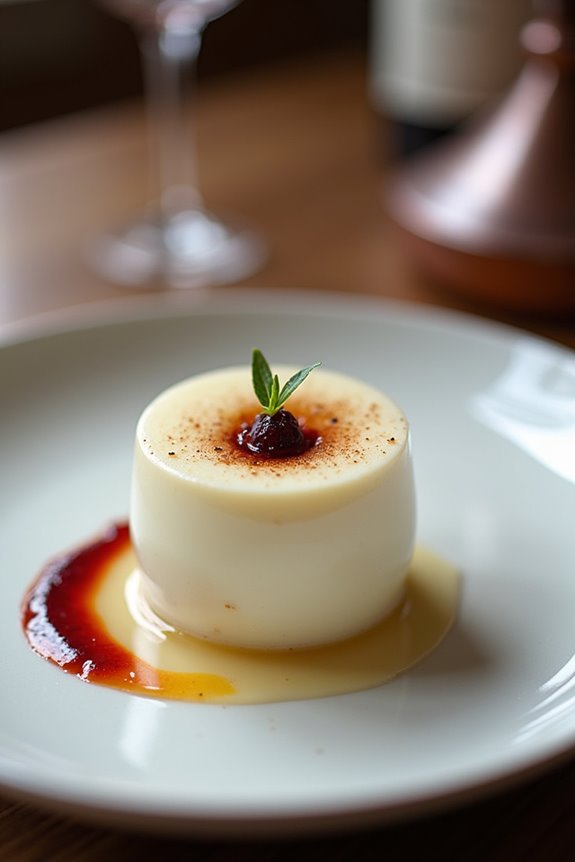
How you serve your sabayon matters just as much as how you make it, because timing and temperature are everything. I’ve learned that this custard works best when it’s warm and freshly made, though you’ve got flexibility depending on your plans.
Timing and temperature are everything with sabayon—serve it warm and freshly made for the lightest, fluffiest texture.
Here’s what works best:
- Serve warm immediately after making for the lightest, fluffiest texture
- Let it cool to room temperature if you’re preparing ahead
- Chill it completely for a firmer consistency that holds its shape
- Store covered in the refrigerator for up to 24 hours
When pairing sabayon, I reach for fresh berries, pastries, or drizzle it over cakes. The creamy richness complements tart fruit well. Whether you’re serving it as a sauce or standalone, this versatile dessert enhances any meal.
Savory Sabayon and Boozy Twists: Creative Variations Worth Trying
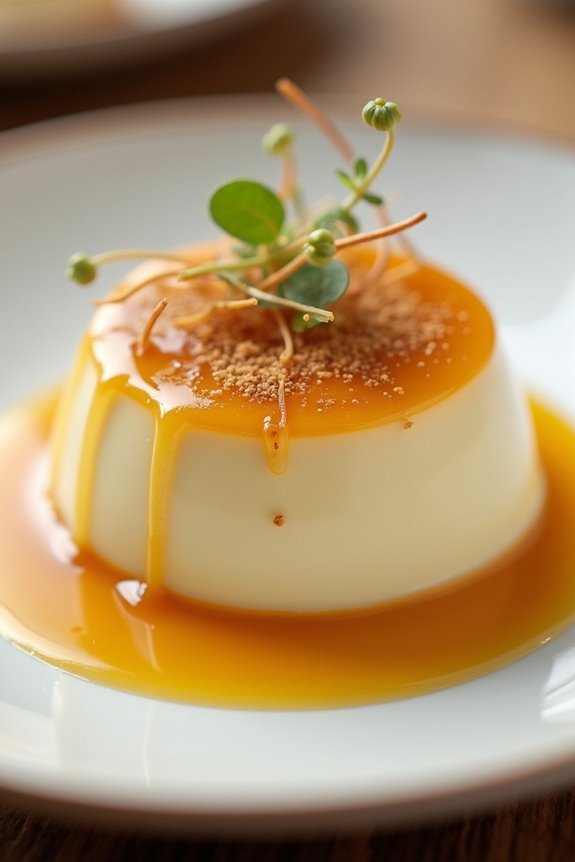
What if I told you that sabayon doesn’t have to be sweet? I’ve discovered that savory sabayon opens up entirely new possibilities. By omitting sugar and whisking white wine instead, you’ll create a non-sweet, airy sauce you can season with salt. Here’s where it gets interesting: try champagne with lemon juice and zest plus cayenne for brightness and heat, or white wine with rosemary for herbaceous depth. Want something bolder? Boozy twists using Marsala, Grand Marnier, or Sherry create distinct alcohol-forward notes that work well for special occasions. The technique stays identical—rapid whisking over simmering water produces that signature mousse-like texture. Whether you’re topping seafood, layering with vegetables, or experimenting beyond dessert, these variations prove sabayon’s versatility. You’re not just making sauce; you’re joining a creative cooking community that challenges traditions.