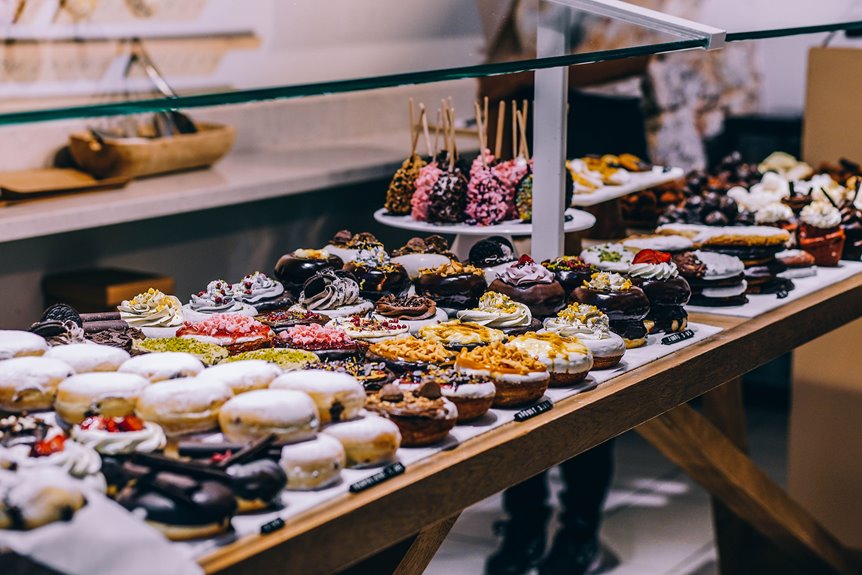
You have solid options for gluten-free desserts: national bakeries like Arise and Bread SRSLY ship nationwide, while Erin McKenna’s reaches you via Goldbelly. Major retailers—Whole Foods, Trader Joe’s, Target, Costco, and Thrive Market—all stock dedicated gluten-free sections.
When ordering online, check for certified gluten-free labels, inspect packaging for cross-contamination warnings, and verify insulated shipping with ice packs arrives within 48 hours.
Regional bakeries deliver faster with local flavors in mind. Support these small businesses, and you’ll fuel continued innovation in grain-free creativity.
There’s plenty more detail on what makes each option worth your consideration.
Online Gluten-Free Bakeries That Ship Nationwide
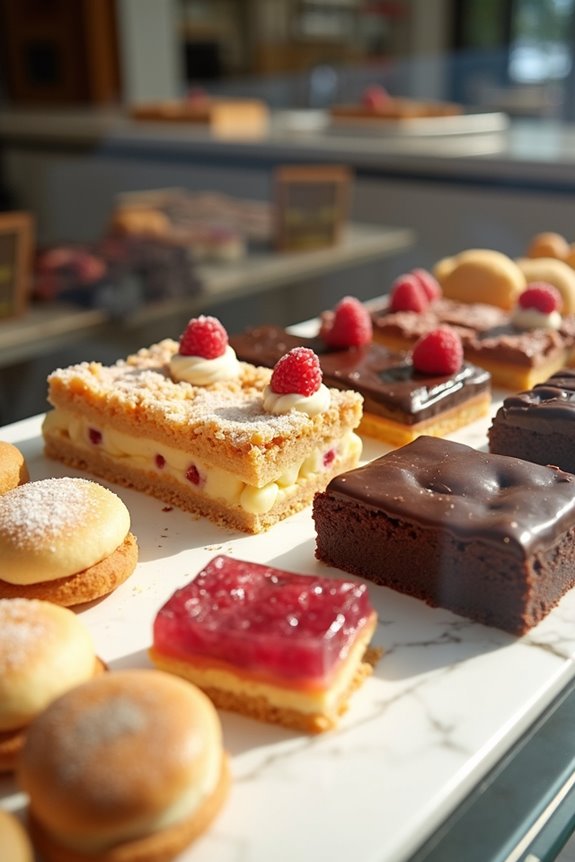
Several fantastic bakeries across the country will ship gluten-free goodies right to your door, so you don’t have to hunt down quality treats in your local area. Arise Bakery in Humboldt County, California offers nationwide shipping and their Wild Yeast Sourdough is a notable white bread choice. Bread SRSLY in San Francisco ships various loaves when they’re available, having grown from farmers markets into an online operation. For something sweeter, Erin McKenna’s Bakery uses Goldbelly to reach customers nationwide from their NYC, LA, and Orlando locations—their frosted lemon teacake and cupcakes are popular options. Daniels Bakery in New York handles gluten-free shipping too, with macarons as a specialty. These gluten-free shipping options mean quality desserts arrive at your home without the effort of local searching.
Regional Gluten-Free Bakeries Worth Ordering From

Skip the nationwide shipping wait and order from bakeries that know your region’s tastes. Regional gluten-free bakeries offer distinct qualities—they understand local preferences and deliver faster. These bakeries ship online while staying true to their communities.
| Bakery | Location | Specialty |
|---|---|---|
| Arise Bakery | Humboldt County, CA | Wild yeast sourdough |
| Bread SRSLY | San Francisco, CA | Variety of loaves |
| Daniels Bakery | NYC | Gluten-free macarons |
| Erin McKenna’s Bakery | NYC, LA, Orlando | Frosted lemon teacakes, loaves |
Ordering from a gluten-free bakery near you means fresher products arrive quicker. Arise Bakery ships sourdough with quality wild yeast cultures, while Bread SRSLY offers versatile loaves. Daniels Bakery’s macarons are worth ordering, and Erin McKenna’s ships from multiple locations via Goldbelly.
National Retailers Stocking Gluten-Free Desserts
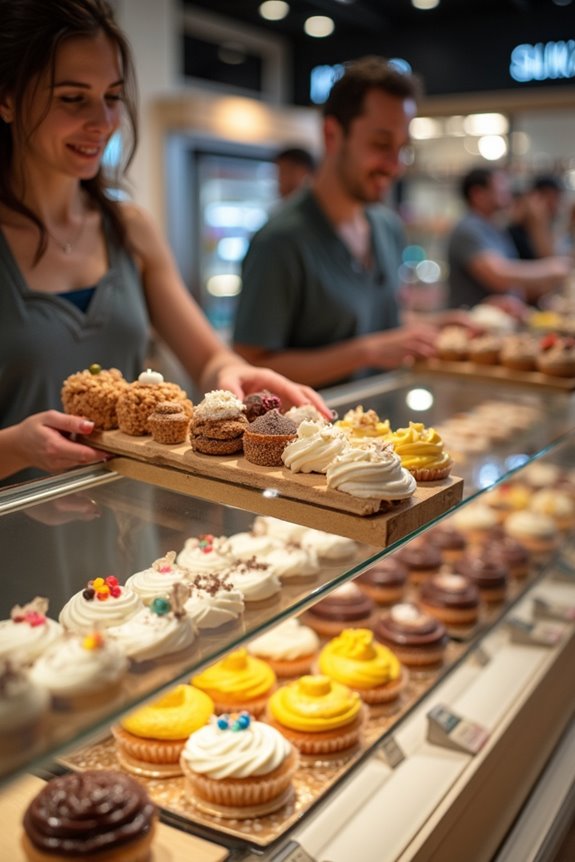
While regional bakeries deliver that fresh-from-the-oven quality, you don’t need to wait days for shipping—major retailers stock gluten-free desserts right now. Whole Foods, Trader Joe’s, Target, Costco, and Thrive Market all carry dedicated gluten-free sections with dairy-free options included. You’ll find frozen desserts, cookies, and pies under their own gluten-free labels, making shopping straightforward. Store brands often feature dairy-free varieties too, so you’re not limited to specialty items. National brands provide consistent availability across the U.S., whether you’re grabbing chocolate, cookies, or baked goods. Thrive Market ships nationwide if your local store lacks selection. These retailers recognize that finding suitable treats should be simple—they’ve built their inventory with folks like you in mind.
Safety, Labeling, and Shipping: Decision Criteria
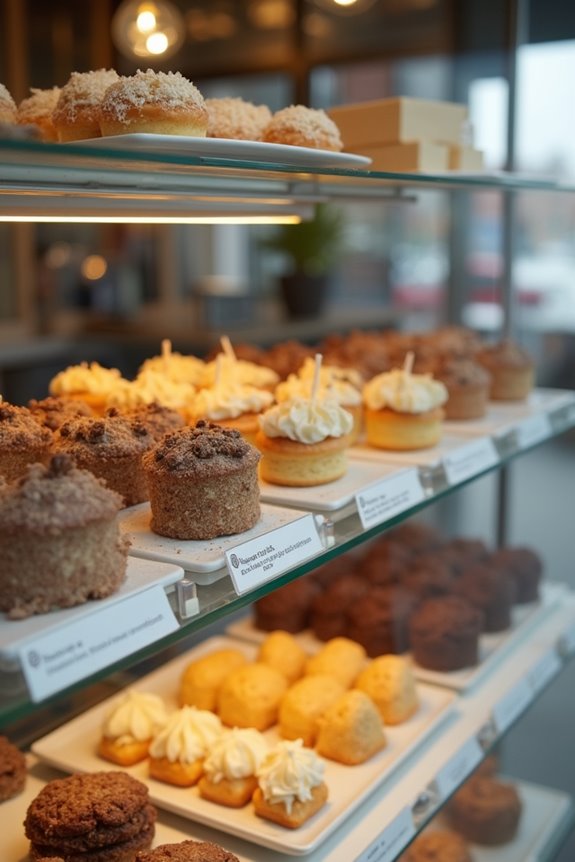
When you’re ordering gluten-free desserts online, I check three critical things before hitting that buy button: whether the product carries certified gluten-free labeling, how carefully the company prevents cross-contamination in their facility, and if their shipping method keeps perishables fresh during transit. Reading labels means looking past marketing claims and actually spotting that gluten-free flour blend or certified seal, plus scanning for those sneaky allergen warnings that tell you about shared equipment or processing risks. The delivery logistics matter just as much as the product itself—I want insulated packaging with ice packs and clear cold storage instructions so my cookies arrive fresh, not melted or compromised during their journey across the country.
Cross-Contamination Prevention Measures
How do you know if a gluten-free dessert’s actually safe to eat? I check for gluten-free certification first—it’s your best guarantee. Look for protective wrapping and dedicated facility labels, which tell you the company takes cross-contamination seriously.
When ordering online, I verify that companies use insulated packaging with cold packs. Temperature control matters because improper shipping can compromise safety. Upon arrival, I refrigerate items immediately or consume them promptly to minimize gluten exposure.
I also read ingredient lists carefully, confirming gluten-free flour blends are used. Dark chocolate’s typically dairy-free, but I still verify certifications since milk chocolate often contains dairy.
These steps might seem like extra work, but they’re worth it. You’re protecting yourself, and that’s what matters most.
Reading Labels Carefully
Beyond checking for certifications and proper packaging, the real detective work happens when you’re actually holding the product and reading what’s on the label. I look for explicit certified gluten-free labeling first—it’s your best option. Then I scan the ingredient list for gluten-free flours like oat, almond, coconut, or tapioca blends instead of wheat flour.
| What to Check | Why It Matters | Red Flags |
|---|---|---|
| Certified gluten-free stamp | Third-party verification | Missing certifications |
| Ingredient list details | Confirms actual flour used | “May contain wheat” |
| Facility production notes | Shows cross-contact controls | Shared equipment warnings |
I also verify dairy content since some desserts sneak in milk chocolate or hidden dairy ingredients. When shopping online, I prioritize products with clear, up-to-date labeling and third-party certification. This approach reduces risk and keeps me confident in my choices.
Shipping Method Reliability
Once you’ve found a bakery with trustworthy labeling, the next challenge is making sure your gluten-free desserts actually arrive in good condition—and still safe to eat.
I look for bakeries that use insulated shipping with ice packs and clear refrigeration instructions. These details matter because delicate treats need protection during transit. Check if your vendor freezes items for peak quality and uses packaging that preserves freshness up to 48 hours—that’s your safety window.
Before ordering, scan their shipping policies and FAQs. Do they document handling procedures? Do they mention cross-contact prevention during packing? Transparent vendors usually spell this out. Avoid places that skip shipping details or gloss over how they prevent contamination. Your desserts should arrive fresh and safe to eat.
Dairy-Free, Paleo, and Keto Dessert Options

Are you hunting for desserts that skip the dairy, grains, and refined sugar all at once? You’re not alone. I’ve found that brands like Sweet Laurel work well for people like us seeking paleo and keto-friendly options. These bakeries use alternative flours and natural sweeteners instead of the usual suspects. What I appreciate most? Clear labeling. When I’m shopping—whether online or in-store—I can quickly spot dairy-free certification and clean ingredient lists. Many retailers now partner with these brands, making it easier to find what we need without hunting forever. You’ll discover treats that actually taste good while fitting your lifestyle. That’s the sweet spot.
Evaluating Freshness and Quality in Shipped Orders

When you’re ordering gluten-free desserts online, checking a bakery’s packaging standards—insulated boxes, ice packs, and guaranteed 24–48 hour delivery windows—helps preserve quality during transit. Once your order arrives, inspect the condition immediately, looking for signs of melting, damage, or temperature abuse, then follow the vendor’s refrigeration advice to maintain freshness. Also check shelf life details before you buy—whether items are frozen, treated with preservatives, or meant to be eaten within days—so you can plan accordingly and avoid disappointment.
Packaging Protection Standards
Shipping frozen desserts across the country isn’t simple—it requires careful consideration about how to keep your treats fresh and delicious from the bakery’s door to yours. I’ve learned that quality packaging separates successful arrivals from disappointing ones. When you order gluten-free desserts online, reputable bakeries use protective wrapping, cold packs, and insulated boxes working together. They’re not cutting corners here.
| Protection Method | Purpose |
|---|---|
| Gel packs or dry ice | Maintains low temperatures |
| Insulated boxes | Prevents temperature fluctuations |
| Protective wrapping | Shields from moisture damage |
Most quality shops guarantee freshness for up to 48 hours in transit. Here’s what matters: you’ll refrigerate immediately upon arrival. This isn’t just packaging—it’s your bakery’s commitment to you. When you see these standards, you’re joining a community that maintains consistent quality standards.
Arrival Condition Assessment
How can you tell if your gluten-free desserts arrived in perfect condition? First, check your packaging immediately upon arrival. Look for any melted spots, warm areas, or leaking ice packs—these signal temperature problems during shipping. Open your box and inspect each item for texture changes or discoloration.
Next, follow the storage instructions included with your order. Most gluten-free bakeries recommend refrigeration right away to maintain freshness. Place everything in your fridge within minutes of opening, especially frozen treats or delicate items prone to melting.
Don’t hesitate to examine packaging for dietary certifications and handling notes. You’re joining a community of smart shoppers who understand that proper assessment protects your investment. If something feels off temperature-wise or looks unusual, contact the bakery immediately.
Shelf Life Verification Methods
Once your desserts have passed the arrival inspection, the real work begins—figuring out how long they’ll actually stay delicious. I always check product pages for stated shelf life and refrigeration times first. Then I look at packing inserts, which often contain freeze-to-store guidance you won’t find elsewhere. Here’s what I verify:
| Verification Method | What to Look For |
|---|---|
| Product pages | Shelf life dates, storage instructions |
| Packing inserts | Freeze or refrigerate recommendations |
| Vendor guarantees | “48-hour freshness” claims |
| Customer reviews | Real reports on freshness after arrival |
| Temperature notes | Shipped frozen, partial, or room-temp |
I cross-reference vendor guarantees with customer testimonials to see if freshness claims actually hold up. This combination approach keeps me confident about quality and helps me plan when I’ll enjoy each dessert.
Cost Comparison: Bakery Direct vs. Retail vs. Subscription
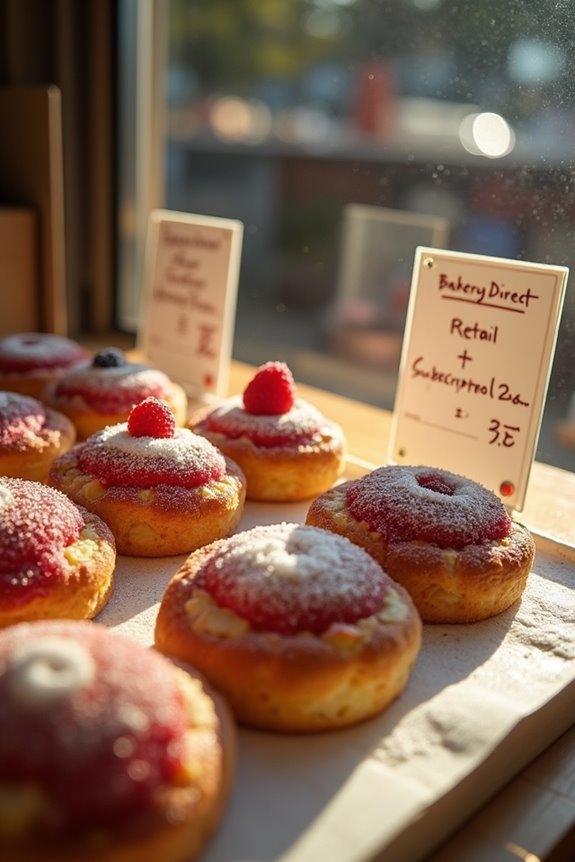
Where you buy your gluten-free desserts can dramatically affect your wallet—and sometimes the quality of what lands on your plate. Direct bakery orders run premium, like $80 for a cake, but you’re paying for freshness and protective shipping with insulated packaging and ice packs. Retail stores offer lower per-unit costs, especially when buying bundles or bulk quantities, though availability varies by location. Subscriptions? They’re your best value option for savings. These recurring orders—whether baking mixes or cookie tins—reduce costs significantly compared to one-off purchases. Factor in shipping logistics too. Direct bakery shipping preserves texture better than standard cross-country courier services, which matters when you’re investing in gluten-free quality. Your budget determines your best option, but subscriptions typically offer the most value over time.
Shipping, Storage, and Handling Best Practices
When you order gluten-free desserts online, the bakery’s packaging choice is important—insulated boxes with ice packs keep your treats at the right temperature during shipping, whether they’re crossing state lines or arriving at your doorstep in a few days. Once your package arrives, you’ll want to follow the storage guidelines that come with it: refrigerate immediately, freeze items you won’t eat right away, and pay attention to those shelf-life windows so you’re eating everything at peak freshness. Understanding these shipping timelines and handling steps means you’ll actually enjoy the quality bakers worked hard to preserve, rather than opening a box of crumbled disappointment.
Packaging For Temperature Control
How do gluten-free desserts stay fresh when they’re traveling across the country to reach your doorstep? The answer lies in thoughtful insulated packaging and strategic cold pack placement. Quality bakeries like Treats from NYC freeze their treats before shipping, then wrap everything in protective layers and surround items with ice packs. This setup keeps your goodies cool for up to 48 hours during transit, which matters because gluten-free desserts are more sensitive to temperature fluctuations than regular baked goods. The insulated packaging acts like a mini cooler, preventing moisture from sneaking in and ruining that perfect texture you’re craving. When your box arrives, you’ll see clear instructions telling you to refrigerate immediately or freeze for later storage. It’s a straightforward system that works.
Storage Guidelines And Shelf Life
Once your gluten-free desserts arrive at your door, what you do in the first few hours really matters. I always refrigerate perishable items immediately—especially anything with dairy or fillings—and consume them within a few days for best taste. Here’s my storage guidelines approach: seal packages tightly, keep everything away from heat, and check your bakery’s specific instructions first because they know their products best.
Many items freeze beautifully. I pop mine in the freezer, then thaw slowly in the refrigerator before serving to maintain that perfect texture and flavor. Some bakeries guarantee freshness for 48 hours during transit, but don’t push it. Cookies, cakes, and pastries with gluten-free formulations need proper care to stay delicious. Follow those storage tips, and you’ll enjoy bakery-quality treats at home.
Shipping Timeline And Delivery Options
Getting your gluten-free desserts to your door safely is just as important as storing them properly once they arrive. Most nationwide bakeries use insulated packaging with ice packs to keep treats fresh during transit. Here’s what you should know:
- Standard shipping options take 3–5 business days; express courier arrives faster
- Insulated packaging maintains freshness for 24–48 hours without refrigeration
- Many shops use Goldbelly or similar platforms for reliable delivery
- Some bakeries require minimum order quantities before shipping
- Frozen items arrive ready to thaw in your fridge
Once your order arrives, refrigerate everything immediately. Most gluten-free baked goods stay fresh for several days when properly stored. Always check the bakery’s specific instructions—they know their products best.
Direct Relationships: Loyalty, Subscriptions, and Community

Why stop at a one-time purchase when you can build an actual relationship with your favorite gluten-free bakery? Many shops offer loyalty programs and subscriptions that reward your repeat business. Sign up for their newsletter or mobile app, share your birthday, and you’ll access personalized discounts like TREATSNOW15 for $15 off orders over $80. Some bakeries create curated baking mix bundles that encourage ongoing orders, while others feature rotating “Shop Best Sellers” sections tailored to repeat customers. Beyond deals, these communities share recipes, blog updates, and customer testimonials that create a sense of connection. You’re not just buying desserts—you’re joining a community of people who understand why gluten-free matters to you.
Why Supporting Small Bakeries Matters (and How to Do It)
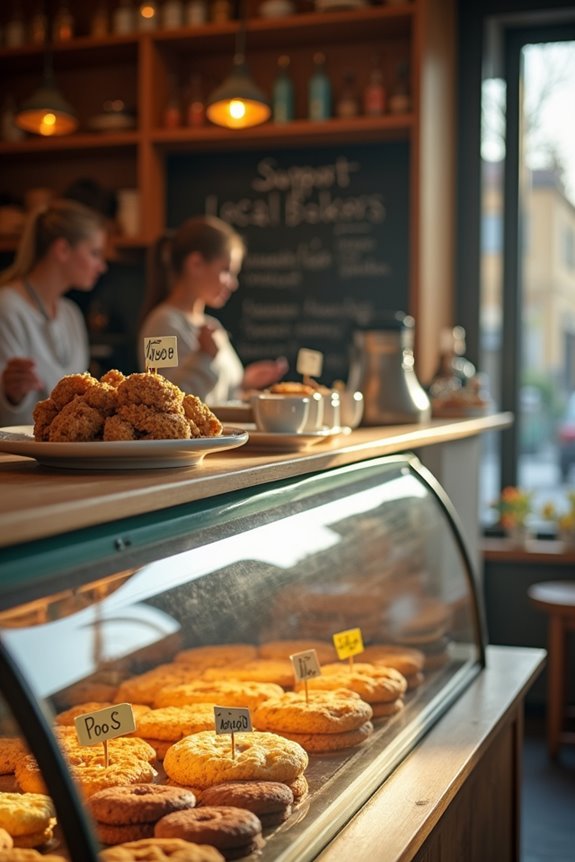
Beyond the loyalty programs and community perks, there’s something bigger happening when you choose a small gluten-free bakery over a chain store. You’re directly fueling innovation and preserving the dessert diversity your community deserves.
When you choose a small gluten-free bakery, you’re fueling innovation and preserving the dessert diversity your community deserves.
Supporting small businesses means:
- Fresher products arrive at your door with transparent ingredient labels
- Bakers tailor treats specifically for your allergies and dietary needs
- Nationwide shipping brings specialty GF and DF options to your kitchen
- Local economies strengthen when your money stays close to home
- Seasonal flavors and experimental recipes flourish instead of disappearing
When you buy from gluten-free bakeries, you’re not just getting dessert. You’re telling talented bakers, “Keep doing this.” You’re voting for grain-free creativity, paleo innovations, and vegan-friendly options. That support cascades through your entire community, making better choices accessible for everyone who needs them.