
I’ll be honest—baking soda can lighten surface stains, but it won’t dramatically whiten your teeth or change your natural tooth color. You’ll see modest results after a few weeks of consistent brushing, especially combined with regular toothpaste.
However, here’s the catch: it lacks fluoride, and overusing it can actually damage your enamel, making your teeth more sensitive and cavity-prone.
If you want real whitening power, stick around to discover safer options that actually work.
Does Baking Soda Actually Whiten Teeth?
So, does baking soda really work as a teeth whitener? Yes, but with important limits. I’ve found that baking soda acts as a mild abrasive, helping remove surface stains and reveal brighter underlying enamel when you brush regularly. It’s effective for lightening surface discoloration, which is good news for your wallet and your bathroom cabinet.
Here’s the catch: baking soda can’t change your teeth’s natural color or treat deeper, intrinsic stains. It also lacks fluoride, so overuse can soften your tooth enamel, increasing sensitivity and cavity risk. For stronger whitening results, I mix baking soda with hydrogen peroxide. The best approach? Use it as a supplement to your regular oral health routine, reserving professional whitening for substantial staining.
What Results Should You Realistically Expect?

When you’re considering baking soda as a whitening solution, it’s important to understand what it can and can’t do for your smile. Here’s the real deal: baking soda works as a mild abrasive that tackles surface stains, but you won’t wake up with movie-star teeth overnight. Most people notice meaningful results after several weeks of consistent use, not days.
The whitening timeline depends on how often you use it and your starting point. Since baking soda removes surface stains only, it won’t lighten your tooth’s natural color or fix deeper stains hiding inside your enamel. Regular brushing combined with baking soda gives better results, though you’ll want professional whitening for dramatic changes. Just remember: overusing this mild abrasive risks enamel wear and sensitivity, so moderation matters.
How to Use Baking Soda Safely
Using baking soda for teeth whitening doesn’t have to be complicated, but getting the technique right really does matter. I’ll walk you through safe use so you can tackle surface stains without damaging your smile.
| Step | Action | Frequency |
|---|---|---|
| Mix | Combine baking soda paste with water or hydrogen peroxide | Once daily |
| Brush | Apply gentle abrasive using soft circular motions | Twice daily |
| Rinse | Thoroughly remove all paste; avoid swallowing | After each use |
Brush twice daily for two weeks to see noticeable results, then ease off. This prevents enamel wear and enamel sensitivity. Skip baking soda around braces or exposed hardware entirely. If sensitivity develops, stop immediately and consult your dentist. Safe use means enjoying whitening benefits while protecting your teeth long-term.
Why Overuse Damages Enamel
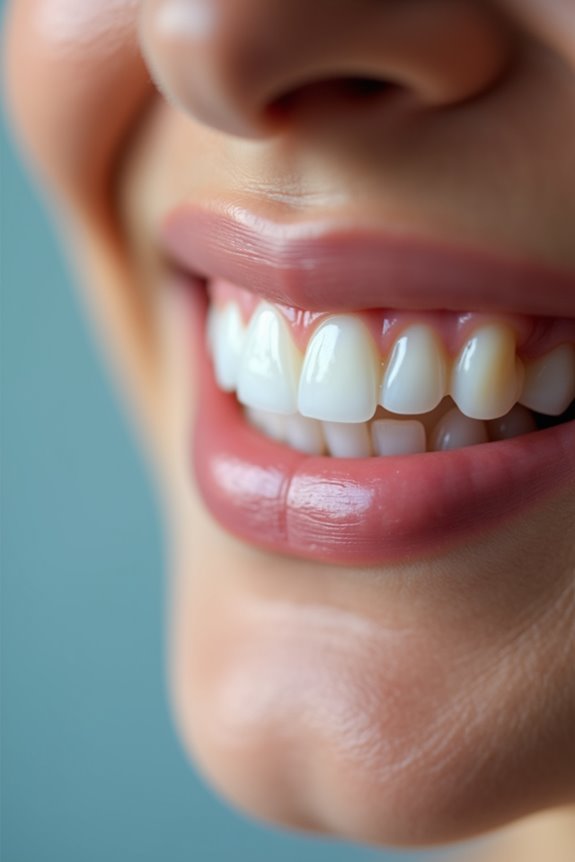
Although baking soda can tackle surface stains effectively, overdoing it puts your enamel at serious risk. Here’s what happens: baking soda overuse acts like sandpaper on your teeth. Its mild abrasive nature gradually wears down enamel through aggressive brushing, smoothing that natural shine right off. When enamel thins, dentin exposure follows—that’s when you’ll notice tooth sensitivity kicking in during your morning coffee or when eating ice cream.
The real problem? Baking soda lacks fluoride, which protects your enamel. Without it, cavity risk increases, and your teeth become more vulnerable overall. You’re basically leaving your enamel defenseless. Enamel protection requires fluoride, not just abrasive action. ADA-recommended whitening methods include both ingredients for good reason.
Stick with occasional baking soda use, not daily routines.
Safer Alternatives to Baking Soda
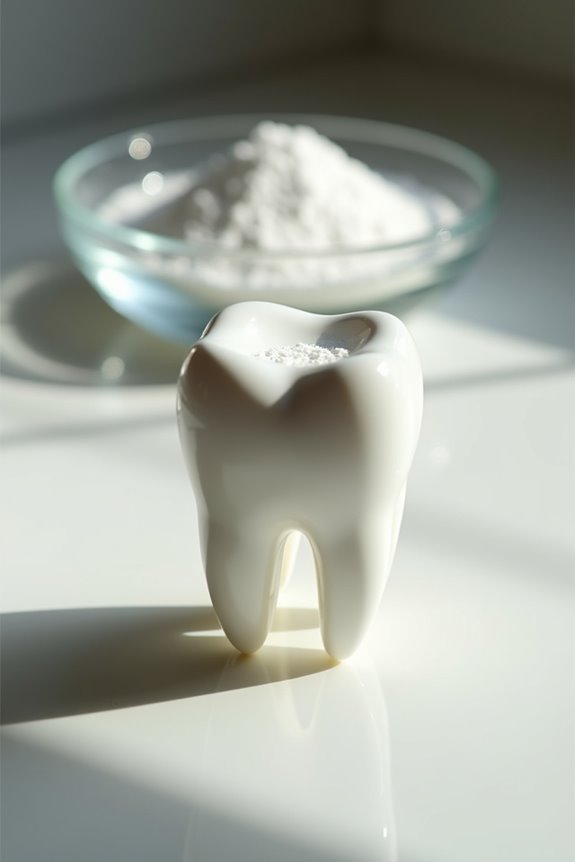
So what should you reach for instead? I’d recommend exploring ADA-approved whitening toothpaste or over-the-counter whitening strips, which offer gentler enamel safety. These products actually protect your teeth better because they contain fluoride—something baking soda lacks. If you want personalized results, ask your dentist about take-home whitening trays tailored specifically for your mouth. They’re designed to minimize sensitivity while maximizing effectiveness. For dramatic results fast, professional in-office whitening delivers impressive outcomes with fewer side effects than DIY alternatives. Fluoride-containing products deserve special attention since they fight cavities simultaneously while brightening your smile. You’re not compromising results by choosing these safer options; you’re simply being smarter about protecting your teeth while achieving the whiteness you want.
When to Skip DIY Whitening and See a Dentist
If you’re dealing with stubborn stains that won’t budge after a few weeks of baking soda treatments, or if your teeth feel sensitive and tender, that’s your cue to book a dentist appointment. Professional whitening treatments work faster and stronger than DIY methods because dentists use higher-concentration products and can target both surface and deeper stains that baking soda simply can’t reach. Plus, a dentist can check whether your tooth sensitivity or discoloration is actually caused by something that needs medical attention rather than just cosmetic fixing.
Professional Whitening Benefits
When does baking soda stop being enough? That’s when I’d consider professional whitening. Here’s what makes dentist-supervised treatments different:
- Higher whitening concentration – Dentists use stronger agents than store-bought options, delivering noticeably brighter results faster
- Protective measures included – Professional teams apply safeguards to minimize sensitivity and protect your enamel safety
- Personalized solutions – I can choose in-office whitening for immediate results or take-home trays for convenience with dentist supervision
- Longer-lasting results – Professional treatments typically last months longer than DIY methods
Your dentist can also spot cavities, cracks, or gum issues that could worsen with baking soda. They’ll identify what’s really happening beneath the surface. With professional whitening, you’re getting faster, safer, and more predictable outcomes. That’s worth it.
Signs You Need Dentist
How do you know when baking soda and store-bought strips aren’t your answer? I’d schedule a dentist visit if you’re experiencing persistent tooth sensitivity, enamel wear, or gum irritation after whitening attempts. You’ll want professional guidance before trying DIY methods if you have untreated cavities or active gum disease—whitening agents can make these worse. Skip baking soda safety risks entirely if you’re wearing braces, have bonded teeth, or exposed roots; hydrogen peroxide and abrasive pastes damage these surfaces. Notice chips, cracks, or severe discoloration? That’s your sign. Professional whitening through in-office treatments or dentist-recommended trays addresses significant staining better than DIY approaches. Your dentist creates a personalized plan that protects your smile while delivering results you’ll actually see.