Baking soda water provides relief from heartburn by neutralizing stomach acid, but the effect is temporary and suitable only for occasional use.
Mix ½ teaspoon in at least 4 ounces of water, drink slowly, and space doses two hours apart from medications.
Do not use it daily or beyond two weeks without doctor approval, particularly if you have high blood pressure, kidney issues, or heart conditions.
The sodium content and electrolyte risks make this a short-term option, not a long-term solution, so knowing when to avoid baking soda altogether is most important.
What Does Baking Soda Water Actually Do in Your Body?
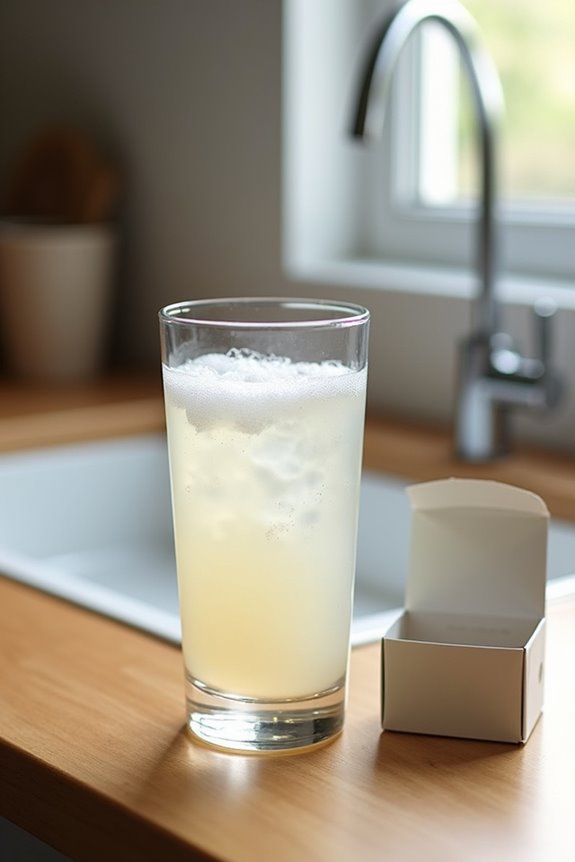
Ever wondered why people swear by baking soda water for heartburn? Here’s what actually happens: when you drink it, sodium bicarbonate creates a mild alkaline solution with a pH around 8.3–8.5. This compound buffers excess stomach acid by forming carbonic acid, CO2, and water—temporarily neutralizing that uncomfortable burning sensation.
But here’s the thing: it’s temporary relief only. Baking soda water doesn’t fix what’s causing your indigestion; it just quiets the symptoms short-term. Your body’s pH buffering system keeps your blood tightly regulated regardless, so don’t expect whole-body alkalinization.
The catch? Frequent use risks high sodium intake and electrolyte balance disruptions. That’s why moderation matters. Think of it as an occasional helper, not a permanent solution—particularly if you have certain health conditions.
How Much Baking Soda Water Is Safe for Adults?
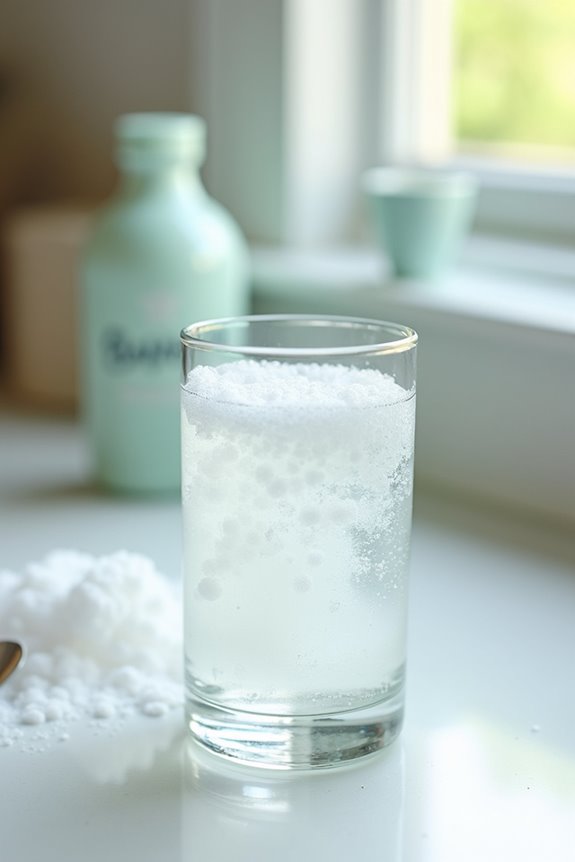
I’ll walk you through the safe dosage for adults, how long you can use it, and when you really need to talk to a doctor. For temporary relief, mix about 1/2 teaspoon of baking soda in at least 1/2 cup of water—that’s your standard adult dose, and it’s important you don’t skip the water part. You shouldn’t keep this up for more than 2 weeks on your own, and if your symptoms stick around or you’ve got high blood pressure, kidney issues, heart conditions, or you’re pregnant, you’ll want to check with your clinician first.
Safe Dosage For Adults
So, how much baking soda water should you actually drink? I’ve found that the safe dosage for adults involves some straightforward guidelines you’ll want to follow closely.
Here’s what works:
- Mix 1/2 teaspoon of baking soda (sodium bicarbonate) into at least 4 ounces of water for temporary indigestion relief
- Use it only short-term, limiting yourself to 2 weeks maximum without checking with your doctor first
- Space it away from medications by at least 2 hours to avoid absorption problems
Baking soda carries real precautions. It’s high in sodium, which matters if you’ve got high blood pressure, kidney disease, or heart conditions. Kids under 6 need pediatrician approval. When symptoms persist beyond two weeks, that’s your cue to call your doctor instead of continuing solo.
Short-Term Use Guidelines
When you’re dealing with sudden indigestion and reach for baking soda, here’s what actually works: mix 1/2 teaspoon into at least 1/2 cup of water and drink it down. This dosage guidance gives you quick symptom relief without overdoing it.
Here’s the thing about short-term use—it’s effective for occasional flare-ups, but not your long-term solution. Don’t use baking soda and water for longer than two weeks without checking with a doctor first. If your symptoms persist beyond that window, it’s time to talk to medical guidance.
Think of baking soda as your emergency backup plan, not your everyday answer. For ongoing heartburn or indigestion, safer antacids exist that won’t mess with your body’s balance. We’re all searching for quick fixes, but sometimes the smartest move is knowing when to call a professional.
When To Seek Medical Advice
How do you know if baking soda water is actually safe for *you*?
Here’s when I’d stop and call my doctor:
- Persistent symptoms. If your discomfort doesn’t improve after a few doses, or it gets worse, that’s your signal to seek medical advice instead of continuing.
- Overdose signs. Watch for diarrhea, vomiting, or dehydration—these mean you’ve had too much and need professional help immediately.
- Medication interactions. If you’re taking other medicines, baking soda safety depends on spacing doses apart, but certain prescriptions conflict anyway.
I’d also reach out if you have kidney disease, since baking soda affects your body differently. Before using baking soda water, mention it to your doctor. Call Poison Control if overdose is suspected. Your health matters more than temporary relief.
What Happens If You Take Too Much? (Poisoning Risk)
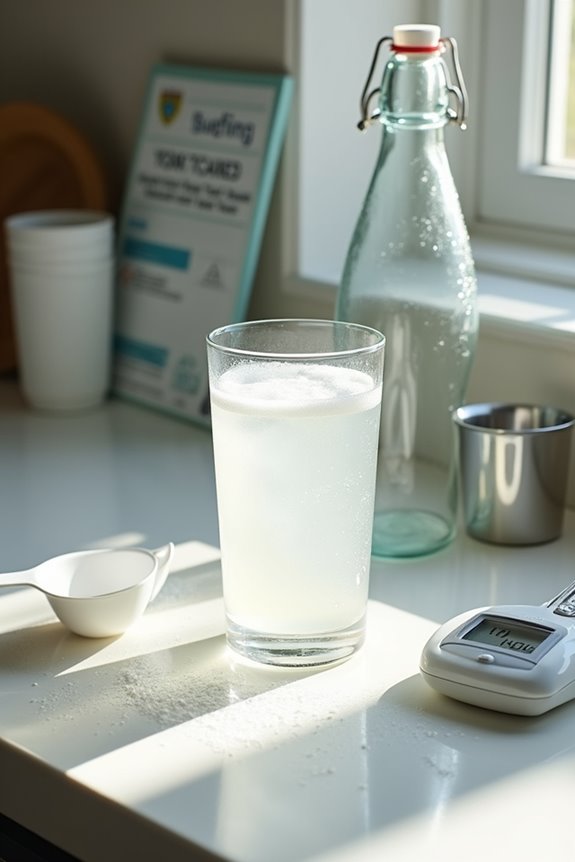
What Happens If You Take Too Much? (Poisoning Risk)
When you overdo it with baking soda, your body sends clear signals that something’s wrong. You might notice nausea, vomiting, diarrhea, muscle weakness, or even seizures in severe cases—these are warning signs that your electrolytes are out of balance and your body’s chemistry is struggling. If you or someone else starts showing these symptoms after taking baking soda, call Poison Control at 1-800-222-1222 right away and get medical help, particularly if it’s a child or someone with existing health problems.
Overdose Symptoms And Signs
Taking too much baking soda can cause serious problems in your body, and it’s important to know what those warning signs look like.
A baking soda overdose happens when you consume excessive sodium bicarbonate, disrupting your body’s salt balance. Here’s what to watch for:
- Digestive distress: nausea, vomiting, diarrhea, and stomach cramping that won’t quit
- Dehydration symptoms: extreme thirst, dizziness, weakness, and headaches
- Serious poisoning signs: seizures, confusion, rapid or shallow breathing, and muscle weakness
If you or someone near you experiences these symptoms, don’t wait around. Call Poison Control immediately at 1-800-222-1222 for emergency help. Children face heightened risks, so never give them baking soda without medical approval. Pay attention to how you feel and seek professional guidance when something feels wrong.
Severe Health Complications Risk
What’s really going on inside your body when you consume too much baking soda? Your digestive system starts working overtime. A baking soda overdose triggers serious problems: your sodium intake spikes, pulling water into your gut, which causes diarrhea and vomiting. Your electrolyte imbalance worsens as your body struggles to maintain proper chemistry. Here’s where it gets concerning—your kidneys face real stress processing the excess sodium. Dehydration sets in fast, counterintuitively, because your body’s trying to correct the salt overload. In severe cases, you’re looking at seizures, slow breathing, and potential kidney risk. Kids are especially vulnerable. The gas from the chemical reaction can even distend your stomach. That’s why moderation matters. Your body’s delicate balance depends on it.
Can Baking Soda Rupture Your Stomach?
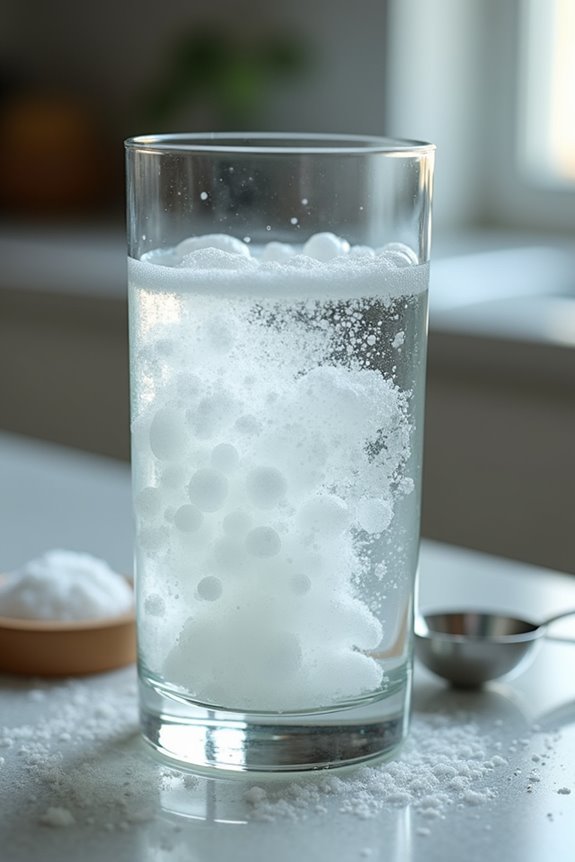
Result: use small doses, avoid heavy meals beforehand, and you’ll be fine.
How Does Baking Soda Affect Your Heart?
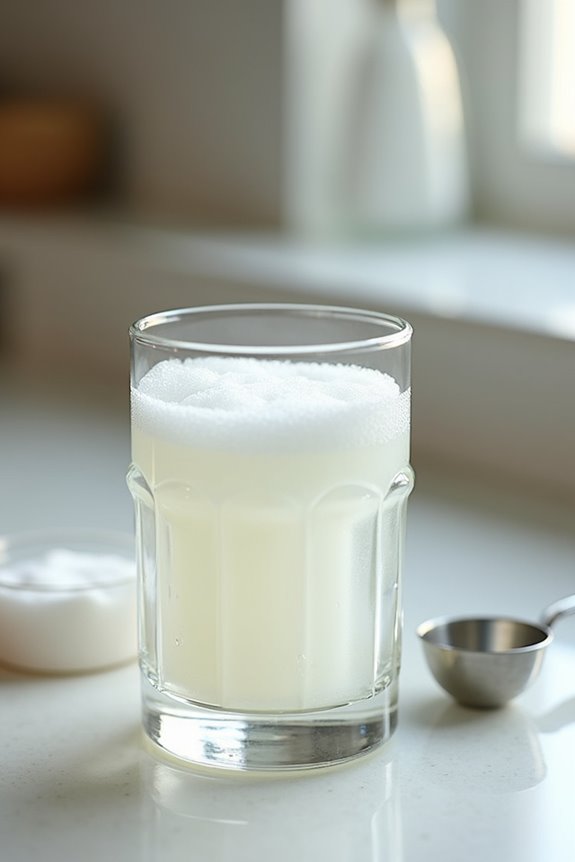
While small doses of baking soda won’t rupture your stomach, there’s another organ you’ll want to think about: your heart. Here’s the thing: sodium bicarbonate is loaded with sodium, and that sodium load directly affects your blood pressure. If you’ve got heart disease or hypertension, unsupervised baking soda use becomes risky. The sodium can throw off your electrolyte balance, potentially triggering arrhythmias or worse—case studies link overdoses to cardiac arrest. Your cardiovascular risk increases when you’re consuming large amounts regularly. Baking soda can also interact with heart medications and alter your body’s acid-base balance. I’m not saying you can never use it, but if you have existing heart conditions, you’ll need medical supervision. Your heart deserves that extra caution.
When Does Baking Soda Water Actually Help?
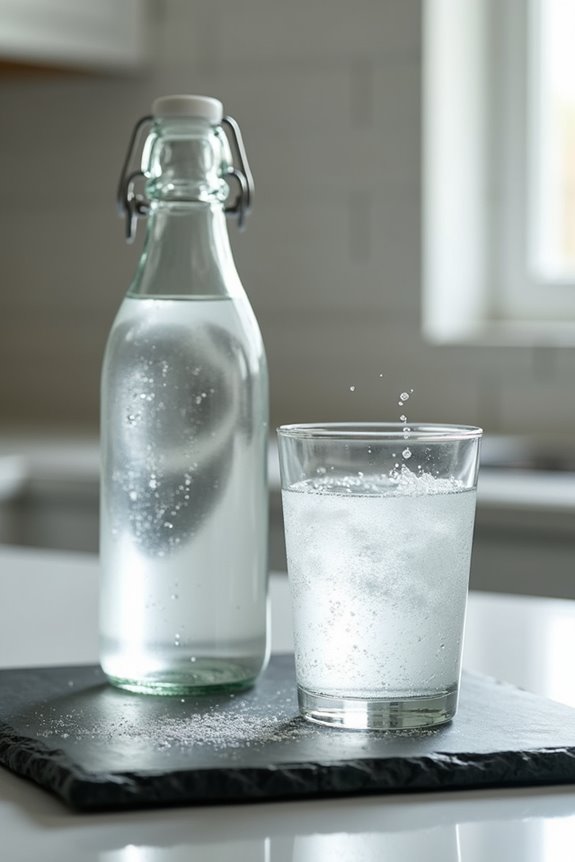
Despite all the caution I’ve just thrown at you, baking soda water does have legitimate uses—it’s just that they’re more specific than you’d think.
I’ve found that baking soda water helps in a few situations:
- Occasional indigestion: The alkaline drink buffers stomach acid effectively, giving you real relief when heartburn strikes
- Athletic performance: For high-intensity efforts between 45 seconds and 8 minutes, bicarbonate dosing (0.2–0.3 g per kg body weight) may boost your results
- Chronic kidney disease: Under medical supervision, sodium bicarbonate therapy can slow progression and improve blood bicarbonate levels
The key? These aren’t cure-alls. I’m talking targeted use for specific situations. You’re not taking this daily or expecting miracles. Think of it as a tool for particular moments, not a lifestyle change.
Can You Use It If You’re Pregnant, Nursing, or Under 6?
How safe is baking soda water for the smallest and most vulnerable among us? Here’s the straightforward answer: it’s complicated, and that’s why I’m telling you to get professional help first.
For children under 6, don’t give baking soda unless your pediatrician says it’s okay. During pregnancy or nursing, you’ll need medical consultation before using it. Long-term use or high doses aren’t safe when you’re expecting or breastfeeding. If indigestion strikes during pregnancy, only use short-term, physician-directed dosing—skip the self-treatment approach.
People with high blood pressure, kidney disease, heart conditions, or those taking other medications should also seek medical guidance first. I know it feels like extra steps, but protecting you and your baby matters most. Your doctor can help you here.
Will It Interfere With Your Medications?
If you’re taking medications regularly, I need to be straight with you: baking soda can absolutely mess with how your body absorbs certain drugs, which means your meds might not work as well as they’re supposed to. Here’s the key timing rule I follow—I space out my baking soda and medications by at least 2 hours, and honestly, this simple habit has helped me avoid potential problems. Since electrolyte imbalances from too much baking soda can change how medications perform or amplify their side effects, talking with your doctor before adding baking soda to your routine is important, especially if you’ve got kidney issues or high blood pressure.
Medication Absorption Effects
Many common medications don’t work well with baking soda, and that’s something you’ll want to know before you start mixing up those fizzy glasses.
Here’s what happens: sodium bicarbonate can interfere with how your body absorbs certain drugs. When you take baking soda within two hours of medication, you’re risking reduced drug effectiveness or unexpected side effects. This bicarbonate interaction affects medication absorption in specific ways:
- Some meds get absorbed slower, weakening their intended action
- Bicarbonate interference can alter how your body processes certain drugs
- Timing with meds matters—spacing them out helps prevent problems
The key? Don’t treat baking soda as a substitute for your prescriptions. Talk with your clinician about bicarbonate therapy and when to take each substance. If you’re on multiple medications, stagger doses and watch for unusual symptoms. Your health depends on getting this right.
Drug Interaction Timing Guidelines
Now that you understand how baking soda affects medication absorption, let’s get specific about timing—because knowing when to take your baking soda water is important. I’d recommend spacing baking soda interactions at least two hours apart from your medications. This gap helps prevent sodium bicarbonate from interfering with medication absorption and effectiveness. Here’s the thing: timing of dosing really matters, especially if you’re taking anticoagulants or antacids. Different drugs react differently, so I’d honestly suggest chatting with your pharmacist about your specific prescriptions before combining them with baking soda water. If you’ve got kidney and heart considerations, or blood pressure concerns, that sodium load becomes even more important to discuss. Your healthcare team can give you personalized guidance that keeps you safe and your medications working as intended.
Do You Have Kidney Disease, Heart Problems, or High Blood Pressure?
Do You Have Kidney Disease, Heart Problems, or High Blood Pressure?
Before you start sipping baking soda water, there’s an important conversation we need to have—especially if you’re dealing with certain health conditions.
If you’ve got kidney disease, heart problems, or high blood pressure, baking soda isn’t something you should tackle alone. Here’s why:
- Kidney disease: Sodium bicarbonate can help with metabolic acidosis under medical supervision, but it needs careful monitoring through blood tests
- High blood pressure: Baking soda’s high sodium content can worsen hypertension, potentially affecting fluid and electrolyte balance
- Heart problems: Self-treating with baking soda water for extended periods risks serious complications without professional guidance
Your healthcare provider can determine if baking soda therapy’s benefits outweigh the risks for your specific situation. They’ll guide dosing and monitor how it affects your blood pressure and overall health. Think of them as your partner in this process—not your obstacle.
How to Mix and Drink Baking Soda Water Safely
If you’re ready to try baking soda water, I’ll walk you through the basics: dissolve ¼ to ½ teaspoon of baking soda in 4–8 ounces of water, stir until it’s fully dissolved, and drink it slowly. Start with the smaller dose to see how your body responds, then adjust upward only if needed. Keep in mind that this works best for occasional heartburn, not as a daily habit, and timing matters—drink it between meals rather than right after eating.
Proper Mixing Ratios
Proper Mixing Ratios
Getting the ratio right is important for mixing baking soda water that works for indigestion relief without throwing your electrolyte balance off.
Here’s what I use:
- 1/4 to 1/2 teaspoon of baking soda (sodium bicarbonate) per 4 to 8 ounces of water—start with less if you’re new to this
- Stir thoroughly until the powder dissolves completely; you’ll see the solution turn slightly cloudy with a pH around 8.3–8.5
- Drink slowly in small sips rather than gulping it down, which helps your body adjust
The smaller dose works best for occasional relief. You’re keeping sodium intake reasonable while still getting the benefit. Mix fresh each time—don’t store it—and always check with your doctor before making baking soda water a regular habit.
Safe Dosage Guidelines
Now that you’ve got the mixing down, let’s talk about how much you can actually take safely—because knowing the right amount is important for effective relief and to avoid stomach upset.
For indigestion relief, I’d recommend mixing ¼ to ½ teaspoon of baking soda in 4–8 ounces of water. That’s your appropriate dose for temporary help. Here’s what matters: don’t make this a habit. Short-term use only. If your symptoms stick around, see a doctor instead of self-treating endlessly.
Your baking soda dosage also depends on your health. Skip this entirely if you’ve got kidney disease, high blood pressure, or heart issues—sodium bicarbonate safety means knowing your limits. Pregnant? Talk to your doctor first. Remember, antacids work better long-term anyway.
Why Baking Soda Relieves Symptoms But Doesn’t Cure GERD
it’s like using a fire extinguisher on a kitchen fire while leaving the stove on. You’ll get temporary relief, sure, but you’re not solving the real problem.
When you dissolve ¼ to ½ teaspoon in water, baking soda neutralizes excess stomach acid fast. That feels good. But here’s what’s actually happening:
- It masks symptoms without addressing what’s causing your acid reflux
- It doesn’t heal esophagitis or fix the mechanisms behind GERD
- Frequent use disrupts your acid-base balance and can interfere with medications
Think of baking soda as your emergency helper, not your solution. For GERD relief that works long-term, you’ll need real antacid safety measures and lifestyle changes. We’re talking about getting to the root cause, not just temporary symptom relief.
Baking Soda Water vs. OTC Antacids: Which Is Safer?
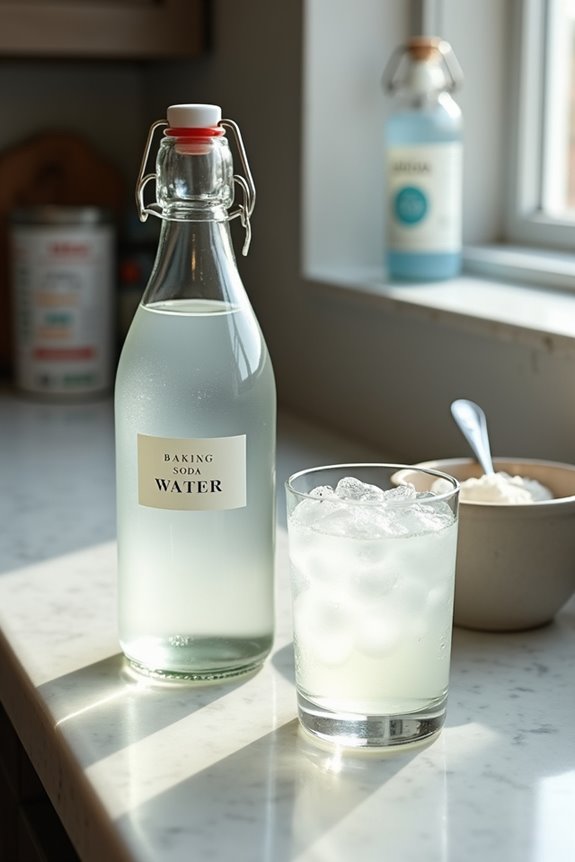
When you’re standing in the drugstore aisle comparing baking soda to bottles of name-brand antacids, you’re looking at two different approaches to the same problem. OTC antacids are formulated specifically for heartburn relief, making them generally safer and more predictable than baking soda water. That high sodium content in baking soda can affect your electrolyte balance and isn’t ideal if you have hypertension or kidney issues. OTC options provide consistent dosing without those risks. While baking soda water works temporarily by neutralizing stomach acid, frequent use increases electrolyte disturbances and medication interactions. OTC antacids represent the tested choice designed by experts. For ongoing symptoms, talk with your doctor about which option aligns with your specific health situation and medical guidance.
Signs You Need a Doctor Instead of Home Remedies
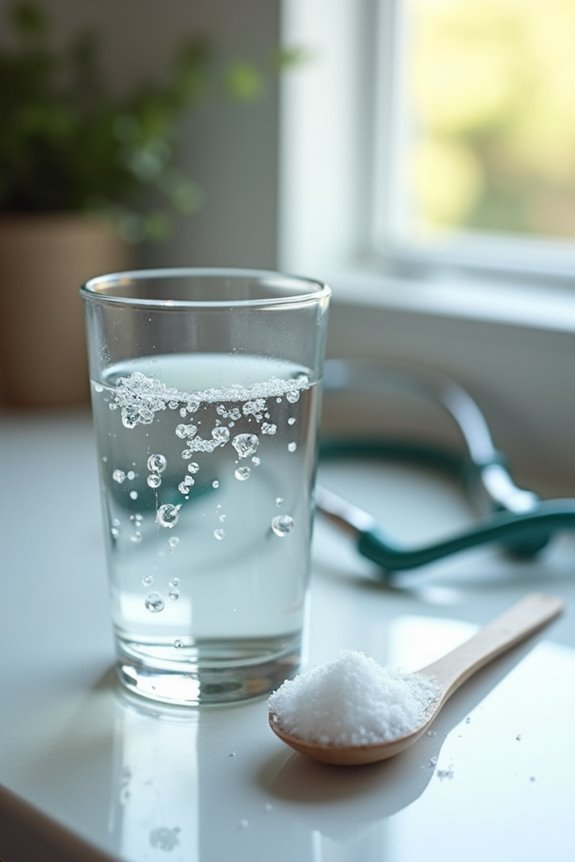
How do you know when baking soda water’s done its job and it’s time to call your doctor? Certain warning signs shouldn’t be ignored, no matter how much we prefer home remedies.
- Persistent indigestion or heartburn that doesn’t improve after a few doses
- Overdose symptoms like diarrhea, vomiting, dehydration, or seizures
- Existing conditions like kidney disease or heart problems requiring medical supervision
If you’re experiencing these issues, baking soda isn’t your answer anymore. A baking soda overdose can seriously affect your body, especially if you have underlying health concerns. Don’t wait it out alone. Your doctor understands your complete health picture and can provide proper treatment. Seeking professional help is being smart about your wellbeing.
Your Checklist: Safe Use Conditions Before You Start
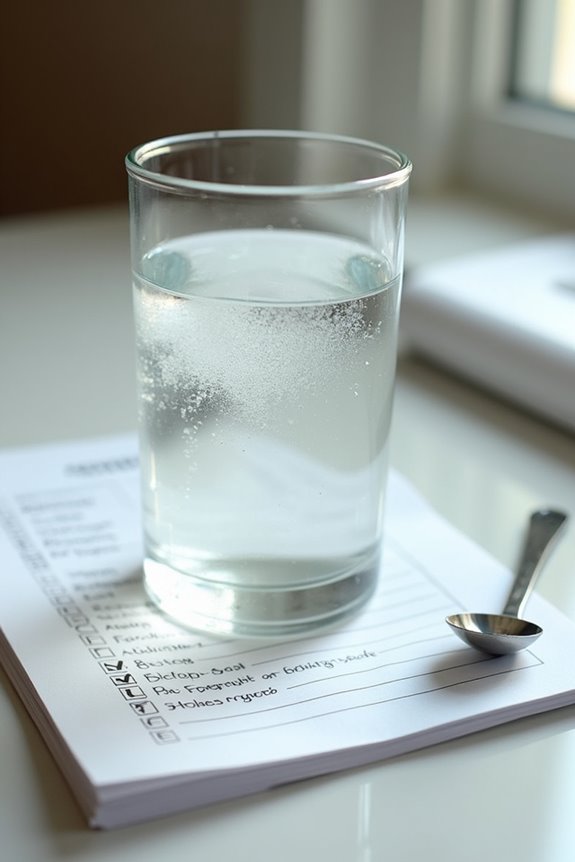
Before you grab that box of baking soda and mix up a glass, you’ll want to make sure you’re actually a good candidate for this home remedy—because not everyone is, and that’s okay.
First, check your health conditions. Skip baking soda water if you’re pregnant, under six years old, or have hypertension, kidney disease, or heart conditions without talking to your doctor first.
Next, review your medications. Don’t use baking soda water within two hours of other drugs, since sodium bicarbonate can interfere with how your body absorbs them.
Finally, get your dosing right. Dissolve just 1/4 to 1/2 teaspoon in 4–8 ounces of water for safe use. This modest amount delivers the sodium bicarbonate you need without overdoing sodium intake.