
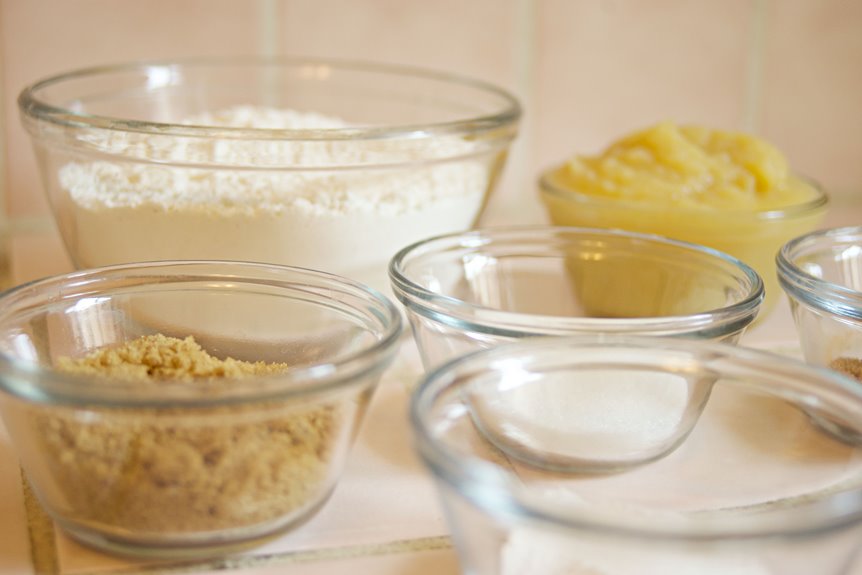
You really only need three essentials to start baking: all-purpose flour (your workhorse at 10–12% protein), sugar (granulated for spread and crispness, brown for chewiness), and leaveners (baking soda for acidic batters, baking powder when you need lift without acid).
I’ve made everything from cookies to cakes with just these.
Understanding how each ingredient behaves—how brown sugar adds moisture, how baking soda reacts fast—improves your results, and there’s plenty more to discover about getting them exactly right.
All-Purpose Flour: Why It’s Your Baking Foundation
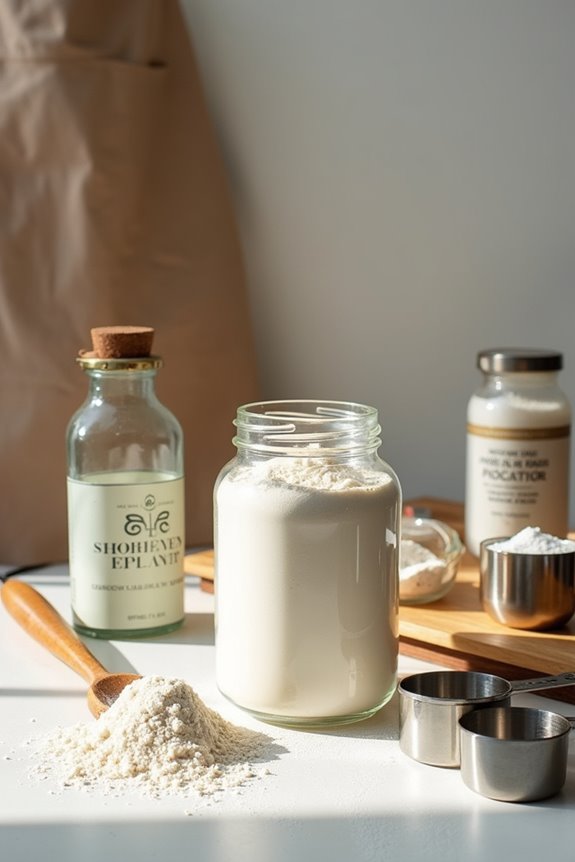
All-purpose flour is the workhorse of your baking pantry, and it’s the only flour you really need to get started. With its moderate protein content of 10–12%, this versatile flour delivers the texture and structure you want whether you’re baking cakes, cookies, or brownies. I use it for about 80% of my sweet baking projects because it blends hard and soft wheat into one reliable base ingredient. What makes all-purpose flour such a pantry staple is its universal use across recipes without requiring specialized handling. Unlike bread or cake flour, it won’t intimidate you with complicated techniques. You’re joining countless home bakers who’ve built their baking foundation on this dependable flour. It’s a solid choice for anyone serious about their kitchen.
Sugar: How Type and Amount Control Spread, Browning, and Texture
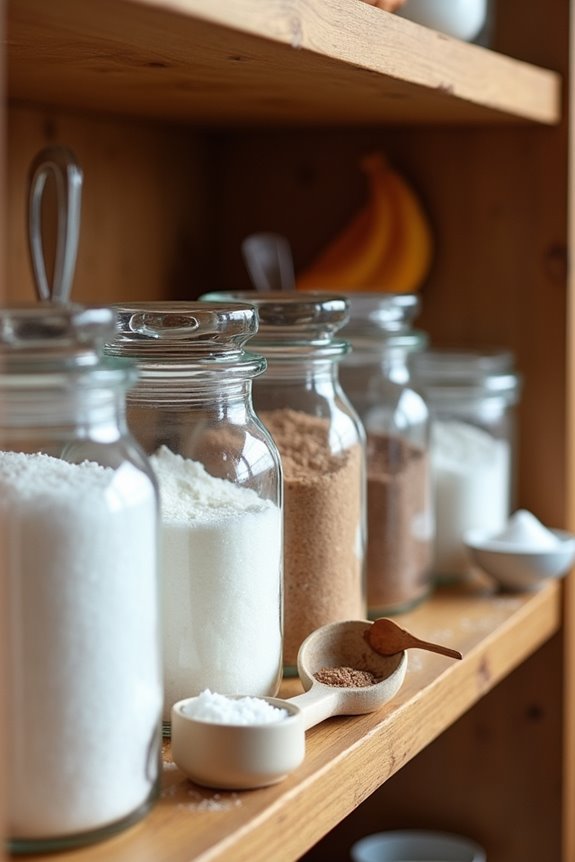
Why does sugar do so much more than just sweeten your baked goods? I’ve learned that granulated sugar and brown sugar each play distinct roles in my baking. Granulated sugar promotes spread and browning, creating crispy edges and golden tops. Brown sugar, rich with molasses and moisture, delivers chewiness and a butterscotch-like flavor that works well in softer cookies and cakes. The molasses content gives brown sugar its softer texture and helps create that denser, chewier crumb I’m after. When I substitute one for the other, I adjust carefully—volume and sweetness differ between them. Getting the balance right means understanding how each sugar influences moisture, spread, and browning. Keep both on hand, and you’re ready for nearly any recipe.
Baking Soda vs. Baking Powder: When to Use Each
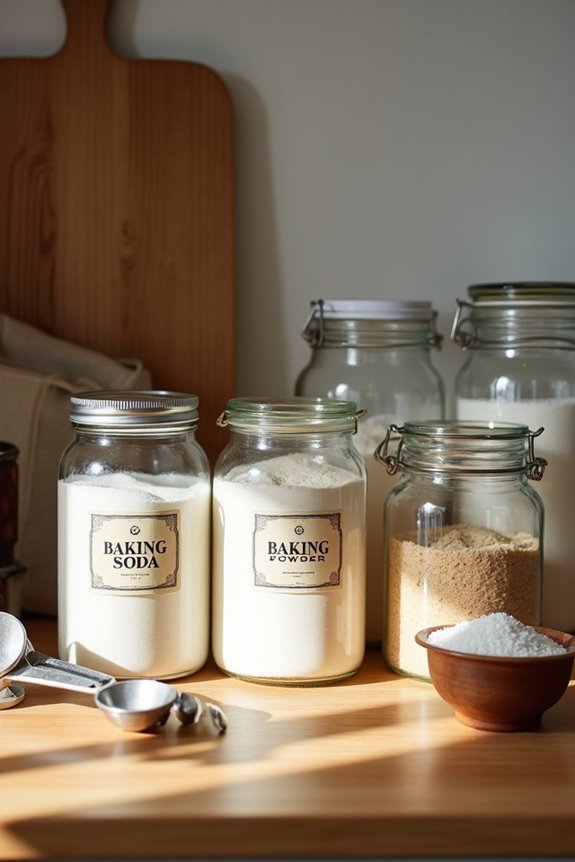
Now that you’ve got sugar mastered, it’s time to tackle the leaveners—the ingredients that make your baked goods rise and get that perfect fluffy texture. Understanding baking soda versus baking powder will improve your baking results.
Baking soda is sodium bicarbonate, a base that needs acid to activate and create leavening. When your recipe includes acidic ingredients like buttermilk, yogurt, or brown sugar, baking soda becomes your go-to choice. It works fast, so mix and bake quickly.
Baking powder, however, already contains baking soda, an acid, and a drying agent bundled together. Use it when your recipe lacks sufficient acidity. It comes in single- or double-acting forms, giving you reliable rise without extra ingredients.
The key is matching your leavener type to your recipe’s acidity level. Get this right, and you’ll achieve consistent, beautifully textured results every single time.