
Lactation cookies are safe during pregnancy when you stick to quality ingredients and chat with your doctor first—especially if you have gestational diabetes or thyroid issues. They contain nutritious staples like oats, brewer’s yeast, and flaxseed that deliver iron, B vitamins, and omega-3s. Start around 35–36 weeks with 1–2 cookies daily.
Here’s the real talk: they’re a tasty nutritional boost, not a milk-supply guarantee. Your actual milk production depends on frequent feeding after birth, so keep scrolling to discover what truly sets you up for breastfeeding success.
Is It Safe to Eat Lactation Cookies During Pregnancy?

When you’re pregnant and scrolling through yet another parenting forum, you’ll probably stumble across lactation cookies—those chewy, oat-packed treats that supposedly prep your body for breastfeeding. They’re generally safe for most healthy pregnant people when you eat them in moderation. The core ingredients—oats, brewers yeast, and flaxseed—are nutritious foods you’d recognize in your pantry. These galactagogues provide real nutrition: iron, B vitamins, fiber, and omega-3s that support you during late pregnancy. That said, you’ll want to check ingredient lists for allergies like nuts, dairy, soy, or gluten. If you’ve got gestational diabetes or thyroid disorders, chat with your healthcare provider first. They’re a tasty nutritional boost, not a cure-all.
What Are Lactation Cookies and How Do They Work?
Ever wondered why lactation cookies have become so popular in pregnancy and postpartum circles? These treats contain galactagogues—ingredients believed to support milk production. Oats, brewers yeast, and flaxseed are the key components you’ll find in most recipes.
Here’s how they work: oats deliver iron, fiber, and B vitamins that help combat pregnancy fatigue. Brewers yeast provides additional B vitamins, protein, and selenium for overall nutrition. Flaxseed contributes omega-3 fatty acids and fiber, supporting digestion and hormonal balance.
When you incorporate lactation cookies into your prenatal diet, you’re adding concentrated pregnancy nutrition to your daily routine. They’re convenient, tasty, and offer real nutritional benefits. I recommend choosing high-quality, wholesome versions that you can feel good about eating daily.
Why Oats, Brewer’s Yeast, and Flaxseed Matter for Pregnancy

Now that you know what goes into lactation cookies, let’s break down why these three ingredients provide significant nutritional value during pregnancy.
- Oats deliver dietary fiber and plant-based iron, supporting your energy levels and satiety
- Brewer’s yeast provides B vitamins, iron, protein, chromium, and selenium—nutrients your body needs during this period
- Flaxseed offers omega-3 fatty acids, fiber, and phytoestrogens supporting digestion and hormonal balance
- Together, they create nutrient-dense, food-based nutrition rather than medication
You’re not taking supplements here; you’re eating real food that nourishes you. These galactagogues have been traditionally used because they work. During pregnancy, nutrition demands increase significantly, and these ingredients address multiple needs at once. When used in moderation with your healthcare provider’s guidance, they’re generally safe and beneficial for supporting your body’s changing needs.
Will Lactation Cookies Trigger Labor or Early Milk Production?

could eating lactation cookies actually kick-start labor or make your milk come in before you’re ready to deliver?
The short answer? No. Labor triggers are hormonal and physiological, not food-based. Those galactagogues in your cookies—oats, brewer’s yeast, flaxseed—won’t induce early labor or jump-start milk production before birth. They’re just nutritious food components supporting your prenatal nutrition.
Your body’s timeline follows its own schedule. What lactation cookies actually do is provide nutritional support during pregnancy and breastfeeding preparation.
Here’s my advice: focus on overall prenatal nutrition and hydration. Use cookies as a supplementary option, not a labor-inducing measure. Always discuss any pregnancy nutrition questions with your healthcare provider first.
When to Start Eating Lactation Cookies

If you’re thinking about adding lactation cookies to your pregnancy routine, timing matters—but not in the way you might expect. You don’t need to wait until labor starts. Most healthcare providers suggest you can begin enjoying these nutrient-packed treats during late pregnancy, around 35–36 weeks, though starting after birth works too.
Here’s what you should know:
- Late pregnancy introduction gives your body time to adjust to oat, flaxseed, and brewer’s yeast
- Start with 1–2 cookies daily, adjusting based on your overall diet
- Check for allergen-friendly variants matching your dietary considerations
- Consult your healthcare provider before beginning, especially with pre-existing conditions
The benefit? You’re not rushing. Your body knows what it needs, and these cookies simply support that natural process during pregnancy.
Lactation Cookie Nutrients: What Your Body Needs

Lactation Cookies: Nutrient Support During Pregnancy and Beyond
Lactation cookies contain nutrients your body needs during pregnancy and lactation. These treats include galactagogues like oats, brewers yeast, and flaxseed that work together to nourish you when you need it most.
Oats provide dietary fiber and plant-based iron, helping increase your blood volume for both you and your baby. Brewers yeast delivers B vitamins, iron, and protein that fuel your energy and immune system. Flaxseed contributes omega-3 fatty acids, fiber, and minerals like calcium and magnesium for hormonal balance.
What distinguishes lactation cookies? You’re getting real-food ingredients instead of isolated supplements. This nutrient combination supports your pregnancy nutrition while preparing your body for lactation, making you feel like you’re taking care of yourself—because you are.
Health Conditions and Lactation Cookies: What to Know

While lactation cookies provide solid nutrition for most pregnant people, your individual health situation matters just as much as those wholesome ingredients do. Before you start munching, consider these important factors:
Your individual health situation matters just as much as wholesome ingredients when considering lactation cookies during pregnancy.
- Pre-existing conditions like gestational diabetes or thyroid issues may affect whether lactation cookies fit your diet
- Allergens hiding in ingredients—dairy, soy, gluten, nuts—could trigger reactions specific to you
- Sugar content varies wildly between brands, so check labels if you’re monitoring intake
- Galactagogues like brewers yeast interact differently depending on your medications
That’s why talking with your healthcare provider matters before adding lactation cookies to your pregnancy routine. They’ll help you determine safe moderation levels for your nutritional support plan. Your pregnancy safety is personal, and what works for someone else might not work for you—and that’s totally okay.
How Many Lactation Cookies Can You Safely Eat?

So, how many of these treats can you actually eat without overdoing it? I’d recommend sticking to 1–2 lactation cookies daily during pregnancy. This safe intake keeps you from overdoing calories and sugar while still getting those nutritional benefits like fiber, iron, and omega-3s.
| Aspect | Details |
|---|---|
| Daily Servings | 1–2 cookies |
| Best Time | Throughout pregnancy after 35 weeks |
| Sugar Monitoring | Track total daily intake |
| Fiber Content | Supports digestive health |
| Balance | Part of your balanced diet |
Think of moderation as your friend here. I know they’re good, but consuming them mindfully protects your nutrition goals. Work with your healthcare provider about what fits your pregnancy needs, especially regarding sugar and calorie totals.
What Lactation Cookies Can (and Can’t) Do for Your Milk Supply

Do these cookies really work magic on your milk supply? Let me be honest: they don’t. Here’s what lactation cookies actually do and don’t do:
- What they can do: Provide nutrients like iron, B vitamins, and fiber through ingredients like oats, brewer’s yeast, and flaxseed
- What they can’t do: Guarantee increased milk production before or after birth
- The real factor: Your milk supply depends on supply-and-demand after delivery—frequent, effective milk removal matters most
- The nutrition angle: These galactagogues support overall pregnancy nutrition, but they’re not magic bullets
Think of lactation cookies as supporting players, not stars. They won’t boost your milk supply alone. What actually drives production? Consistent breastfeeding or pumping after birth. If you’re considering them, chat with your doctor about what works best for your unique situation.
Preparing for Breastfeeding Success Beyond Cookies

While lactation cookies can be a tasty part of your pregnancy routine, I’ve found that the real value lies in building a strong support system—connecting with an IBCLC (lactation consultant), your healthcare provider, and your partner before baby arrives. You’ll want to educate yourself on the fundamentals too: taking an online breastfeeding class that covers latch, positioning, and hunger cues can seriously reduce anxiety and set you up for confidence when your baby’s born. Think of it this way—cookies are the sprinkles, but your support network and knowledge are the cake that actually matters.
Building Your Support System
they’re beneficial for supporting your milk supply, but they can’t hold your hand at 3 a.m. when you’re exhausted and second-guessing everything. That’s where your support system comes in. While pregnancy nutrition and lactation cookies lay groundwork, you’ll need real people in your corner.
Start building now:
- Connect with lactation consultants (IBCLCs) before baby arrives through Milky Mama’s early access programs
- Join peer support groups like Milky Mama’s Facebook community for shared experiences
- Brief your partner, family, and friends on how they’ll help with water, snacks, and encouragement
- Schedule regular check-ins with your OB/GYN and pediatrician for personalized breastfeeding preparation
Proactive postpartum planning prevents problems from spiraling. You’re not doing this alone—galactagogues and cookies support lactation, but people support you.
Education Powers Confident Parents
Knowledge about breastfeeding transforms you from someone who’s just hoping things work out into someone who actually knows what to expect—and that difference matters more than you’d think. When you understand latch positioning, hunger cues, and how milk supply actually develops, you’re not caught off-guard by normal patterns. Prenatal education through Milky Mama resources teaches you what effective milk transfer looks like, when to worry, and when things are simply typical newborn behavior. You’ll learn which galactagogues—like oatmeal in lactation cookies—actually support supply versus hype. This knowledge base, built during pregnancy, prepares you to recognize feeding challenges early and seek help with confidence. Breastfeeding readiness isn’t just about lactation support or pregnancy nutrition; it’s about owning your maternal health journey with real understanding.
Before You Start: Have This Conversation With Your Doctor

What to discuss at your appointment:
- Your medical history – gestational diabetes, thyroid issues, or other conditions that might affect cookie safety
- Your current medications – checking whether galactagogues like brewer’s yeast and flaxseed could interact with them
- Ingredient allergies – bring those cookie lists so your provider reviews oats, herbs, and other components
- Timing and serving size – whether starting at 35–36 weeks works for you, and how many cookies daily fits your plan
Your provider becomes your partner here. They’ll review your unique situation, assess potential interactions, and confirm lactation cookies align with your pregnancy safety needs.
Finding Quality Lactation Cookies and Storage Tips

How do you know you’re actually getting a quality lactation cookie and not just a regular treat with a fancy label? Look for whole-food galactagogues like oats, brewers yeast, and flaxseed—the ingredients that actually support milk production during pregnancy and beyond. Check whether options offer allergen-friendly variants: dairy-free, gluten-free, or soy-free formulations that match your needs.
Storage matters too. You’ll want heat-sealed packaging that keeps cookies fresh for their 9 to 12-month shelf life. Store yours in a cool, dry place at home. If you’re ordering from Australia or New Zealand, confirm shipping details and that there’s no lock-in subscription required. Quality lactation cookies aren’t mysterious—they’re just thoughtfully made with ingredients you’d actually recognize.
Common Myths About Lactation Cookies and Pregnancy

The truth about lactation cookies myths:
- They won’t induce labor (despite what you’ve heard)
- Galactagogues like oats and brewer’s yeast don’t guarantee increased milk supply
- Starting them at 35–36 weeks won’t speed up delivery
- They’re nutritional support, not magic pregnancy safety solutions
Your cookies offer real value through oats nutrition and wholesome ingredients. Just remember: check allergens, monitor sugar intake, and chat with your healthcare provider about late-pregnancy use. These treats help you feel prepared for breastfeeding, but managing milk supply myths means understanding they’re tools, not promises.
What to Expect: From Pregnancy to Early Postpartum
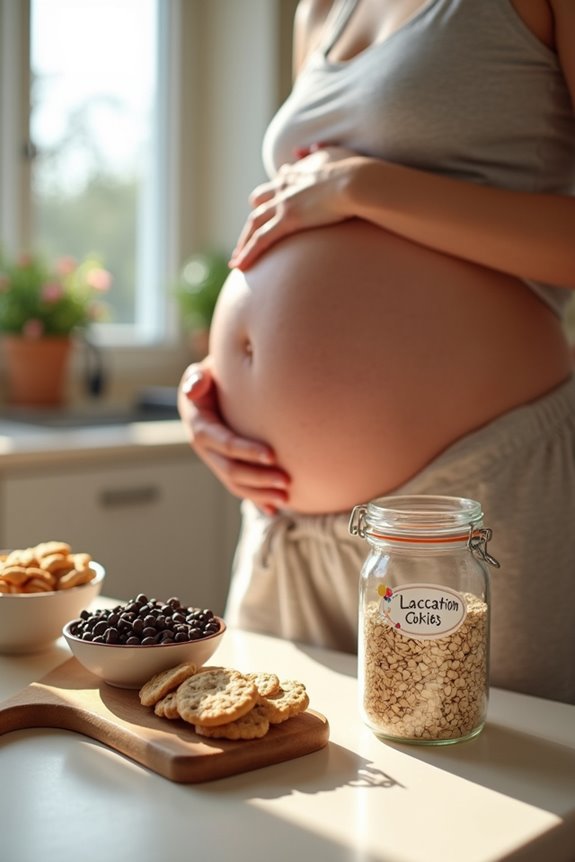
So you’ve been munching lactation cookies since week 35 or 36—what actually happens next? Here’s the real deal: those ingredients like oats, brewers yeast, and flaxseed continue supporting your third trimester nutrition, but they’re not magic milk-makers. After birth, your milk supply depends on demand, not cookie intake. Your baby’s frequent nursing drives lactation far more than any galactagogue ever could. That said, you’re building solid pregnancy nutrition habits that matter. The iron from oats, B vitamins from brewers yeast, and omega-3s from flaxseed prepare your body for breastfeeding preparation and recovery. Think of lactation cookies as your nutritional foundation, not your supply guarantee. Your body’s doing the real work during those early postpartum weeks.