
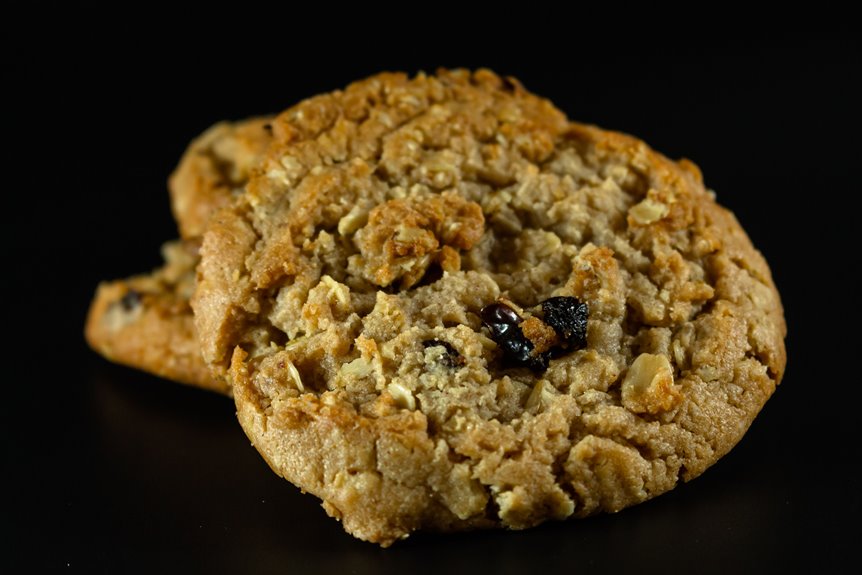
Oatmeal cookies aren’t inherently fattening—a plain one runs about 111 calories with decent fiber and protein. The real culprit? Mix-ins like chocolate chips and nuts can push that to 230 calories, plus daily habits matter way more than one cookie. Four cookies daily adds 460 calories; one cookie occasionally won’t derail you. The trick is portion control and honest tracking. Want to know exactly how to enjoy them without the guilt?
What Calories and Macronutrients Do Oatmeal Cookies Contain?

A typical oatmeal cookie contains about 111 calories per serving, alongside 17 grams of carbohydrates, 4 grams of fat (with 2 grams saturated), 2 grams of protein, 2 grams of fiber, and 8 grams of sugar. This nutritional breakdown is reasonable for a treat.
The macronutrients distribute as follows. Carbohydrates comprise most of the cookie’s energy content, which is logical since oats are high in carbs. The fat contributes to texture and taste, while fiber supports digestion. Protein levels are modest, which is typical for cookies.
Different varieties—plain oatmeal, oatmeal raisin, or chocolate chip—maintain similar calorie and fat content. Ingredient substitutions such as replacing butter with applesauce or using honey instead of sugar will cause minor variations, but won’t substantially alter the cookie’s nutritional profile. Most recipes yield consistent nutritional values.
How Do Oatmeal Cookies Compare to Other Cookie Types?

When you’re standing in the cookie aisle comparing your options, you might wonder whether oatmeal cookies really deserve their healthier reputation.
Here’s the honest truth: oatmeal cookies aren’t dramatically different from chocolate chip varieties in calories or fat. A typical oatmeal cookie contains 230 calories and 9 grams of fat, while chocolate chip cookies have 210 calories and 11 grams of fat—basically a wash.
Oatmeal cookies contain 230 calories and 9g fat versus chocolate chip’s 210 calories and 11g fat—basically nutritionally equivalent.
What sets oatmeal cookies apart is fiber and protein content. Oatmeal raisin varieties offer more of both, which means you’ll feel fuller longer and experience a slower glycemic response. That whole grain foundation matters.
Texture impacts satisfaction too. Old-fashioned rolled oats provide heartier bites than quick oats, making cookies feel more substantial.
The real difference? Portion control. Even healthier oatmeal cookies are calorie-dense, so we’ve got to eat mindfully.
Why Does the Health Halo Mislead You?

So here’s where it gets tricky: just because oatmeal cookies contain whole grains, dried fruit, and nuts doesn’t actually make them a nutritional slam dunk.
That “health halo” tricks us into thinking we’re making better choices. But here’s the reality:
- The calorie comparison isn’t convincing: Oatmeal cookies clock in at 230 calories with 9g fat, while chocolate chip cookies hit 210 calories with 11g fat—basically a wash nutritionally
- Sugar and fat still dominate: Those wholesome ingredients don’t erase the high sugar content and added fats that drive weight gain
- Portions matter most: Eating four cookies daily easily derails your goals, regardless of the ingredients list
The bottom line? Those oats don’t magically cancel out the calorie density. We’ve got to actually practice portion control to see real results.
What Makes Oatmeal Cookies Nutritionally Different: Fiber and Blood Sugar

Why do oatmeal cookies hit differently than their white-flour cousins? It’s about fiber and blood sugar stability.
Oats contain beta-glucans, soluble fiber that slows sugar absorption into your bloodstream. This means your blood sugar won’t spike and crash like it does with regular cookies. Ground flaxseed adds protein and healthy fats, keeping you fuller longer. Swapping refined sugar for unsweetened applesauce bumps up fiber, lowering your glycemic impact overall.
| Ingredient | Benefit | Impact |
|---|---|---|
| Oats | Beta-glucans | Stabilizes blood sugar |
| Flaxseed | Protein & healthy fats | Increases satiety |
| Applesauce | Added fiber | Reduces glycemic response |
| Whole grains | Micronutrients | More nutrient-dense |
| Portion control | Moderation | Controls total intake |
That said, portion size matters. Large amounts still raise blood sugar, even with whole grains.
Where Do Hidden Calories Hide: Mix-Ins and Added Sugar

When I bite into an oatmeal cookie, I’m not just eating oats—I’m eating chocolate chips, nuts, and dried fruit that quietly pack on calories and fat without me really noticing. A single cookie with these mix-ins can jump from around 150 calories for a plain oat base to 210–230 calories, and that’s before we even talk about the added sugars like honey or brown sugar that bakers stir into the dough, sometimes reaching 8 grams of sugar per cookie. The tricky part is that these add-ins taste good and blend in so smoothly that I end up eating three or four cookies thinking I’ve only had “a couple,” which means those hidden calories add up faster than I’d expect.
Chocolate Chips Add Up
they’re delicious, but they’re also little calorie bombs that sneak up on you. Those chips dramatically increase your cookie’s calorie density and fat content, even when the base dough is relatively healthy. A handful of chocolate chips might not seem like much, but they pack serious energy per cookie.
Consider this reality:
- Dark chocolate chips still contain sugars and fats that add 50-80 calories per tablespoon
- Reducing chip quantity or choosing smaller chips preserves flavor while cutting calories significantly
- Mix-ins like chips can offset fat reductions from substitutions like applesauce, keeping overall fat content higher
The takeaway? Watch your portion size closely. Even with wholesome oatmeal as your foundation, chocolate chips transform your cookie into a calorie-dense treat that adds up quickly.
Sugar’s Sneaky Impact
Even if you’ve swapped out butter for applesauce or used old-fashioned oats instead of flour, there’s still a hidden culprit in your cookie jar: sugar.
Here’s the thing—added sugars in oatmeal cookies, whether honey, maple syrup, or regular white sugar, still pack serious calories. Those sugar substitutes feel healthier, but they don’t erase the energy balance problem. One cookie contains roughly 17 grams of carbs and 4 grams of fat, giving you around 111 calories. Double that to two cookies, and you’re looking at 222 calories before you’ve even finished snacking.
The real issue? Calorie density. Even with increased fiber content from mix-ins and oats, the added sugars keep overall energy high. That’s why portion control matters. Be honest about serving sizes to stay on track.
Nuts and Mix-In Calories
You’ve tackled the sugar problem, but here’s what really sneaks up on you: all those delicious add-ins you’re tossing into your dough.
A single oatmeal cookie with minimal mix-ins contains about 111 calories, but nuts and chocolate chips? They’ll push that number significantly higher. Here’s why:
- Nuts add fat and calories: Walnuts, pecans, and almonds boost energy density fast, making each bite more calorie-dense than you’d expect
- Chocolate chips and dried fruit increase sugar load: These affect your glycemic impact, spiking blood sugar alongside total calorie count
- Portion control matters most: Freezing dough or baking smaller cookies helps you manage hidden calories from mix-ins
The smart move? Swap some chocolate chips for raisins or oats. You’ll maintain that satisfying texture while keeping calories in check. Small tweaks create big differences.
How Much Can You Eat Daily Without Gaining Weight?
How many oatmeal cookies can you actually eat without tipping the scale? Here’s the honest answer: one or two cookies fits comfortably into most daily intake plans without derailing your goals. Since each cookie packs roughly 111 calories with moderate energy density, portion control becomes your best friend. If you’re active and maintaining a balanced diet overall, two cookies won’t sabotage your weight. The trick? Don’t mindlessly grab a handful. The fiber and oats in oatmeal cookies offer nutritional benefits, but calories and fat still add up quickly without restraint. Consider making yours with healthier fat substitutions like applesauce, which reduces energy per cookie. Your daily total matters most—stick to one or two, pair them with smart choices elsewhere, and you’ll stay on track.
How Frequency Matters More Than Single-Cookie Guilt

I get it—you ate one cookie and immediately worried you’d ruined everything, but here’s what actually matters: whether you’re grabbing a cookie once a month or four times a week makes far more difference than that single indulgence. Your body doesn’t panic over one 230-calorie oatmeal cookie, but eating two at lunch and two at dinner, day after day, absolutely compounds into weight gain because those repeated choices add up to real calorie excess. The actual focus is building sustainable eating patterns where treats fit in occasionally, not cutting them out completely, because consistency and habit are what actually drive your weight outcomes over time.
Cumulative Calorie Impact
When it comes to oatmeal cookies, the real question isn’t whether that single cookie at lunch will derail your goals—it’s what happens when you grab two at lunch and two more at dinner, day after day. Four cookies daily adds roughly 460 calories and 18–20 grams of fat, which seems manageable until you realize small daily surpluses compound quickly.
Here’s what actually happens with cumulative calories:
- An extra 100–200 calories daily builds several pounds over weeks, even if individual cookies aren’t particularly “fatty”
- Calorie density matters: choosing alternatives like applesauce for fat or honey for sugar reduces impact significantly
- Your daily energy balance determines everything—cookies become fattening when they replace nutrient-rich foods or exceed maintenance needs
Track portion sizes honestly. Your weight management depends less on perfection and more on consistent choices.
Building Sustainable Eating Patterns
| Strategy | What It Means | Why It Works |
|---|---|---|
| Portion Control | Eating 1-2 cookies instead of 5 | Prevents daily calorie overload |
| Mindful Eating | Noticing when you’re satisfied | Builds awareness, reduces excess |
| Fiber-Rich Pairing | Adding whole grains to meals | Stabilizes blood sugar, increases fullness |
| Balanced Diet | Including protein, veggies, healthy fats | Creates sustainable weight management |
| Tracking Intake | Writing down what you consume | Creates accountability, reveals patterns |
Sustainable eating means building habits you’ll actually stick with. When you plan portions, pair cookies with fiber and protein, and track your choices, you’re creating a system that works. This consistency beats sporadic “perfect” days followed by binge sessions. You’re not eliminating cookies—you’re integrating them intelligently into your balanced diet.
Can Oatmeal Cookies Fit Into Weight Loss?

So, can you actually enjoy oatmeal cookies while trying to lose weight? Yes, you absolutely can—with smart choices and portion control.
Here’s the honest truth: a single oatmeal cookie contains roughly 67–111 calories depending on size and ingredients. That’s manageable if you account for it in your daily calorie budget. The key factor? Understanding calorie density. Two to three cookies can quickly add up, so knowing your limits matters.
Strategies that work:
- Swap applesauce for fat and use honey or mashed bananas for natural sweetness
- Choose cookies packed with whole oats and fiber-rich mix-ins like flaxseed
- Compare nutrition labels—oatmeal cookies often rival or beat chocolate chip varieties
The whole oats and fiber actually help you feel fuller longer, supporting your weight-loss goals. You’re not giving up cookies; you’re just being intentional about them.
5 Serving Methods That Stop Mindless Overeating
Understanding your calorie budget and picking better cookie ingredients are solid moves, but here’s what actually stops you from eating an entire batch without thinking: how you serve them. I’ve found that pre-portioning oatmeal cookies into single-serving containers—eight cookies per container—creates a natural stopping point. You’re not mindlessly grabbing from a jar. Next, try protein pairing: eat each cookie with nuts or fruit to stabilize your blood sugar and feel fuller longer. Bake smaller cookies, around 50–60 grams each, and log every one for accountability. Use the one-in-one-out rule: swap each cookie for another high-calorie snack you’re removing. Finally, anchor cookie eating to regular meals rather than random snacking. These serving methods shift portion control from willpower into simple habit.
Healthier Homemade Oatmeal Cookie Recipes
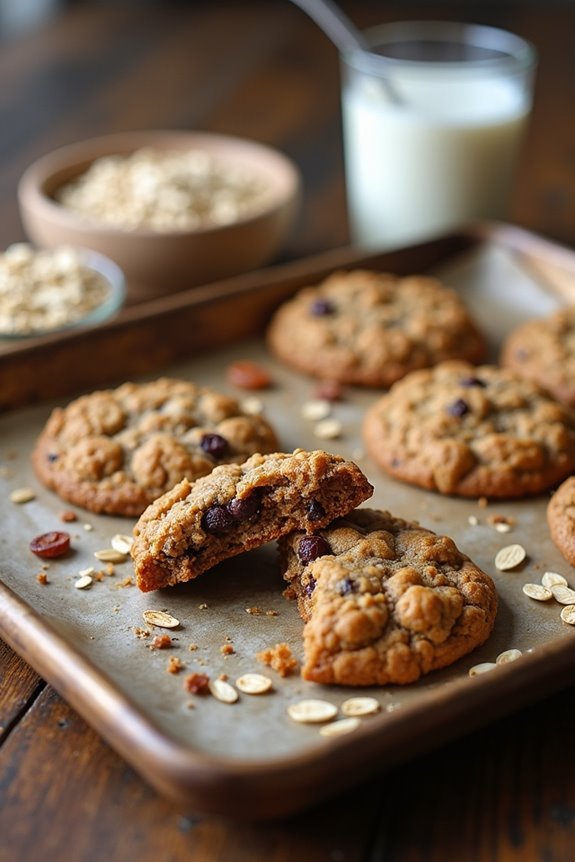
Making your own oatmeal cookies gives you control over every ingredient that goes in. Swapping half the butter for applesauce keeps cookies moist while cutting calories. You’re also ditching added sugars when you use honey or mashed bananas instead.
Here’s what improves your recipe:
- Replace white flour with whole grains like old-fashioned rolled oats or whole wheat flour to boost fiber
- Mix in sliced almonds, raisins, or dark chocolate for nutrients without extra calories
- Use coconut oil in vegan versions for that chewy texture you want
These tweaks mean you’re baking cookies that support your goals. You’ll notice the difference—richer, more satisfying—without feeling like you’re missing out on anything.
Swaps That Lower Calories Without Sacrificing Taste

Want to cut calories from your oatmeal cookies without turning them into cardboard? I’ve found swaps that work. Replace half your butter with applesauce—you’ll keep the moisture and chewiness while dropping fat content. Switch to quick oats instead of old-fashioned; they create a tender crumb that feels satisfying in a smaller cookie.
For sweetness, use maple syrup or less sugar than honey calls for. Trade white flour for whole wheat flour to boost fiber and protein, helping you feel fuller longer. Finally, swap some butter for coconut oil or mashed banana. You’ll lower saturated fat and calorie density while maintaining flavor.
These lower-calorie tweaks give you cookies you can enjoy without guilt.
Should You Cut Out Oatmeal Cookies Entirely?

Do you really need to banish oatmeal cookies from your life? I don’t think so. The key isn’t elimination—it’s smart choices about portion control and moderation. You can absolutely enjoy oatmeal cookies while managing your weight. Here’s what works:
- Practice portion control: One cookie (around 111–230 calories depending on the recipe) paired with water or tea satisfies cravings without derailing your goals
- Pair strategically: Combine your cookie with fiber-rich foods like an apple or protein-rich Greek yogurt to stabilize blood sugar and increase satiety
- Choose wisely: Select cookies with lower fat content and reduced added sugars to manage your daily calorie intake
The truth? Cutting out foods you love rarely sticks. Instead, enjoying oatmeal cookies in measured amounts keeps cravings manageable and makes weight management sustainable long-term.