
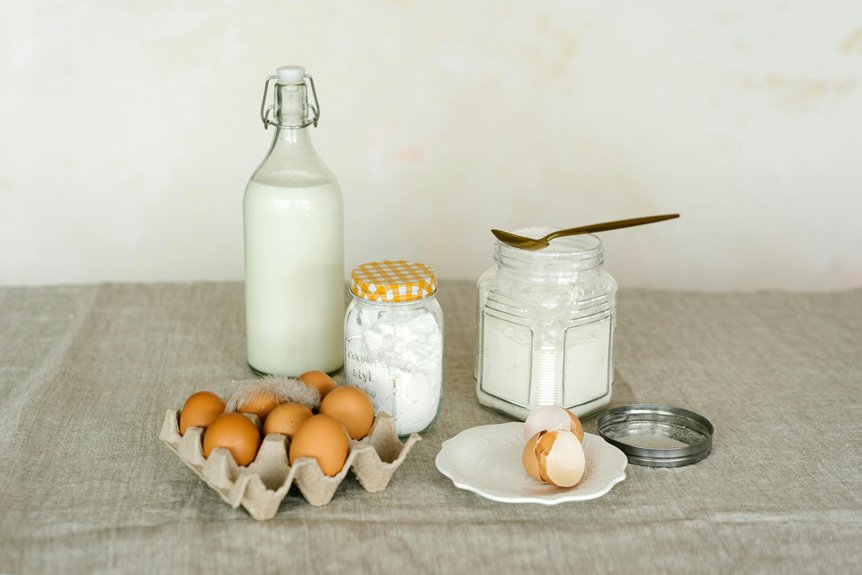
I’ve got several reliable baking soda swaps you can grab from your kitchen right now.
Baking powder works best—use three teaspoons per one teaspoon of soda.
You can also mix baking soda with acid like lemon juice or yogurt for immediate lift.
Self-rising flour, club soda, or even whipped egg whites create leavening through different methods.
For crispy cookies, baker’s ammonia does the trick.
Each substitute has its own strengths, so understanding which one fits your specific recipe will improve your baking results.
Why You Need a Baking Soda Substitute
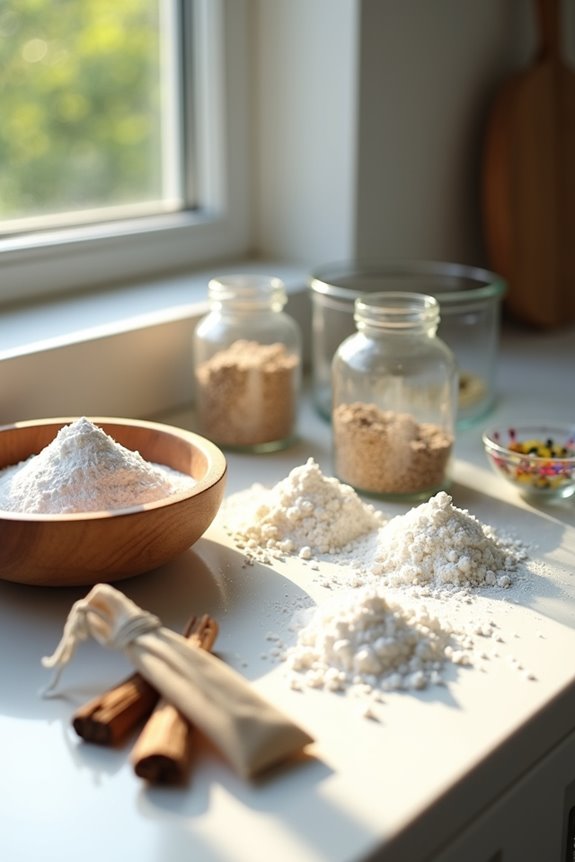
Ever reached for the baking soda only to find the box empty, or realized mid-recipe that you’ve got baking powder instead? I’ve been there too. Knowing your substitutes matters because baking soda is pure sodium bicarbonate—it needs an acid to create the acid-base reaction that makes baked goods rise. Without that acid present in your recipe, you’re stuck. Baking powder, by contrast, already contains both base and acids, so it works differently. Whipped egg whites offer another option, though they change texture entirely. Understanding these substitutes helps you adapt recipes on the fly, rescue a batch when you’re missing ingredients, or accommodate dietary needs. Having backup options means you’re never truly out of luck in the kitchen.
Baking Powder: The Direct Swap
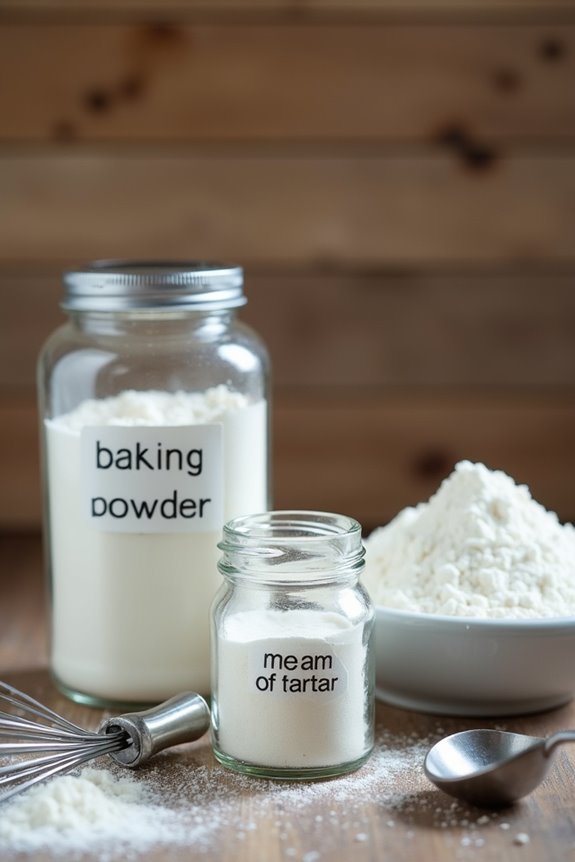
Baking powder is your easiest pantry substitute—use three teaspoons for every teaspoon of baking soda needed.
So what’s the easiest substitute sitting right in your pantry? Baking powder. It’s your direct swap for baking soda, and here’s the deal: replace each teaspoon of soda with three teaspoons of baking powder. Since baking powder contains baking soda plus dry acids and starch, it handles the leavening job nicely on its own.
Now, if your recipe already includes acidic ingredients like buttermilk or lemon juice, keep the original baking soda amount and add your baking powder too. This substitution ratio maintains proper leavening without sacrificing texture.
What’ll you notice? Your cookies become fluffier and crispier, with less acidic batter. That’s because baking powder’s double-acting nature reacts twice—first with moisture, then with heat.
Potassium Bicarbonate: A Salt-Free Substitute
If you’re watching your sodium intake, potassium bicarbonate is a practical option—it swaps in for baking soda at a perfect 1:1 ratio without adding any salt to your cakes, cookies, or muffins. Here’s the trade-off: you’ll need to add about 1/3 teaspoon of salt for every teaspoon of potassium bicarbonate you use, which keeps your baked goods from tasting flat or bland. This simple adjustment gives you all the leavening power you’d get from regular baking soda, minus the sodium, so you’re not sacrificing taste or texture in the process.
Sodium Content Comparison
Want to bake without worrying about your sodium intake? Potassium bicarbonate is an effective option for sodium content management. Unlike baking soda, which contains salt, potassium bicarbonate is completely salt-free. Here’s how they compare:
| Ingredient | Sodium per Teaspoon |
|---|---|
| Baking Soda | 821mg |
| Potassium Bicarbonate | 0mg |
| Sea Salt | 2,325mg |
| Table Salt | 2,360mg |
| Kosher Salt | 1,680mg |
When you switch to potassium bicarbonate, simply add 1/3 teaspoon salt per teaspoon used. This adjustment lets you control your sodium intake precisely. For those monitoring heart health or following low-sodium diets, this baking soda substitute works well. You’ll get identical leavening power while keeping sodium levels manageable. It’s a straightforward swap that makes baking more accessible for everyone’s dietary needs.
Direct Substitution Ratio
Making the swap from baking soda to potassium bicarbonate is simple—you’re looking at a straightforward 1:1 ratio. If your recipe calls for one teaspoon of baking soda, you’ll use one teaspoon of potassium bicarbonate instead. That’s it. No complicated math or confusing conversions needed.
Here’s the thing though: since potassium bicarbonate contains no sodium, you’ll want to add a salt adjustment. For every teaspoon of potassium bicarbonate you use, sprinkle in 1/3 teaspoon of salt. This keeps your cakes, cookies, and muffins tasting balanced.
The substitution ratio stays consistent across all your baked goods. Your leavening action remains identical to traditional baking soda, so you’re not sacrificing rise or texture. You’re simply creating a lower-sodium version of your favorite recipes while maintaining the fluffy result you’re looking for.
Salt Adjustment Guidelines
Now here’s where potassium bicarbonate gets a little tricky—you’ve nailed the 1:1 swap, but there’s one essential step you can’t skip if you want your baked goods to actually taste good. Here’s the thing: potassium bicarbonate lacks salt, which means your recipes might taste flat or bland without adjustment. That’s why I add 1/3 teaspoon of salt for every teaspoon of potassium bicarbonate I use. This salt adjustment compensates for the flavor your baking soda substitute is missing. It’s a simple move that makes a real difference. When you’re using leavening substitutes like potassium bicarbonate for sodium reduction, this step improves your baked goods significantly. This tiny tweak helps your cookies, cakes, and muffins taste just as good as they should.
Baker’s Ammonia: For Thin, Crispy Baked Goods
Ever wondered what gives those impossibly thin, shattering crackers and biscotti their signature crunch? That’s baker’s ammonia, also called ammonium carbonate, at work. It’s your hidden advantage for creating thin crisp textures that’ll make your friends ask for your recipe.
Here’s the thing: baker’s ammonia works best in low-moisture baking projects. It dries out your batter, promoting that satisfying crispness rather than a soft, cakey rise. The best part? You swap it in using a simple 1:1 ratio with baking soda—no complicated math required.
One heads-up: skip this for moist recipes or cakey cookies. That ammonia smell can linger. But in low-water environments, it vanishes during baking, leaving only crisp, airy results behind. Your crackers will benefit from this approach.
Baking Soda Plus Acid: The DIY Method
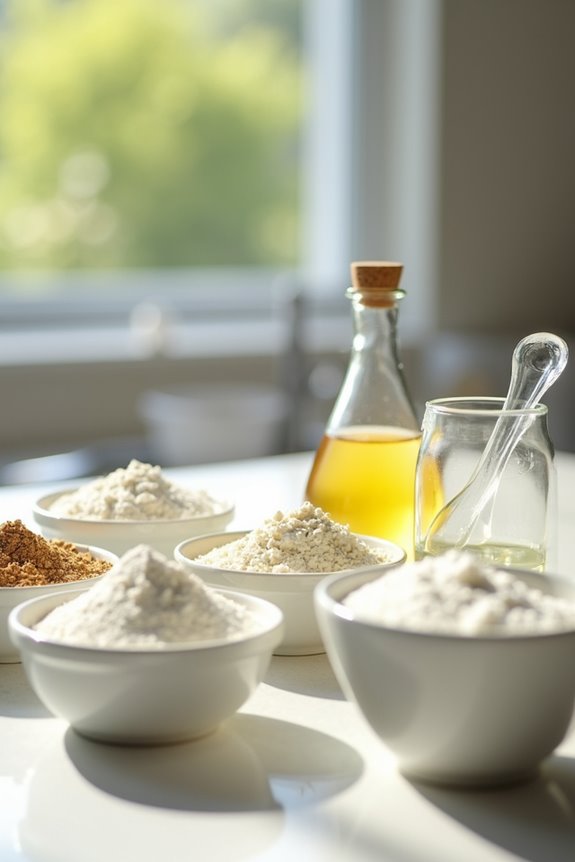
What if I told you that you can create your own leavening agent with just two ingredients sitting in your kitchen right now? I’m talking about mixing baking soda with acid—and it’s straightforward.
Here’s the basic formula: combine 1 teaspoon baking soda with 2 teaspoons of acid like lemon juice or white vinegar. The reaction creates carbon dioxide, which gives your baked goods that rise you’re after. You can also use 1 teaspoon baking soda with 125 grams yogurt, buttermilk, or kefir for a homemade baking powder alternative.
The catch? You’ve got to bake immediately after mixing—the leavening happens fast. If you’re substituting dairy or fruit acids, watch your recipe’s moisture balance so your batter doesn’t thin out or taste too tangy.
Club Soda and Beer: Carbonation for Lift

Have you ever noticed how club soda fizzes and bubbles when you pour it? That carbonation works as a leavening agent for baking without baking soda. Club soda functions well because those bubbles create lift in your batter. Here’s what makes it effective:
- Contains water, sodium bicarbonate, and citric acid for fizzing action
- Provides lift through carbonation rather than chemical reactions
- Works best in recipes with adequate liquid content
- Less ideal for heavy, moisture-rich batters like dense cakes
- Requires adjusting your liquid measurements to maintain proper batter hydration
When I substitute club soda in recipes, I reduce other liquids slightly. This keeps my batter from becoming too thin while maximizing that carbonation effect. It works well for lighter baked goods where you want that airy texture.
Self-Rising Flour: A Flour-Based Swap
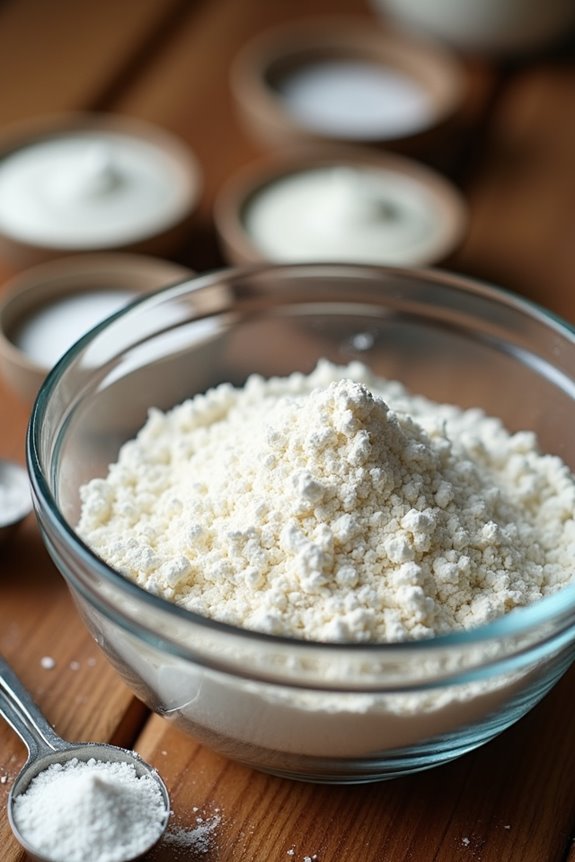
Self-rising flour contains baking powder and salt already mixed in—1 1/2 teaspoons of baking powder and 1/4 teaspoon of salt per cup—which means you’re not just swapping flours, you’re actually changing how your recipe rises. When you make the swap, you’ll replace your regular flour cup-for-cup with self-rising flour, but then you need to do some math to figure out your total leavening since that extra baking powder’s now in the mix. This substitution works best when your original recipe already calls for both flour and baking soda, because you’ll need to account for all the lift you’re adding and might need to adjust other ingredients to keep your final bake from getting too fluffy or crumbly.
What Self-Rising Flour Contains
Ever wondered why some recipes specifically call for self-rising flour instead of the regular kind you’ve got in your pantry?
Self-rising flour is just regular flour with leavening agents already mixed in. Here’s what you’ll find in every cup:
- 1 1/2 teaspoons of baking powder
- 1/4 teaspoon of salt
- All-purpose flour as the base
- Pre-measured consistency for convenience
- Built-in leavening for baking
This combination means you’re getting a complete substitution package. The baking powder acts as your primary leavening agent, creating that rise and fluff in baked goods. The salt enhances flavor and controls fermentation. When you understand what’s actually in self-rising flour, substitution becomes straightforward. You’ll recognize why certain recipes demand it specifically, and you’ll know exactly how to swap it into your favorite dishes without guessing.
Substitution Ratio And Adjustments
Now that you know what’s actually packed into self-rising flour, let’s talk about how to swap it into your recipes without throwing off your baking results. The basic substitution ratio is straightforward: use equal amounts of self-rising flour for regular flour. However, here’s where adjustments matter. Since self-rising flour already contains leavening agents—specifically 1½ teaspoons of baking powder per cup—you’ll need to reduce any additional baking powder in your recipe. If your original recipe calls for 1 teaspoon of baking soda, you’re adding extra lift, so cut back the baking powder accordingly. Calculate the total leavening agents you’re getting, then balance everything to match your recipe’s needs. This prevents over-rising and keeps your baked goods properly balanced.
Egg Whites and Aquafaba: Air-Based Alternatives
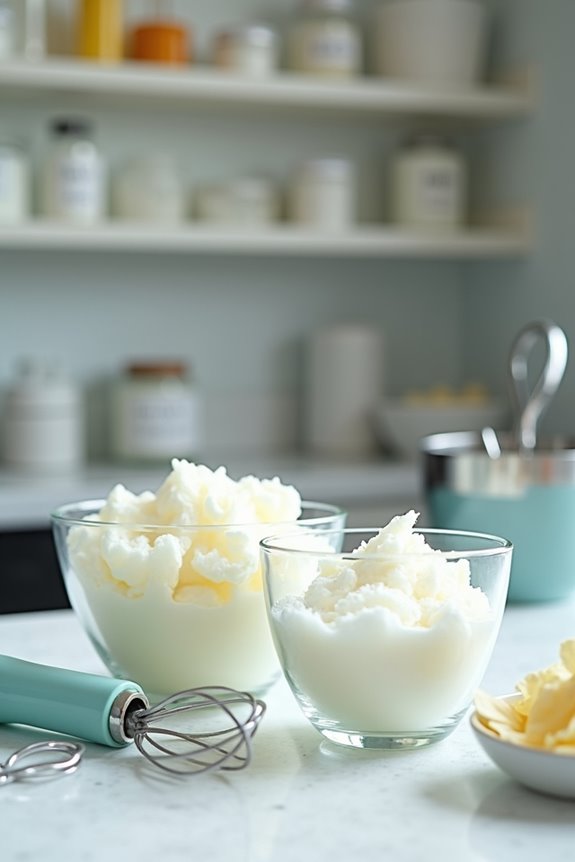
What if I told you that you don’t need any chemical reaction at all to make your baked goods rise? I’m talking about air-based leavening using egg whites and aquafaba—the cooking liquid from chickpeas. Here’s why they work well:
- Whipped egg whites trap thousands of tiny air bubbles, creating mechanical lift
- Aquafaba whips to stiff peaks just like eggs, making it perfect for vegan baking
- You’ll fold 2–3 stiffly beaten whites into your batter at the end to preserve volume
- One can of chickpea liquid (about 150 ml) equals 2–3 egg whites
- Use electric mixers for best results with both ingredients
The approach? No acids needed. Just trapped air doing the heavy lifting. It’s straightforward, reliable, and effective once you see it work.