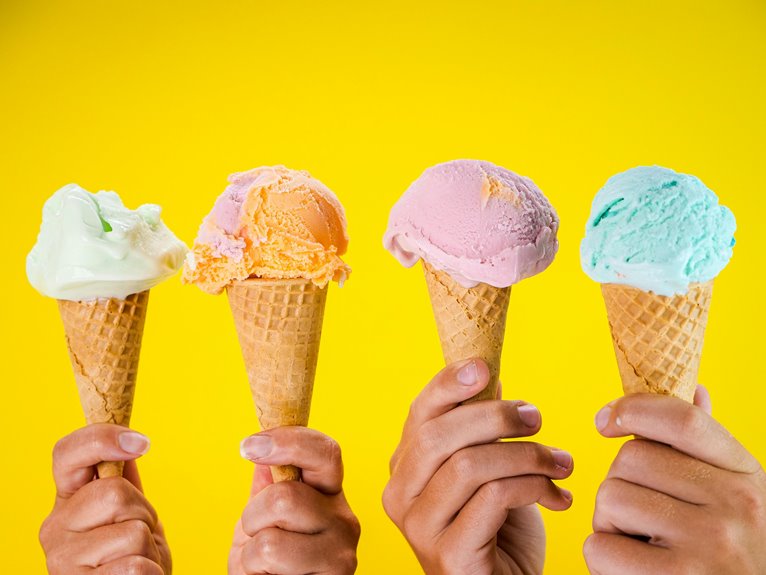
Frozen dairy dessert is basically ice cream’s lighter cousin—it’s got less than 10% milk fat instead of the real deal’s minimum 10%.
Manufacturers swap out dairy fat for vegetable oils like palm or coconut, then load it up with stabilizers to fake that creamy texture.
The result? It’s airier, melts faster, and tastes thinner on your tongue.
The ingredient list tells the whole story if you know what to look for.
What Makes Ice Cream “Real”
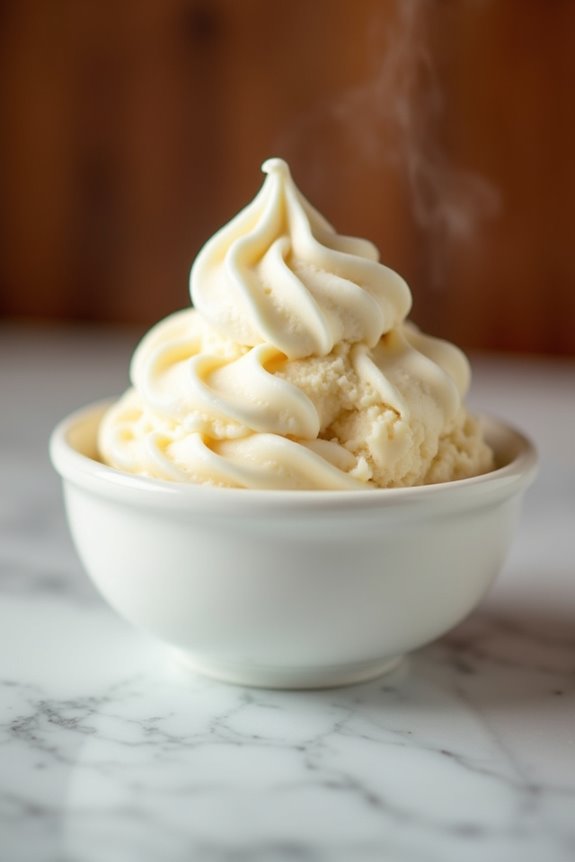
Ever wondered why some frozen treats taste creamier and richer than others? Real ice cream differs because of strict FDA standards. True real ice cream must contain at least 10% milk fat and around 20% total milk solids.
Here’s what separates quality ice cream from frozen dairy dessert: real ice cream uses simple ingredients like cream, milk, sugar, and sometimes eggs. No unnecessary additives or excessive stabilizers that make things gummy. The production process matters too—in-store churning and authentic recipes create that distinctive, fresh taste.
Lower air content and higher fat deliver that rich, creamy mouthfeel. When you see “ice cream” on packaging, you know it meets the legal definition for real ice cream.
Why the Difference Actually Matters
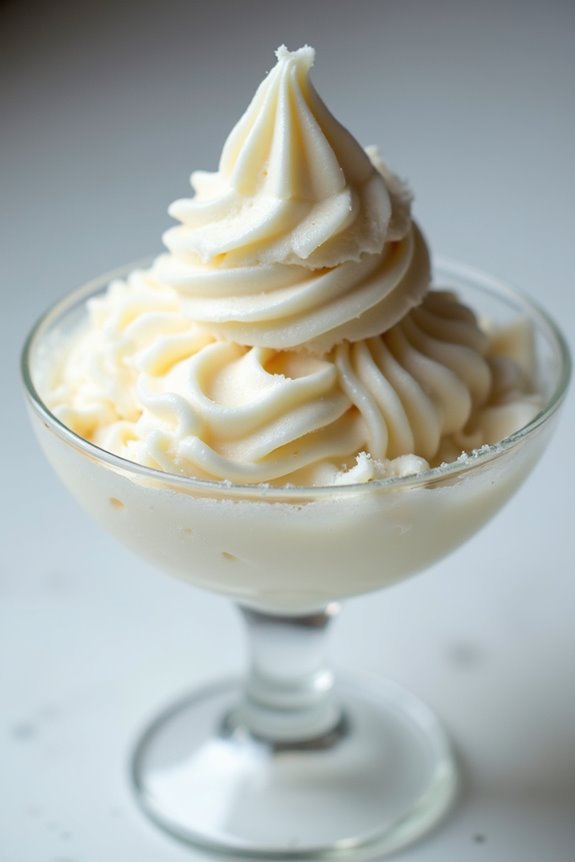
Why should you care whether you’re eating real ice cream or frozen dairy dessert? Here’s the thing: what you’re actually consuming matters more than you might think.
| Aspect | Real Ice Cream | Frozen Dairy Dessert |
|---|---|---|
| Milk Fat | Higher, creamier | Lower, lighter feel |
| Stabilizers | Minimal | Heavy reliance |
| Melt Behavior | Smooth, natural | Altered texture |
| Ingredient List | Simple dairy | Vegetable oils, substitutes |
When you choose frozen dairy dessert, you’re getting stabilizers and fat alternatives instead of actual cream. That affects how it tastes, melts, and feels in your mouth. I’m not saying one’s better—I’m saying you should know what you’re buying. Check those labels. Compare ingredients. You’ll spot the difference, and that knowledge helps you make choices that align with your preferences.
Vegetable Oils vs. Real Dairy
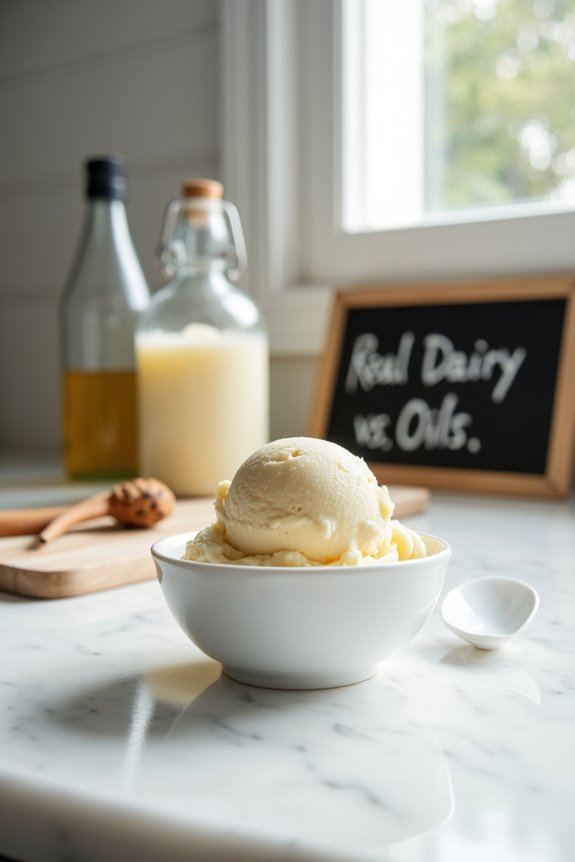
When I compare frozen dairy dessert to real ice cream, the biggest difference I notice is what’s actually in the bowl—vegetable oils like palm and coconut oil replace some of the dairy fat, which sounds like it might save money and calories, but here’s the catch: your body processes dairy fat and plant oils differently, affecting everything from how full you feel to what nutrients you’re actually getting. I’ve found that swapping real milk fat for oils gives you that lighter, melts-faster texture, but you lose some of the richness and staying power that makes traditional ice cream so satisfying. Understanding this swap matters because it changes not just how the dessert tastes and feels in your mouth, but also what you’re putting into your body nutritionally.
Oil-Based Ingredient Substitution
One of the biggest differences you’ll notice between frozen dairy dessert and traditional ice cream comes down to what’s actually in the container—specifically, whether that creamy texture comes from real dairy fat or vegetable oils like palm and coconut oil. When manufacturers swap dairy for these plant-based fats, they’re fundamentally changing your eating experience. You’ll detect a lighter mouthfeel, almost airier than traditional ice cream. The melting behavior shifts too—oil-based products melt faster and less evenly on your tongue. To compensate, producers load up on stabilizers and sweeteners, trying to replicate that richness dairy naturally provides. Understanding oil-based ingredient substitution helps you recognize what you’re actually choosing when you pick up frozen dairy dessert versus ice cream at the store.
Dairy Fat Nutritional Impact
How does your body process the fat you’re eating when you reach for frozen dairy dessert versus real ice cream? The difference matters.
Here’s what’s happening in your bowl:
- Real ice cream contains at least 10% dairy fat, creating that rich, satisfying taste
- Frozen dairy desserts swap milk fat for vegetable oils like palm or coconut
- Your body digests these plant-based oils differently than natural dairy fat
- Nutrition labels reveal the truth—check the fat source to know what you’re really eating
Real dairy fat gives you authentic creaminess and flavor complexity. Plant-based oils require heavy-duty stabilizers and sweeteners to replicate that experience. When you understand what’s in your frozen treat, you’re making informed choices that align with what your body needs.
Texture and Mouthfeel: Why Frozen Desserts Taste Thinner
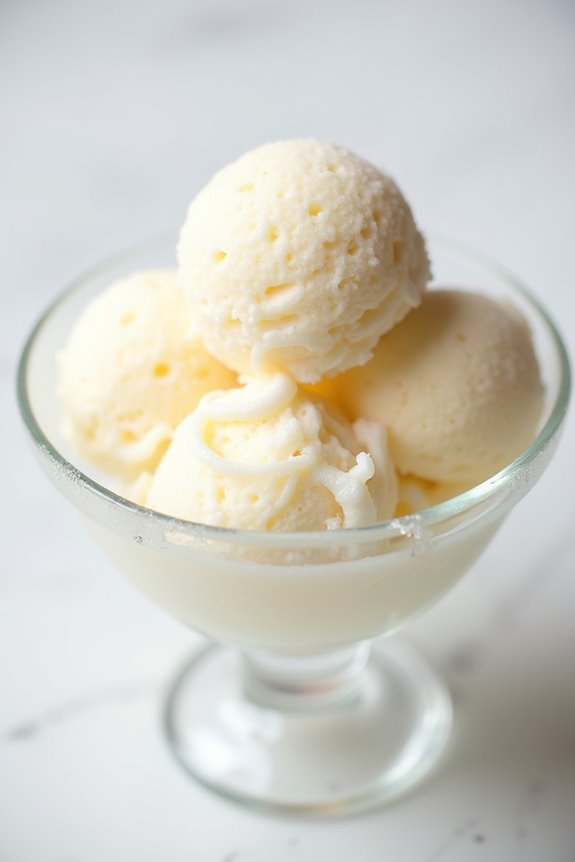
Ever noticed that some frozen treats feel lighter and melt faster on your tongue than traditional ice cream? That’s your frozen dairy dessert at work. These products use more stabilizers and air, which creates that distinctly thinner mouthfeel you’re experiencing.
| Factor | Ice Cream | Frozen Dairy Dessert |
|---|---|---|
| Milk Fat Content | Higher (richer) | Lower (lighter) |
| Stabilizer Use | Minimal | Increased |
| Melt Rate | Slower | Faster |
The lower milk fat content plays a significant role here. When manufacturers swap dairy fat for vegetable oils like palm or coconut oil, you lose that creamy density. Combined with extra air whipped into the mixture, you’re getting something that feels almost insubstantial compared to real ice cream. The difference is noticeable—that quick disappearing act on your palate.
Stabilizers: The Gummy Problem
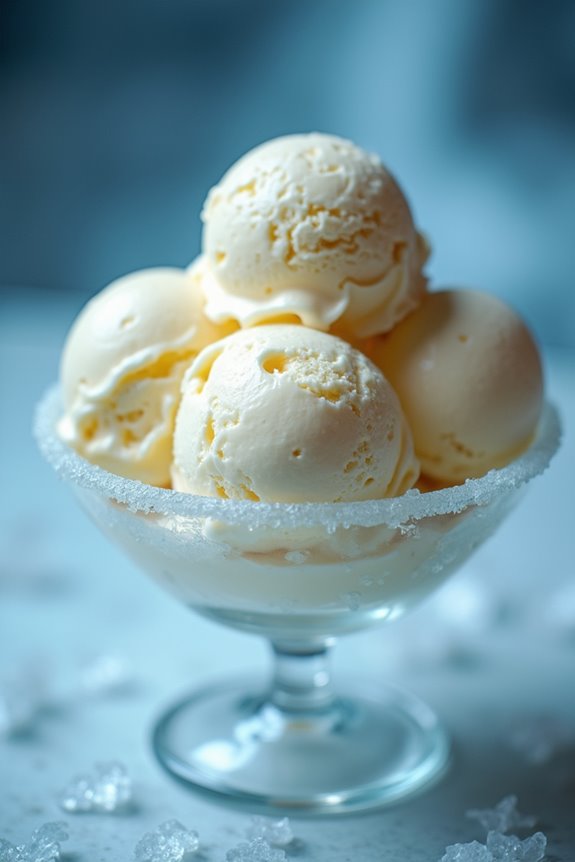
So we’ve established that frozen dairy desserts feel thinner and melt faster—but there’s a catch hiding in that smoother texture. Manufacturers pack these products with stabilizers to create that deceptively creamy mouthfeel you’re experiencing. Here’s what’s actually happening:
- Gums and thickeners replace milk fat’s natural creaminess
- Extra stabilizers bind water particles, preventing ice crystal formation
- The result feels smooth initially, then turns slightly gummy
- Your mouth detects the artificial texture almost immediately after
I’ve noticed this myself—that odd coating that lingers. Stabilizers do their job too well sometimes, creating a texture that’s less like ice cream and more like frozen pudding. You’re getting smoothness, sure, but at the cost of that natural dairy richness real ice cream delivers.
Price vs. Quality: Why Real Ice Cream Costs More
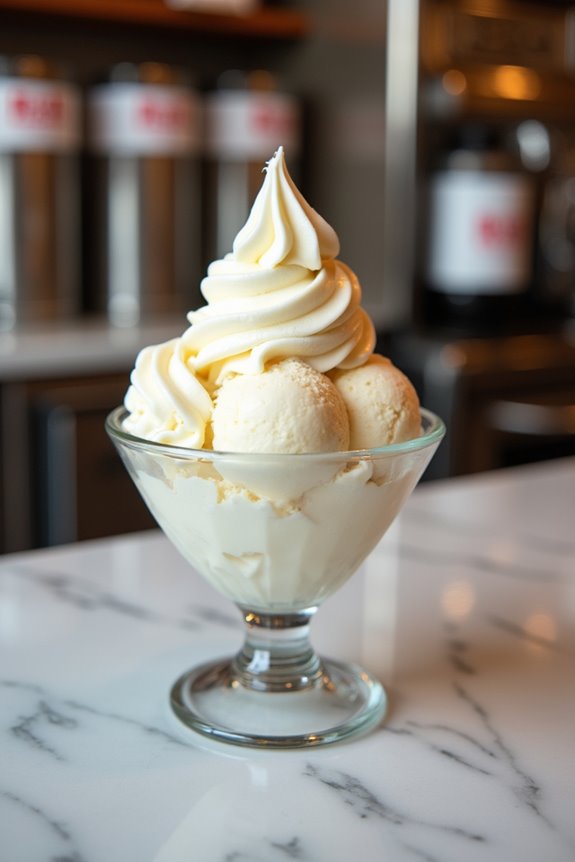
Why’s real ice cream sitting there at $6 a pint while frozen dairy dessert costs half that?
The answer’s simple: quality ingredients cost money. Real ice cream requires at least 10% milk fat and proper milk solids. That’s expensive. Frozen dairy desserts? They swap dairy for cheaper vegetable oils and pile on stabilizers instead. You’re paying for cream versus clever chemistry.
| Factor | Real Ice Cream | Frozen Dairy Dessert |
|---|---|---|
| Milk Fat | 10%+ | Lower |
| Main Fat Source | Dairy | Vegetable Oils |
| Stabilizers | Minimal | Heavy Use |
| Production Cost | Higher | Lower |
When you buy premium ice cream, you’re investing in richer flavor and smoother texture. That creaminess? It comes from actual dairy, not air and additives. Your taste buds notice the difference.
How to Spot Frozen Desserts on the Label
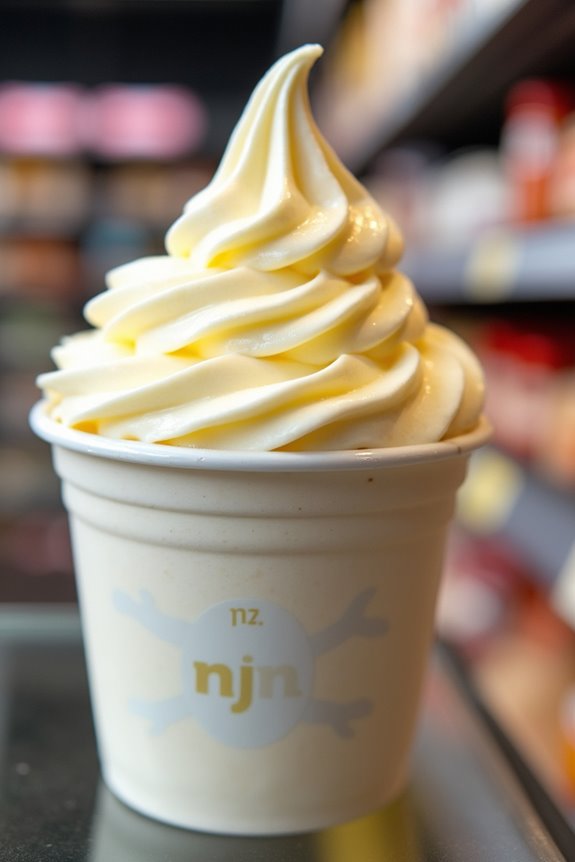
How do you tell the difference between real ice cream and frozen dairy dessert when you’re standing in the grocery store aisle?
Check the label: real ice cream says “ice cream,” has 10% milk fat minimum, and uses dairy—not vegetable oils.
Check the label carefully. Here’s what I look for:
- Product name—it’ll say “frozen dairy dessert” instead of “ice cream”
- Ingredient list—vegetable oils like palm or coconut oil replace some dairy
- Milk fat percentage—lower than the 10% minimum real ice cream requires
- Stabilizers and gums—these thicken the product at lower cost
Manufacturers must be upfront about what they’re selling. If you’ve bought frozen dairy dessert before, you’re not alone. Understanding labels helps you make choices that match what you actually want to eat. Next time you’re shopping, spend ten seconds reading that ingredient list. You’ll spot the difference right away.
Ingredient Breakdown: Ice Cream vs. Frozen Dessert
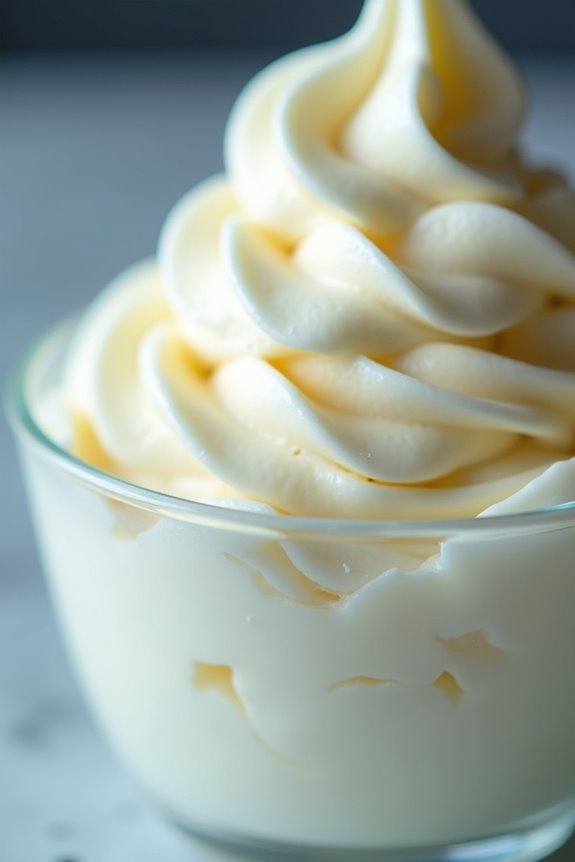
When you compare ice cream and frozen dairy dessert side-by-side, the ingredient list tells you everything you need to know about what you’re actually eating. Real ice cream contains at least 10% dairy milkfat from actual milk or cream, while frozen dairy desserts cut costs by swapping in palm or coconut oil instead—ingredients that don’t deliver that rich, creamy texture you’d expect. To make up for the missing dairy fat and keep things stable, manufacturers load frozen desserts with extra stabilizers and sweeteners, which is why they tend to feel lighter and melt faster on your tongue than the real deal.
Dairy Fat Content Differences
The biggest difference between ice cream and frozen dairy dessert comes down to one key ingredient: milk fat. When you’re comparing these two treats, here’s what separates them:
- Ice cream requires at least 10% milk fat by FDA standards
- Frozen dairy dessert contains less milk fat, often substituting vegetable oils instead
- Ice cream needs roughly 20% total milk solids for proper texture
- Frozen desserts rely on stabilizers and extra non-dairy fats to compensate
That lower milk fat content changes how the dessert feels in your mouth. You’ll notice frozen dairy dessert tastes lighter and airier because it’s less dense than traditional ice cream. Manufacturers boost texture through added stabilizers and sweeteners, creating that fluffy quality. The labeling tells the real story—if it doesn’t meet those milk fat requirements, it’s frozen dessert, not ice cream.
Stabilizers And Oil Substitutes
Why’d manufacturers swap out milk fat for vegetable oils in frozen dairy dessert? Cost. Simple as that. By replacing dairy fat with palm or coconut oil, companies save money while maintaining that creamy texture you’re craving.
Here’s the catch: oils alone don’t cut it. Manufacturers load these products with stabilizers—ingredients like guar gum and carboxymethyl cellulose—to mimic ice cream’s smooth mouthfeel. These stabilizers thicken the mixture and prevent ice crystals from forming during storage.
The trade-off? You’re getting more additives than traditional ice cream. Your frozen dairy dessert melts faster and feels lighter on your tongue because it’s literally less dense. It’s not bad, just different. Understanding these swaps helps you make choices that match what you actually want in your bowl.
Why Commercial Churning Makes Frozen Desserts Fluffier
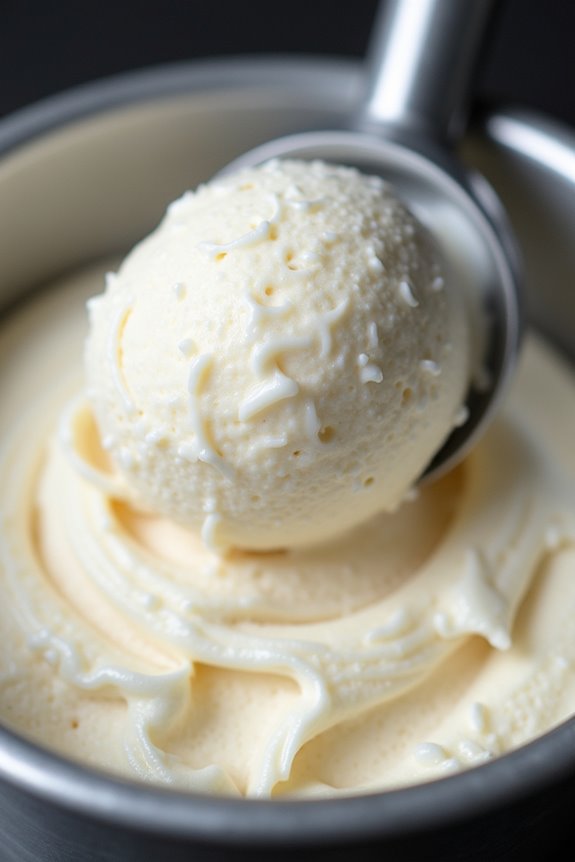
Commercial churning has a straightforward job: it whips air into frozen dessert mixtures, and that’s exactly why these products end up so fluffy. When manufacturers churn frozen dairy dessert, they’re incorporating tons of air bubbles throughout the blend. Here’s what happens during this process:
- Air gets mechanically mixed into the base
- Stabilizers help trap those air pockets in place
- The mixture becomes lighter, less dense overall
- Overrun increases, creating that characteristic fluffy texture
This churning technique matters. It’s why your frozen dairy dessert feels so light and airy compared to regular ice cream. The more air incorporated, the fluffier the final product becomes. That’s also why these desserts melt faster—there’s less actual dairy fat creating density.
Frozen Desserts and Your Health: Nutrition Reality Check
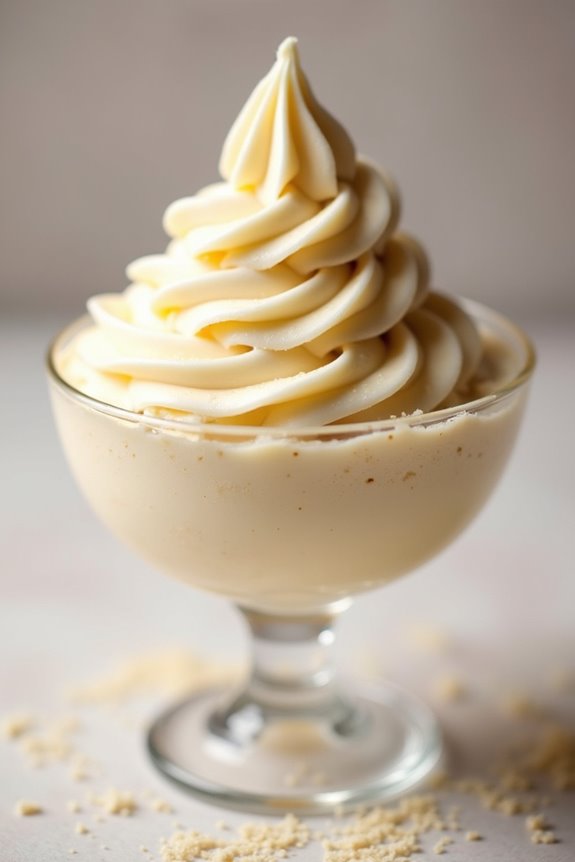
they’re not ice cream, and that distinction matters when you’re thinking about what you’re actually eating. Let me break down what you’re really getting nutritionally.
| Product | Milk Fat | Added Fats | Calories (per serving) |
|---|---|---|---|
| Ice Cream | 14%+ | Dairy only | 150-200 |
| Frozen Dairy Dessert | 2-6% | Vegetable oils | 100-180 |
| Frozen Treat | <2% | Mixed sources | 80-140 |
Here’s what matters: reading those nutrition labels tells you the actual calories and fat content. Frozen dairy desserts use vegetable oils instead of pure dairy fat, which changes how your body processes them. The stabilizers and sweeteners they add affect calories too. Check that label. It’s your clearest window into what you’re actually consuming.
Which Frozen Treat Should You Buy?
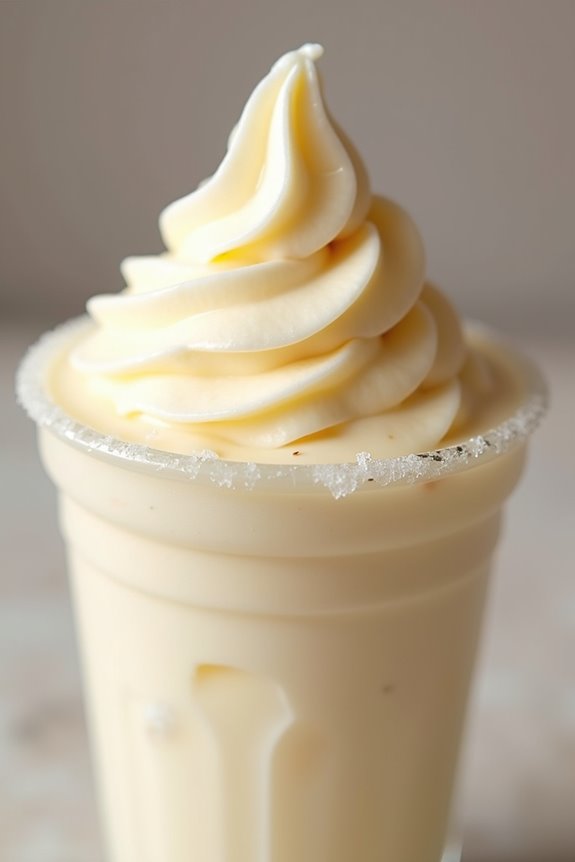
Now that you know what’s actually in these products, you can make a smarter choice at the grocery store. I’ve learned that reading labels really matters when you’re deciding between options.
Reading labels really matters when you’re deciding between grocery store options—now you can make a smarter choice.
Consider these factors:
- Check the milk fat percentage – Real ice cream has at least 10% milk fat, while frozen dairy dessert doesn’t
- Look at the ingredient list – Notice if vegetable oils replace dairy content
- Compare prices – Frozen dairy dessert costs less, but you’re getting fewer dairy ingredients
- Think about what you want – Do you prefer rich creaminess or a lighter texture?
Here’s my take: if you’re craving that indulgent, creamy experience, splurge on real ice cream occasionally. But if you want a refreshing treat at a lower cost, frozen dairy dessert works fine. Either way, you’re now choosing with your eyes open.