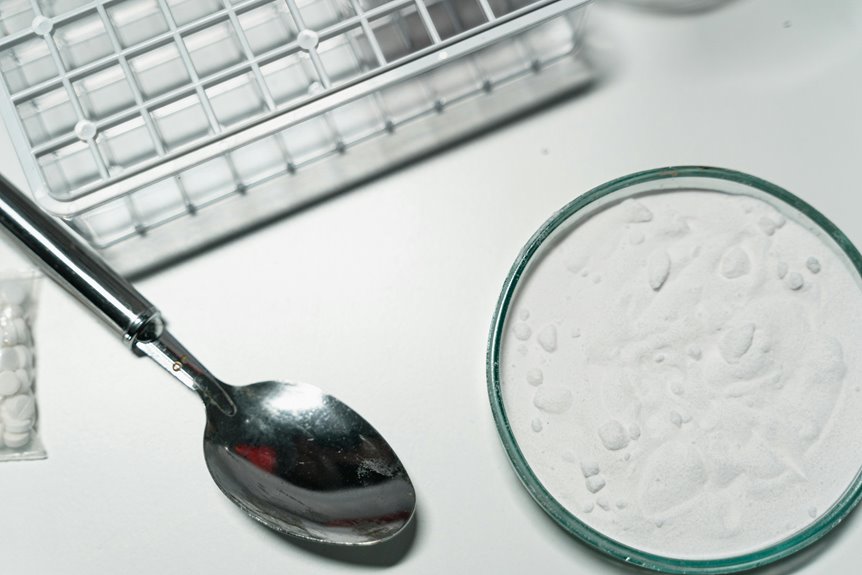
Baking soda raises your pool’s total alkalinity, which acts like a chemical shock absorber for pH swings. I use it to stabilize water, protect equipment from corrosion, and keep my sanitizer working efficiently.
About 1.5 pounds per 10,000 gallons bumps alkalinity up roughly 10 ppm—simple math, reliable results.
Low alkalinity causes pH to bounce around, damaging plaster, metal fixtures, and your eyes. Test first, add gradually, retest after six hours, and you’ll understand exactly why this inexpensive ingredient matters.
What Baking Soda Actually Does in Your Pool
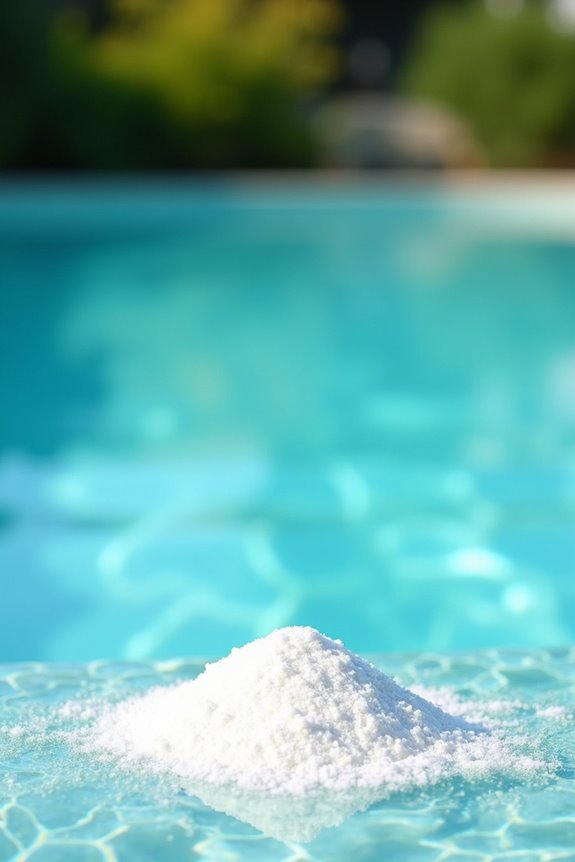
Ever wonder why baking soda keeps showing up in pool maintenance guides? It’s useful. Baking soda, also called sodium bicarbonate, does one main job: it raises your pool’s total alkalinity, or TA. Think of TA as your pool’s pH stabilizer. When TA dips too low, your pH swings wildly, making the water harder to balance. Baking soda fixes this without dramatically spiking pH like other chemicals do. Since it’s naturally around 8.3, it gently raises TA while keeping pH relatively stable. You’ll add roughly 1.5 pounds per 10,000 gallons to boost TA by about 10 ppm. It’s cost-effective and reliable—a standard tool serious pool owners keep in their maintenance toolkit. Test first, add gradually, retest after 6–24 hours, and you’re done.
Why Low Alkalinity Damages Your Pool (and Why Baking Soda Helps)
Now that you know baking soda’s main job—raising total alkalinity—let’s look at why that job matters so much. Low TA creates serious problems for your pool:
- pH swings wildly, making water corrosive and damaging your equipment
- Metal fixtures pit and rust when pH drifts toward extremes
- Plaster and concrete surfaces etch, requiring expensive repairs
- Your eyes and skin get irritated from unstable water chemistry
Here’s the thing: testing TA regularly prevents these headaches. You’ll want to maintain a TA between 80–150 ppm. When TA drops below that range, baking soda steps in to stabilize pH, protecting your pool surfaces and hardware. By keeping alkalinity balanced, you’re giving your pool protection against corrosive water and costly damage.
Test Your Water First: When Alkalinity Is Too Low
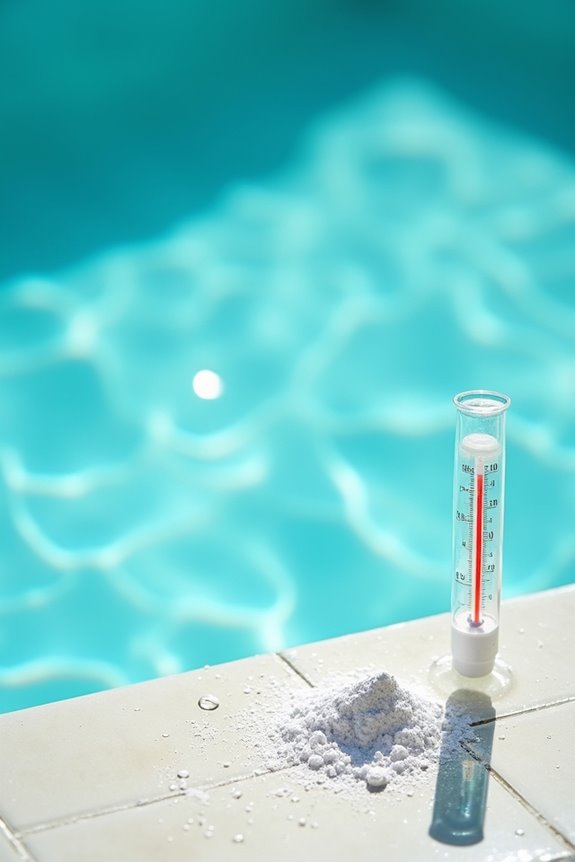
Before you grab that box of baking soda, I’d recommend testing your pool water first—it’s the only way you’ll know if low alkalinity is actually your problem. If your total alkalinity (TA) sits below 80 ppm, you’ll have unstable pH that’ll swing around like a pendulum, making your pool harder to maintain and less comfortable to swim in. Once you’ve confirmed those numbers, you’ll know exactly how much baking soda you need to bring your alkalinity back to the ideal range of 110–150 ppm.
Why Testing Matters First
Why should you test your pool water before dumping in baking soda? I’ll tell you—guessing gets expensive and wasteful. Testing your pool water first reveals whether you actually need a TA adjustment. Here’s what matters:
- Low alkalinity causes pH swings. Without testing, you won’t know if rapid pH changes are already damaging your equipment.
- TA below 80 ppm signals a problem. Testing confirms whether you’re in the danger zone before adding anything.
- You’ll avoid overdoing it. Adding baking soda blindly wastes product and creates imbalance.
- Re-testing validates your work. Check results 6 to 24 hours later to confirm your adjustment worked.
Testing keeps total alkalinity stable, supports pH stability, and protects your investment. It’s the foundation of smart pool maintenance.
Identifying Low Alkalinity Levels
How do you know if your pool’s alkalinity has dropped too low? You’ll need to test regularly—I recommend daily checks—because low alkalinity below 80 ppm sneaks up on you. When total alkalinity drops, your pH becomes unstable and water turns corrosive, which nobody wants.
I’ve learned that TA testing reveals the problem before it worsens. If your results show numbers under 80 ppm, that’s your signal to act. Here’s what matters: baking soda raises alkalinity by roughly 10 ppm for every 1.5 pounds per 10,000 gallons.
One caution though—if your pH is already below 7.2, raise alkalinity cautiously since pH and TA interact closely. After adding baking soda, retest within 6 to 24 hours. You’re aiming for that range between 110–150 ppm.
Before Adding Any Baking Soda
Before Adding Any Baking Soda
The temptation to toss in baking soda and call it a day is real, but I’d urge you to pump the brakes—testing comes first, always. You can’t fix what you don’t know exists. Here’s what I recommend doing before adding anything:
- Test your pool water with a reliable kit to confirm total alkalinity levels
- Check if TA is below 80 ppm, which signals low alkalinity that needs correction
- Calculate your pool size (knowing your 10,000 gallons helps with dosing accuracy)
- Document your baseline numbers so you can track changes after treatment
Low TA causes erratic pH stability and unpredictable water chemistry. Baking soda raises total alkalinity specifically, not pH. Testing first means you’re actually solving the problem, not creating new ones. This small step prevents frustration down the road.
Calculate How Much Baking Soda You Need
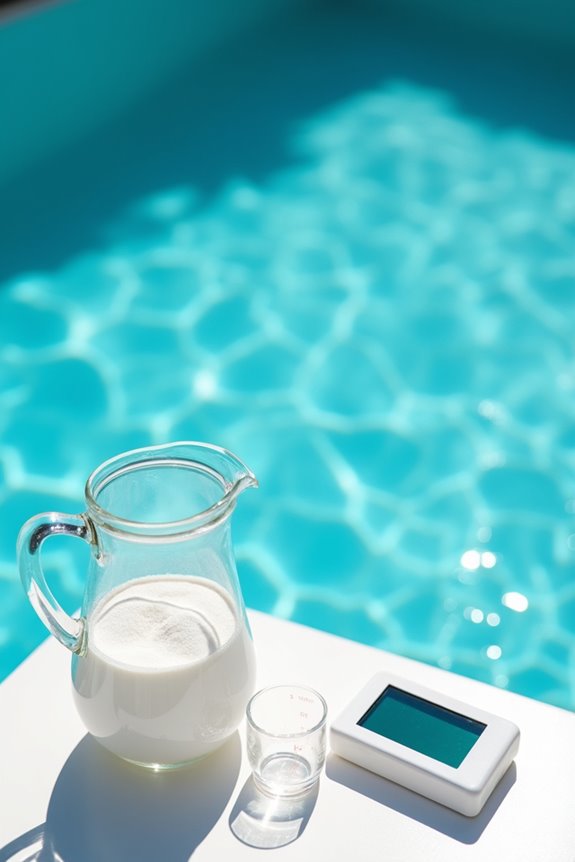
Before you grab that box of baking soda and start pouring, you’ll need to figure out exactly how much your pool needs. Here’s the basic math: for every 10,000 gallons of water, about 1.5 pounds of baking soda raises total alkalinity by roughly 10 ppm. First, measure your pool’s volume in gallons—check your pool documentation or do some quick calculations. Next, test your water to see your current alkalinity level and desired ppm increase. If your pH tests below 7.2, I’d recommend starting with 3–4 pounds to lift both pH and total alkalinity simultaneously. Since we’re all learning here, beginners should calculate half to three-quarters of the recommended amount. This conservative approach lets you retest after 6–24 hours and adjust gradually without overshooting.
How to Add Baking Soda Correctly
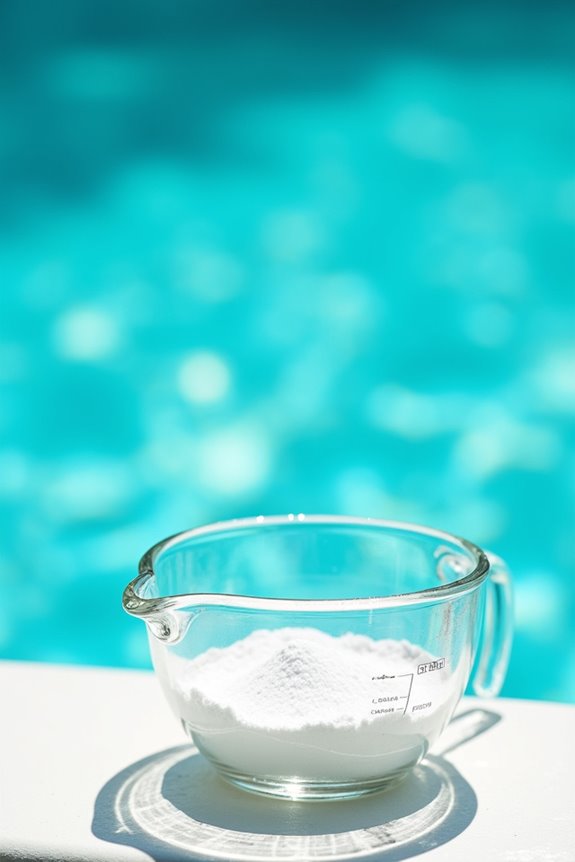
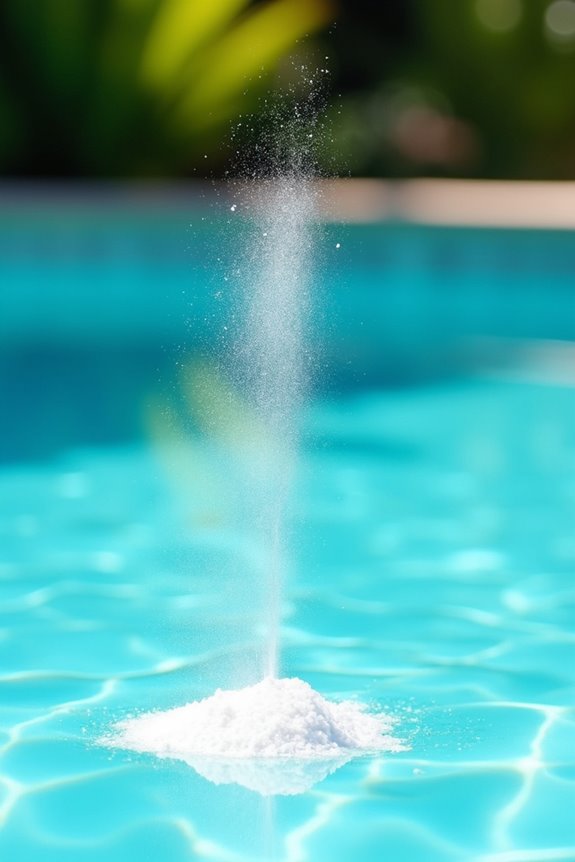
Now that you’ve calculated your baking soda amount, it’s time to actually get it in the pool—and the method matters. Here’s how to do it:
- Sprinkle in wide arcs across the water’s surface to prevent clumping and achieve even distribution of your alkaline powder
- Avoid windy days; you’ll lose product to the air and end up with uneven dosing
- Keep circulation running for at least six hours so the baking soda dissolves completely and mixes throughout
- Retest between 6–24 hours later to check your total alkalinity and pH levels
After addition, retest your alkalinity and pH. If either’s still off target, adjust accordingly. This careful approach to pool maintenance prevents overdosing and keeps your water balanced properly.
Retest and Adjust: Confirm Your Results
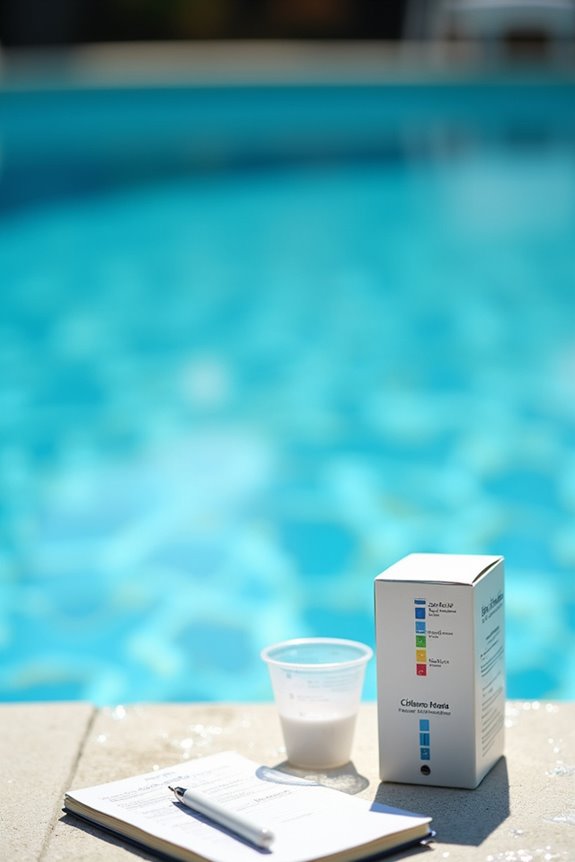
Why wait to check your work? Testing your pool after adding baking soda is where you’ll actually see if you’ve nailed the balance. I retest between 6 and 24 hours later to let everything settle properly. Here’s what I’m looking for: target alkalinity (TA) between 110–150 ppm and pH between 7.2 and 7.8. If my alkalinity’s still low, I don’t panic—I just add more baking soda in smaller amounts and test again. This gradual approach prevents overshooting, which honestly saves you headaches later. If pH drops below 7.2 after raising TA, I retest to confirm TA’s actually low before adding anything else. Small, measured adjustments and patience create the stable pool chemistry we’re all after.
Problems Baking Soda Can Fix
When your pool’s alkalinity dips below 80 ppm, you have a real problem on your hands—corrosive water that’ll eat away at your equipment and surfaces faster than you’d expect. Baking soda tackles this by raising your total alkalinity and stabilizing pH swings that’d otherwise complicate pool maintenance.
Here’s what baking soda fixes:
- Low TA levels – Prevents corrosive water damage to pumps, filters, and concrete
- Rapid pH fluctuations – Creates a stable buffer so your water stays balanced longer
- Equipment deterioration – Protects liners, metal parts, and plumbing from rust and wear
- Water instability – Makes dosing adjustments easier by establishing a solid foundation
Typically add about 1.5 pounds per 10,000 gallons, then retest after 6–24 hours to confirm TA is back in that 100–150 ppm range.