

Most dessert plates I’ve seen range from 6 to 8 inches across, with 7 to 8 inches being the preferred size for everyday use. You’ll find smaller 6-inch options for petite servings and some premium lines that stretch to 8.5 inches or beyond.
The variation depends on your brand and style preference, so one manufacturer’s standard might differ by nearly an inch from another’s.
If you’re choosing between sizes, understanding how plate dimensions affect both presentation and storage can help you pick what works best for your needs.
What Size Are Dessert Plates?
Ever wonder why your dessert plate looks so different from your dinner plate? Dessert plates typically range from 6 to 8 inches in diameter, which is noticeably smaller than dinner plates at 10 to 12 inches. Most dessert plates fall into that sweet spot of 7 to 8 inches—it’s the ideal size for portion visibility and easy handling. Some collections offer slightly roomier 8.5-inch options if you want extra presentation space. On the smaller end, you’ll find 6-inch dessert plates too. This sizing serves a purpose. Smaller dessert plates help us enjoy our sweets without feeling overwhelmed, while still giving our favorite treats appropriate respect on the table.
Standard Dessert Plate Dimensions Explained
I’ve found that most dessert plates fall into a 6 to 8-inch diameter range, though you’ll notice manufacturers get creative with their sizing—some offer 6.5 inches, others go up to 8.5 inches depending on the collection and brand. The standard range lands around 7 to 8 inches for plates that work well with most dessert servings and coordinate nicely with your other dinnerware. What matters is how these sizes function: smaller 6-inch plates work best for delicate, bite-sized treats, while the larger 8-inch options handle generous cake slices and fancy plated desserts without looking sparse.
Diameter Range Breakdown
When you’re shopping for dessert plates or setting a fancy table, what exactly are you looking for? Understanding diameter ranges really helps. Standard dessert plates typically measure between 6 and 8 inches across, with 6 inches being the smaller option and 8 inches representing the larger end. Some manufacturers push it to 8.5 inches, depending on their style. These sizes sit comfortably between miniature plates—those tiny 3 to 5 inch ones for petit fours—and full dinner plates, which clock in around 10 to 12 inches. Knowing this diameter breakdown helps you pick plates that match your needs. Whether you’re serving elegant desserts or casual sweets, you’ll find the right fit within this range.
Manufacturer Size Variations
Why do dessert plates vary so much from one manufacturer to another? Well, I’ve found that different companies have their own size standards, and it’s quite common. Most dessert plates fall between 6 to 8 inches in diameter, but that’s where the similarities end. Some manufacturers lean toward the smaller 6-inch option—appropriate for those delicate, bite-sized treats. Others push toward 8 to 8.5 inches, giving you more room for generous slices or artfully plated desserts. Then you’ve got the miniature options at 3 to 5 inches for petit fours. These size variations mean you’re shopping for plates that match your specific dessert style. When you’re building your collection, checking measurements matters because one company’s “standard” might differ from another’s by nearly an inch.
How Do Dessert Plates Compare to Dinner Plates?
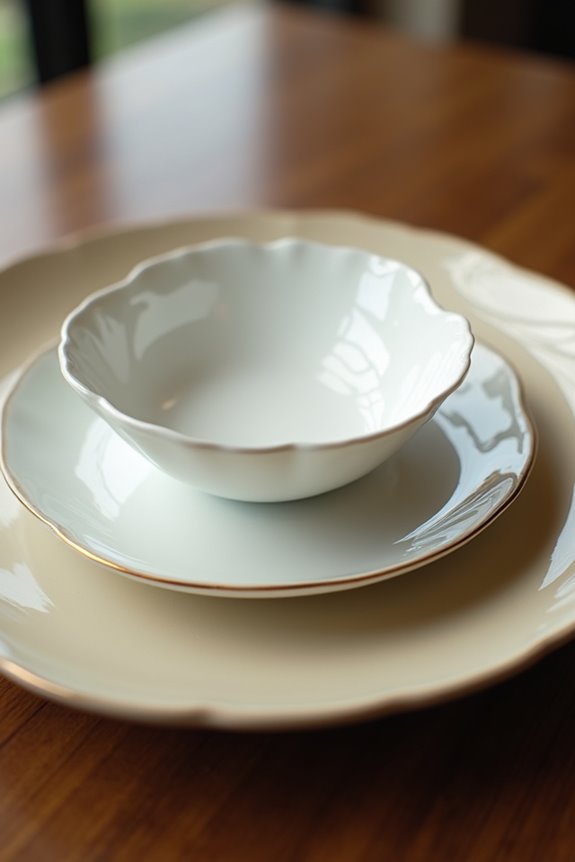
When you set a table, you’ll notice dessert plates (6–8 inches) are noticeably smaller than dinner plates (10–12 inches), and that size difference matters more than you might think. The smaller dessert plate makes your slice of cake or pastry look more generous, while the larger dinner plate gives you room to spread out your main course without everything feeling cramped together. Beyond just size, these plates differ in material and design too—dessert plates are crafted specifically to showcase sweets, whereas dinner plates are built tough enough to handle everything from roasted vegetables to gravies without any issues.
Size Difference Comparison
How much smaller are dessert plates, really? I’d say the difference is pretty noticeable once you see them side by side. While dinner plates stretch from 10 to 12 inches across, dessert plates typically measure just 6 to 8 inches—that’s a solid 2 to 4 inches smaller in diameter. Some dessert plates max out around 8.5 inches, giving you extra room for generous sweet portions, but they’ll never match a standard dinner plate’s size. Here’s what matters: that size gap actually shapes how we experience desserts. Smaller dessert plates make individual servings feel deliberate and purposeful. They’re not just scaled-down versions of dinner plates; they’re designed to highlight each bite and make modest portions look appropriately satisfying.
Portion Perception Impact
The real effect of dessert plates happens when you put them to work—a smaller plate doesn’t just hold your dessert, it actually changes how your brain perceives it. Here’s what I’ve noticed: when you serve a slice of cake on a standard 6–8 inch dessert plate size, it looks noticeably bigger than the same slice on a 10–12 inch dinner plate. That negative space around your dessert matters. Your eyes focus on the treat itself, making modest portions feel more satisfying and intentional. It’s like the plate whispers, “This is special,” rather than shouting it. The smaller surface area creates visual balance, so your dessert doesn’t get lost in empty plate real estate. You’re not just eating less—you’re enjoying more.
Material And Design Distinctions
Beyond their smaller footprint, dessert plates and dinner plates differ notably in how they’re made and what they look like. Dessert plates typically feature more decorative designs—think glazes, patterns, or fancy edges—to complement your sweet treat. Materials matter too. You’ll encounter porcelain, bone china, ceramic, glass, and stoneware, each with different durability levels and appearances. Rimmed dessert plates contain sauces and garnishes effectively, while flat profiles stack easily for storage. That said, not all dessert plates handle microwaves or dishwashers equally. Some glazes and materials require hand washing to maintain their condition. When you’re shopping, checking compatibility labels helps your dessert plates fit your everyday lifestyle, whether you’re rushing through weeknight cleanup or hosting something special.
Small Dessert Plates for Petite Servings
When you’re serving up something special—like a single cupcake, a delicate stack of macarons, or a bite-sized chocolate creation—you’ll want a plate that matches the occasion. That’s where small dessert plates come in. I’ve found that 6-inch dessert plates, measuring around 15 centimeters in diameter, are perfect for petite servings. They’re not too big, not too small—just right for emphasizing portion control and creating visual balance with delicate sweets.
Some collections even offer 5-inch mini options if you’re going ultra-fancy. What I appreciate most? These smaller dessert plates fit naturally into larger place settings, leaving plenty of breathing room on your table. The result is a lighter, more elegant presentation that gives your dining experience a refined quality.
Medium Dessert Plates for Individual Portions
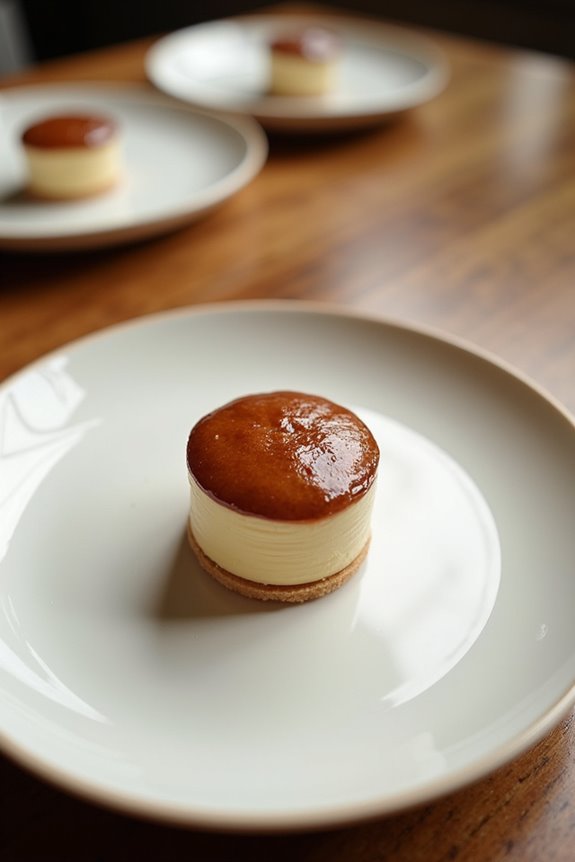
How do you find that sweet spot between too small and too large? Medium dessert plates, ranging from 6 to 8 inches in diameter, hit that mark perfectly. I’ve found that a 7 to 7.5 inch plate works well for most desserts—it’s the Goldilocks zone of dinnerware.
These dessert plates give you room to showcase individual portions of cake, pastries, or tarts without feeling cramped. You’re not fighting for space when you add decorative garnishes or sauces. They’re noticeably smaller than dinner plates (which run 10–12 inches), so they signal to your guests that dessert is different from the main course. Plus, this size naturally encourages portion control while keeping presentation elegant. You’ll appreciate how versatile they are across different dessert styles.
Large Dessert Plates for Generous Slices
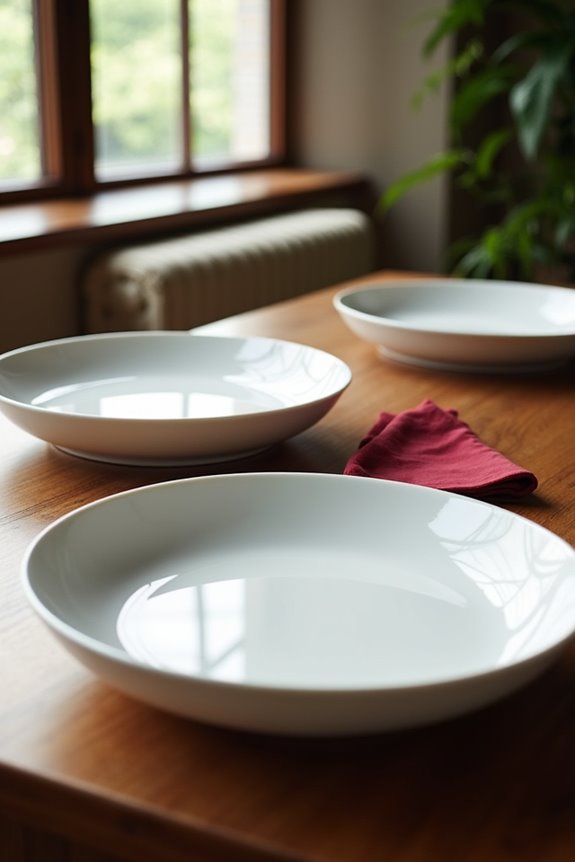
When you’re plating a generous slice of cake or a layered dessert masterpiece, an 8 to 9 inch plate gives you the breathing room you need—those extra inches let each component shine without crowding. You’ll notice how that larger surface area works in your favor, creating negative space around your creation that makes even a simple slice look more intentional and carefully composed. Whether you’re stacking multiple components or adding decorative elements like sauce drizzles and garnishes, this size category keeps your plating from feeling cramped and allows for thoughtful presentation.
Accommodating Layered Dessert Compositions
Ever noticed how a towering slice of cake can look awkward on a tiny plate? That’s where understanding dessert plate size matters. I’ve found that 8–9 inch plates work well for layered desserts because they give you breathing room. When you’re stacking cake layers, adding fruit toppings, and drizzling sauce, you need space that won’t feel cramped.
Here’s what I’ve discovered: these larger plates maintain proportion between your dessert and the dinnerware itself. This balance actually makes portions look better and more intentional. Plus, you’ll have room for garnishes on the side without everything feeling squeezed together.
The extra space also makes eating easier—no accidental fork-meets-plate collisions. When you’re working with multi-element compositions, going bigger is the practical choice.
Enhanced Visual Presentation Space
Why does that same slice of cake look so much better on a bigger plate?
Larger dessert plates—ranging from 8 to 9 inches in diameter—change how your dessert appears. You’re not imagining it. That extra space creates what I call “negative space,” making your portion look more impressive without actually serving more food.
Here’s what makes this work:
- Creates breathing room around your dessert
- Highlights multi-component compositions with toppings and garnishes
- Makes standard portions appear more generous visually
- Provides canvas space for creative plating arrangements
- Keeps sauces contained within elegant rim designs
When you’re plating at home or enjoying restaurant desserts, you’ll notice how porcelain or ceramic dessert plates in larger sizes elevate the entire experience. That perceived generosity? It matters psychologically. Bigger plates make us feel celebrated, which, frankly, is worth considering when enjoying something sweet.
Miniature Plates for Petit Fours and Bites
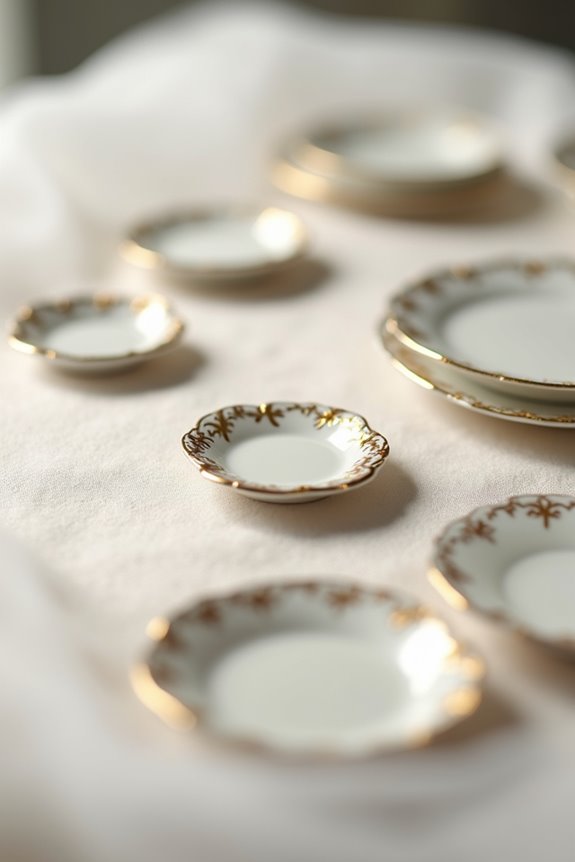
How small can a dessert plate actually get? I’ve discovered that miniature plates typically range from 3 to 5 inches across—perfect for showcasing petit fours, bite-sized treats, and amuse-bouches. They’re effective tools for creating elegant, focused presentations.
| Size (inches) | Size (cm) | Best For |
|---|---|---|
| 3 | 7.6 | Single bites |
| 4 | 10.2 | Petit fours |
| 5 | 12.7 | Small tasting portions |
What I value about miniature plates is how they let each dessert shine. You’re not crowding your display—you’re curating it. I use them in tiered arrangements at dessert stations, and they work well alongside larger plates for multi-course menus. The stability matters too; I choose porcelain or ceramic options with appropriate weight to prevent tipping. They’re an important element of sophisticated, intentional plating.
Why Plate Size Matters for Dessert Presentation
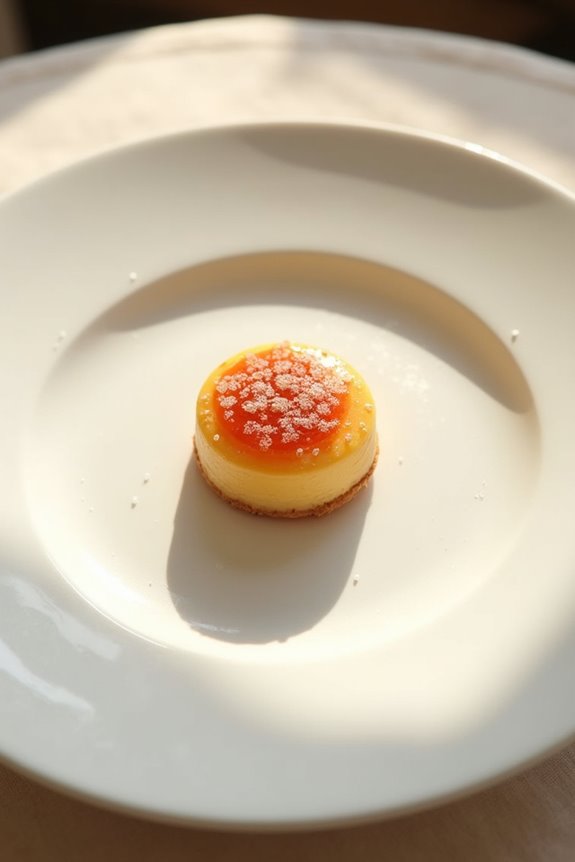
I’ve learned that the plate you choose makes a real difference in how your dessert actually looks and tastes—well, looks anyway—because the right size creates visual balance, controls how much you’re eating, and makes even a simple dessert feel polished. When I plate a delicate tart on a 6-inch plate versus an 8-inch one, the smaller plate makes it look generous and impressive, while the larger plate gives me room to add garnishes and negative space that draw your eye to the dessert itself. Getting the proportions right between dessert and plate is like finding the perfect frame for a picture; it’s the difference between something looking thoughtfully presented and something that just sits there.
Visual Balance and Proportion
The plate you choose isn’t just a vessel for your dessert—it’s a tool that shapes how your creation looks and feels to whoever’s eating it. Visual balance matters. Here’s what I’ve learned about getting it right:
- A 6-inch plate makes single desserts stand out, creating a focal point
- 8-inch plates give you room to play with negative space and decorative elements
- Round plates naturally guide the eye toward your center creation
- Square or rectangular plates create interesting visual tension and modern aesthetics
- Rimmed designs help contain sauces without looking chaotic
When I’m plating, I consider how much white space surrounds my dessert. Too crowded? It feels cramped. Too empty? It looks insufficient. The right balance pairs your dessert’s size with intentional breathing room.
Portion Control and Perception
Why does a modest slice of cake look generous on a 6-inch plate but skimpy on a 10-inch dinner plate? That’s where portion control and perception intersect. When I serve dessert on a smaller plate, the negative space shrinks, making each bite feel more substantial. A 6-inch plate creates visual abundance. Switch to a standard 10-inch dinner plate, and suddenly that same dessert appears lost and inadequate. I’ve learned that dessert plates in the 6–8 inch range strike the perfect balance. They’re purposefully sized to showcase proper portion control while making treats look satisfying. Your guests perceive value and care. That psychological approach? It’s intentional design working in your favor, transforming modest portions into memorable moments through smart sizing choices.
Enhancement of Dessert Appeal
Once you’ve nailed the psychology of portion control, you’re ready to think bigger about what that plate actually does for your dessert’s appearance.
The right plate size elevates how your dessert looks, making it more appealing to eat. Consider these key ways plate size enhances your presentation:
- Smaller plates (6 inches) create focused designs
- Larger plates (8–9 inches) offer breathing room for components
- Extra space lets you add decorative sauces without crowding
- Negative space draws attention to your dessert’s best features
- Multiple elements shine without looking cluttered or cramped
When you match your dessert plate size to your creation—whether it’s a delicate tart or layered cake—you’re not just serving food. You’re creating an experience that feels intentional and thoughtfully designed.
How Do I Choose the Right Size for My Occasion?
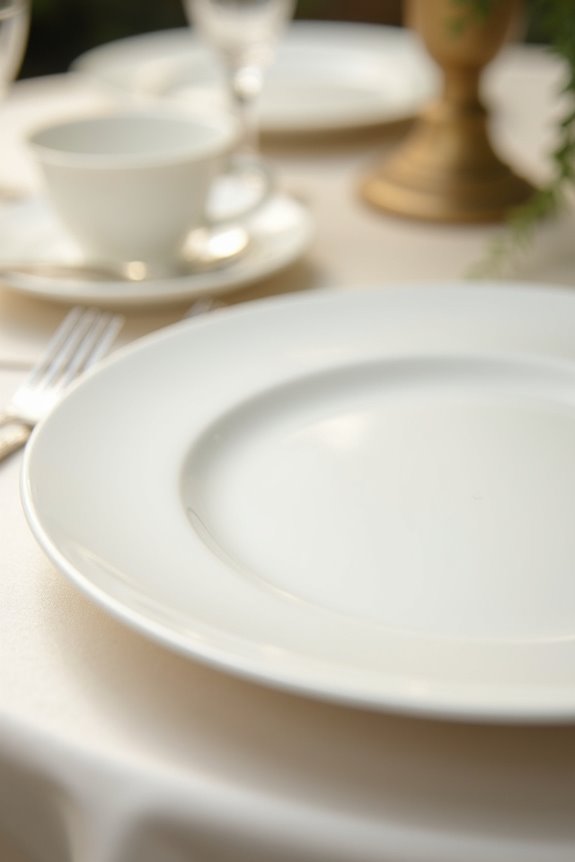
Selecting your dessert plate size really comes down to understanding what you’re serving and where you’re serving it. For everyday desserts at home, I’d grab a smaller plate—around 6 inches—since it keeps things simple and intimate. But when you’re hosting a dinner party or celebration, that’s your moment to go bigger. An 8 or 9-inch plate gives generous portions room to breathe, making each dessert look appealing without cramming everything together. Think formal dinner? Rimmed or decorative plates add polish to the whole experience. Casual hangout? Plain designs work perfectly fine. The real trick is matching your dessert plate size to your occasion’s vibe. Smaller plates for cozy moments, larger ones for impressive presentations. That balance affects how your dessert actually feels to eat.
Material and Finish Considerations
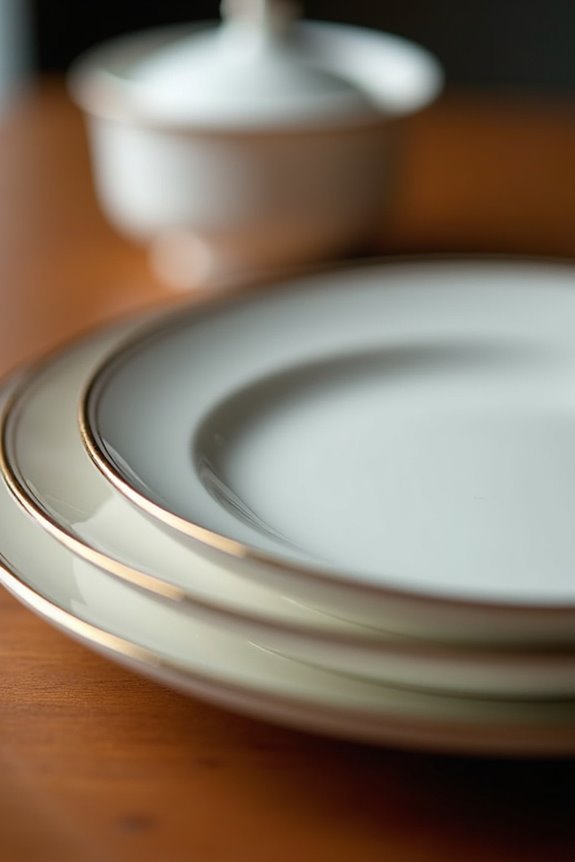
Now that you’ve picked your plate size, it’s time to think about what your dessert plates are actually made of—because the material you choose impacts everything from how your dessert looks to how easy it is to clean.
Your material options shape your whole experience:
- Porcelain and bone china offer strength and that refined, elegant look
- Ceramic gives you flexibility with glazes and textures for creative aesthetics
- Glass brings transparency and modern appeal to your table
- Durability varies by material, affecting long-term value
- Maintenance differs—some glazes resist staining better than others
The rim style and glaze type matter too. They influence how sauce splashes behave and whether your plates survive the dishwasher. Think about what fits your lifestyle, and you’ll have made a solid choice.
Dessert Plates vs. Salad Plates: Key Differences
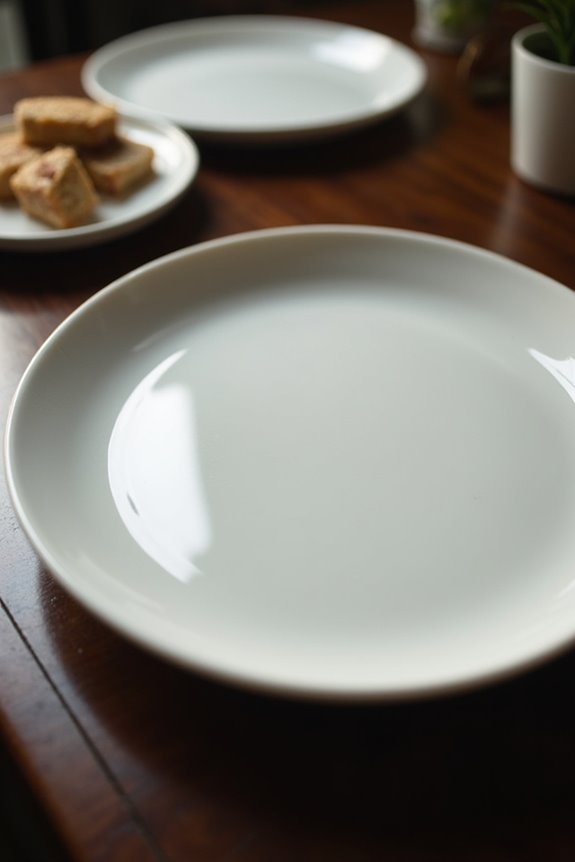
Ever stood in front of your plate cabinet wondering whether you’re grabbing the right dish for the job? I’ve totally been there. Here’s the thing: dessert plates and salad plates look similar, but they’re actually different options. Dessert plates run 6 to 8 inches across—perfect for showcasing that slice of cake or pastry. Salad plates? They’re slightly bigger, measuring 7.25 to 8.75 inches, giving your greens more room. The real difference isn’t just size, though. Dessert plates present sweets and help you see appropriate portion sizes for treats. Salad plates handle lighter courses and control how much salad you’re actually eating. So next time you’re choosing, remember: dessert plates are the smaller, sweet-focused option.
Popular Dessert Plate Sizes by Brand
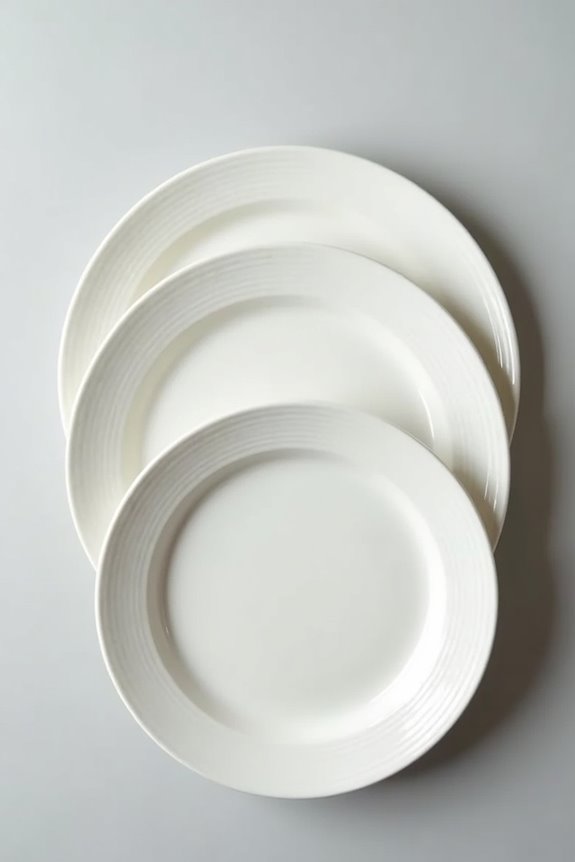
Once you’ve figured out that dessert plates are your sweet spot—literally—you might wonder what sizes the brands you actually use are offering.
I’ve found that popular brands keep things pretty consistent when it comes to dessert plates size. Most fall within that trusty 7 to 8.5-inch range, which honestly makes shopping easier. Here’s what I’ve discovered:
- Standard casual dessert plates hover around 8.5 inches (22 cm)
- Many everyday brands stick to 7 to 8-inch options
- Premium lines often go bigger, like the Arbre Dessert Plate Matte at 9.4 inches (24 cm)
- Budget-friendly options typically max out around 8 inches
- Specialty brands sometimes offer 6-inch sizes for minimalist presentations
You’ll notice these sizes match what we actually need for serving. They’re not random—brands design them around real dessert portions and how we actually eat.
Stacking and Storage: Size Implications
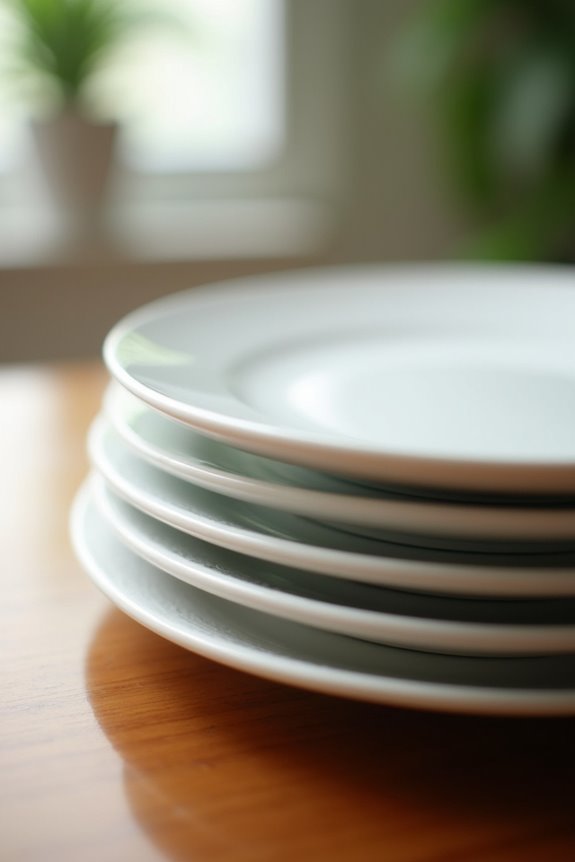
How you store your dessert plates matters more than you’d think, and size plays a bigger role than most people realize. The standard 6 to 8-inch dessert plates size works perfectly for stacking because they balance easy storage with practical usability. You’ll find that 6-inch plates nest compactly, while 8-inch plates offer a bit more breathing room without becoming unwieldy. Here’s where it gets interesting: if you’re considering rimmed versus coupe-shaped plates, remember that rims add height to your stack, which affects how they fit with other dinnerware pieces. Miniature 3 to 5-inch plates for petit fours stack even more efficiently. However, anything larger than 8 inches starts taking up noticeable cabinet space. Understanding your dessert plates size helps you maximize storage while keeping everything accessible and organized.
Shape and Style Options Beyond Standard Round
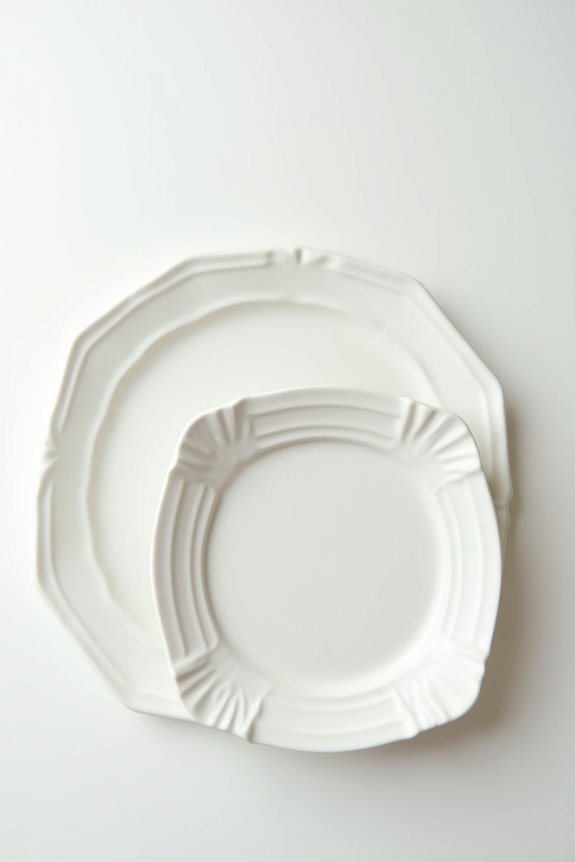
While round dessert plates have dominated tableware for centuries, they’re not your only choice—and breaking away from the circle can change how your desserts look. Non-round options offer creative possibilities:
- Square plates provide modern, contemporary vibes perfect for geometric plating
- Rectangular designs work great for elongated dessert presentations
- Coupe-shaped plates add vintage elegance to your table
- Geometric shapes create visual interest and conversation starters
- Glass options showcase layered desserts beautifully
Materials matter too. Porcelain, ceramic, and glass each bring different qualities to your table. You’ll find finishes and glazes that influence both presentation and cleaning ease. Since non-round plates are less common, they help you stand out while keeping practicality in mind. The right shape improves your dessert experience.
Where to Buy Dessert Plates in Your Size
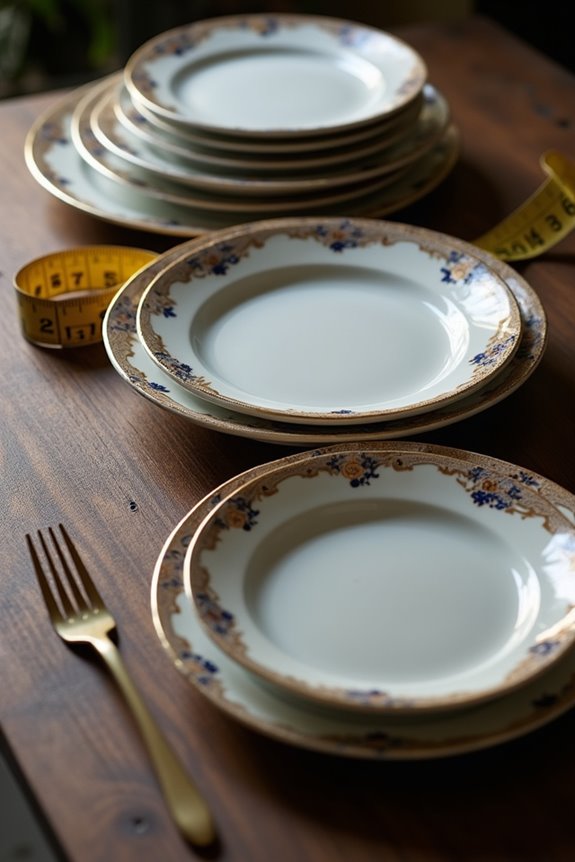
Now that you’ve explored all those beautiful shape and style options, you’re probably wondering where you can actually find dessert plates that fit your needs. I’ve found that both in-store retailers and online shops make hunting down the perfect set straightforward. Places like Williams-Sonoma and Nordstrom stock quality options in-store, so you can see them before buying. If you prefer shopping from home, Amazon and Etsy offer tons of choices with fast shipping for quick replacements. Brands like PITO Porcelain specifically carry dessert plates in the standard 6–8 inch range, emphasizing durable porcelain and varied styles. Whether you’re after 6-inch plates for petite servings or 8-inch ones for heartier portions, you’ll find what works for your table without much searching.