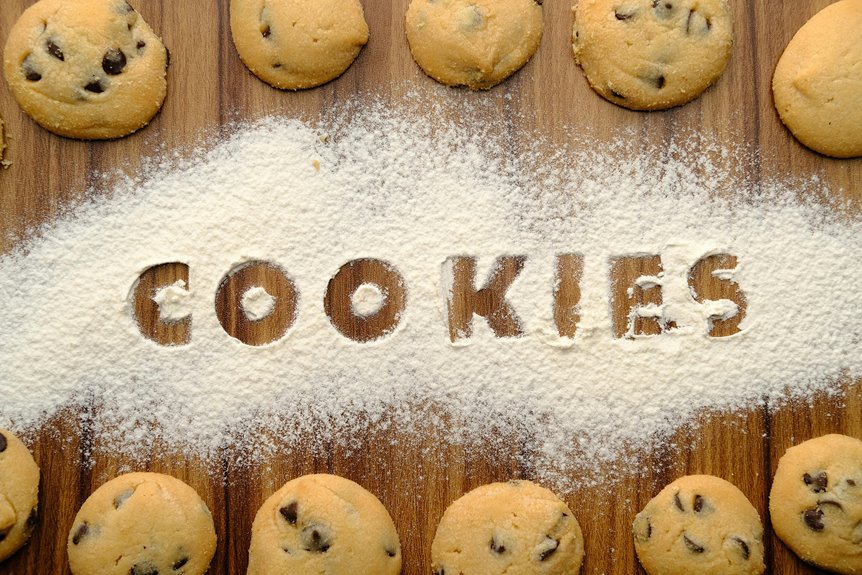
Cookies actually started in 7th-century Persia as tiny, practical helpers. Bakers used small sugar-sweetened cakes to test oven temperatures before baking bread.
These test cakes traveled along spice trade routes into Europe, where medieval bakers adopted them. They were cheap to make, lasted long thanks to low moisture content, and used leftover oven heat efficiently.
By the 1600s, jumbles and shortbread emerged as regional favorites. What began as an oven thermometer became the treat we know today, with a rich history worth exploring.
When Sugar Met Baking: The Persian Beginning
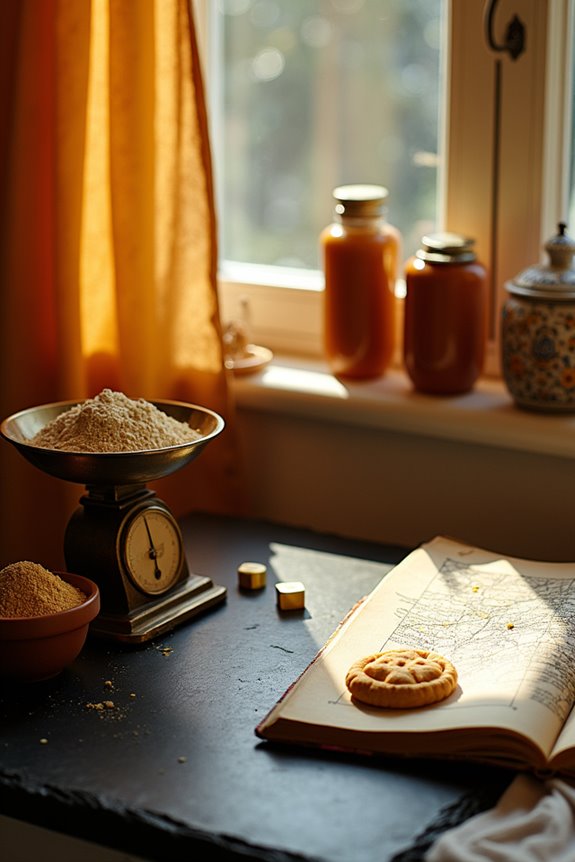
Ever wonder why we’re so obsessed with cookies today? Well, I’ll tell you—it all started in 7th century Persia when sugar cultivation changed everything about baking. Before that, sweets were rare and expensive. But when Persians began growing sugar, they discovered they could create small, sweet cakes in their home ovens that tasted good.
These early cookies weren’t just treats, though. Bakers used them as temperature testers. They’d bake a small cookie first to check if their ovens were hot enough before baking larger loaves of bread. It was practical and tasty—a perfect combination. The sugar made cookie doughs more versatile too, allowing bakers to experiment with different flavorings and textures. This Persian innovation laid the foundation for the cookies we love today.
How Cookies Spread Along the Spice Trade Routes
How’d these Persian treats make their way from the ovens of Persia all the way to Europe? Well, I’ll tell you—it’s all thanks to the spice trade. Merchants traveling ancient caravan networks didn’t just carry cinnamon and cloves. They brought baking knowledge too. When the Crusades happened, European soldiers encountered these baked goods and wanted them back home. Suddenly, spices, dried fruits, and nuts weren’t just luxuries—they were cookie ingredients. Trade routes connecting the Islamic world to the Mediterranean and Northern Europe meant recipes traveled just as far as goods did. Cities across Europe started baking their own versions. By the 14th century, you’d find cookies everywhere, each region adding its own twist. That’s how one Persian innovation became a widespread favorite treat.
The Role of Ovens in Early Cookie History
I find it fascinating that early bakers used cookies as test cakes—they’d slip a small, simple cake into the oven to check if the temperature was right for bread, which saved them from ruining expensive loaves. Medieval bakers operated under strict guild rules that controlled everything from oven temperatures to baking times, keeping cookies consistent and reliable. When the Industrial Revolution brought better oven technology in the 1800s, bakers could finally control heat more precisely, which meant they could experiment with new recipes and stop relying on guesswork.
Test Cakes And Temperature
Bakers in medieval kitchens faced a real problem: ovens didn’t have thermometers. They needed a way to test if the heat was right before committing precious ingredients. This is where cookie dough came in handy. Bakers would mix small portions of simple batter—just flour, water, and maybe a bit of fat—then bake these tiny test cakes to judge oven temperature. If the test bakes turned golden and crispy, the oven was ready. If they burned, it was too hot. If they stayed pale and doughy, they needed more heat. This early baking technique was effective and practical. These test bakes eventually became cookies themselves as recipes improved and sugar became available, turning a temperature-checking necessity into the treats we enjoy today.
Guild-Controlled Baking Standards
What’d happen if you baked something in your neighbor’s oven without permission in 14th-century medieval Europe? You’d get in serious trouble. Guilds controlled everything about baking—techniques, ingredients, even exact quantities. Master bakers held all the power, and they weren’t shy about enforcing their standards. These organizations kept strict rules so cookies and biscuits maintained consistent quality. They protected their craft jealously, determining who could bake, what recipes they’d follow, and how much they’d produce. This system shaped European baking for centuries. You couldn’t just experiment freely or open a bakery on a whim. The guilds created standardization across communities, producing predictable products that people trusted. This control eventually loosened as industrial advances arrived, but guild traditions left lasting marks on how we bake today.
Industrial Revolution Oven Technology
While medieval guilds were busy policing who could bake and how they’d do it, a completely different revolution was brewing—one that’d make their strict control over the craft almost irrelevant.
The Industrial Revolution transformed cookie baking through technological innovation:
- Gas ranges arrived in the 1820s–1830s, replacing slow wood-fired ovens with faster, more controllable heat
- Temperature regulation became standardized, eliminating the guesswork of testing doneness by hand
- Manufactured ovens enabled reliable, high-volume production both at home and in bakeries
- Batch baking flourished thanks to consistent heat cycles essential for drop cookies and bars
These innovations meant you could finally bake cookies the same way twice. Better oven design created uniform textures that helped spread standardized recipes across communities. Suddenly, cookie baking wasn’t a mysterious craft requiring guild membership—it was accessible to anyone with a modern kitchen.
Why Medieval Bakers Found Cookies Practical
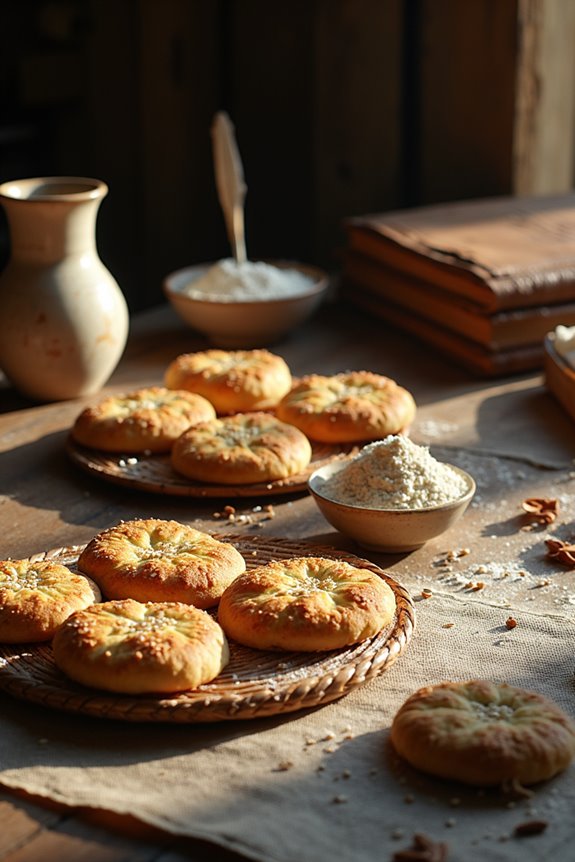
How’d medieval bakers manage to create treats when fuel was scarce and ovens were shared resources? They got clever with cookies. Instead of wasting precious firewood, bakers used leftover oven heat from bread production to bake small, durable treats simultaneously. This practicality stretched their fuel further while maximizing equipment use—a win for their wallets.
Cookies offered another advantage: preservation. Their low moisture content meant they lasted weeks, even months, without spoiling. Bakers sometimes baked them twice or dried them thoroughly, creating shelf-stable confections perfect for travel and storage.
Through trade routes and the Crusades, cookie techniques spread across Europe. Bakers incorporated local spices and sugar, creating diverse flavors that appealed to everyone from peasants to nobility. What started as a fuel-efficient necessity became a lasting tradition.
How European Bakers Integrated Cookies Into Guild Systems
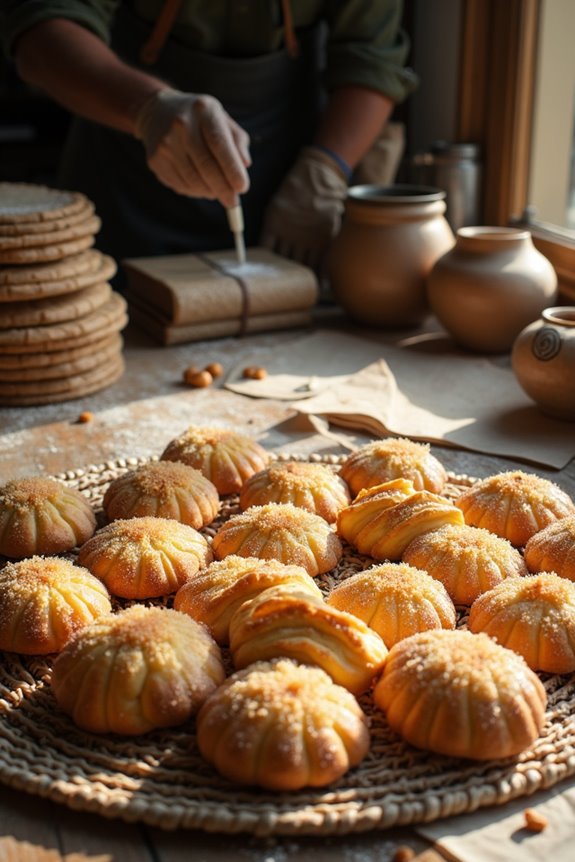
Guilds transformed cookies from casual kitchen creations into serious business. As urban commerce expanded, bakers joined together to control quality and establish standardized recipes. I find it interesting how they created specific rules that shaped biscuit production across Europe.
Guild systems changed cookies in these ways:
- Set ingredient standards – Members couldn’t skimp on butter, sugar, or flour without facing penalties
- Controlled weights and portions – Every biscuit had to match exact measurements for consistency
- Enforced techniques – Bakers learned identical methods through apprenticeships, producing reproducible textures
- Regulated pricing – Guilds prevented unfair competition by standardizing what bakers could charge
These regulations meant you’d get the same quality cookie whether you bought in London or Paris. Guild systems converted cookie-making from individual experimentation into a unified craft, building the foundation for industrial-scale production later.
From Jumbles to Shortbread: Early Cookie Varieties
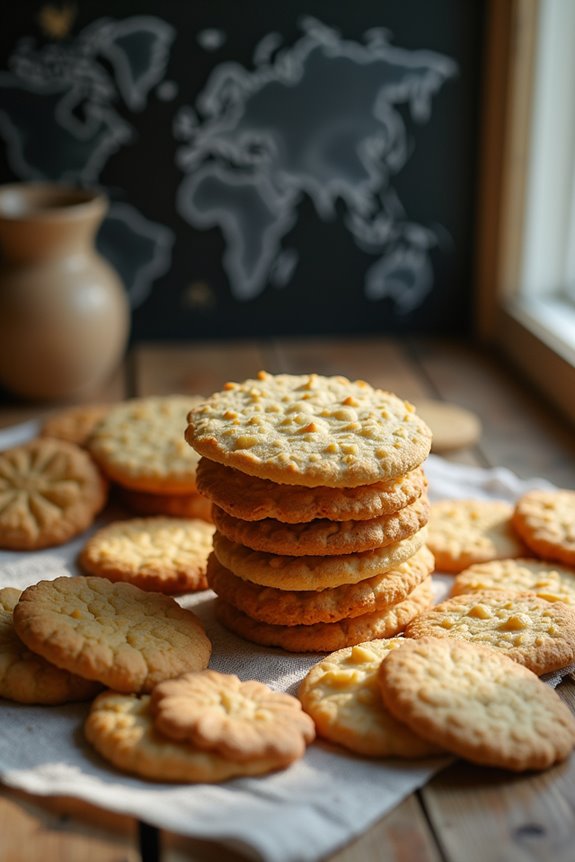
I want to show you how cookies transformed from simple treats into the beloved varieties we recognize today, starting with jumbles—those currant-studded, nutmeg-scented confections that English bakers shaped and flavored in the 17th and 18th centuries. As you’ll see, Scottish shortbread emerged as something different altogether, with its high butter content creating that distinctive crumbly, sandy texture that made it stand out from other European cookies. Together, these early varieties tell the story of how regional traditions, local ingredients, and baker creativity shaped cookie evolution across Europe.
Jumbles: Early English Cookies
Shaped like knots, rings, and twisted loops, jumbles were the cookies that dominated English tables during the 1600s—and they’re basically nothing like what we’d call cookies today. These Renaissance-era treats represented early English baking at its finest, blending luxury ingredients into something distinctive:
- Butter, cream, and eggs created a soft, cake-like texture
- Currants and nutmeg provided warmth and sweetness
- Sack (a fortified wine) added sophistication and depth
- Wooden-beat methods and buttered surfaces shaped each jumble by hand
You’ll find jumbles documented in period cookbooks like *The English Hus-wife* and Sir Kenelme Digbie’s famous collection. These cookies weren’t meant for long storage—they were indulgent treats enjoyed fresh. Eventually, jumbles evolved into harder, drier varieties, paving the way for shortbread and modern pressed cookies we know today.
Scottish Shortbread Traditions
How’d Scottish bakers transform those soft, wine-infused jumbles into something completely different? They ditched the leavening and created shortbread—a shift in simplicity. I’m talking flour, butter, and sugar. That’s it.
The technique? A seriously high butter-to-flour ratio that’d make your head spin. This ratio creates that crispy texture we crave, that satisfying sandy crunch when you bite down. Scottish bakers pressed dough onto wooden boards, baked it pale gold, then snapped it into pieces.
European Cookie Evolution
While Scottish bakers were perfecting their buttery shortbread, the rest of Europe was busy creating its own cookie evolution. The cookie development across medieval Europe offers valuable insight—it shows how bakers adapted recipes based on available ingredients.
Here’s what made European cookies so diverse:
- Jumbles featured currants, butter, eggs, nutmeg, and sack in small, shaped cakes
- Biscotti came from the Latin term “twice baked,” creating hard, travel-friendly treats
- Medieval biscuits spread across England and Europe as storage solutions
- Renaissance varieties like stroopwafels incorporated new spices, nuts, and dried fruits
The Renaissance expanded trade routes, bringing exotic ingredients that changed cookie-making practices. European innovations in oven use, sugar, and fat sources established the foundation for the cookies we enjoy today. Each region developed its own specialties, creating the distinct cookie traditions we recognize now.
How Dutch Settlers Brought Cookies to America
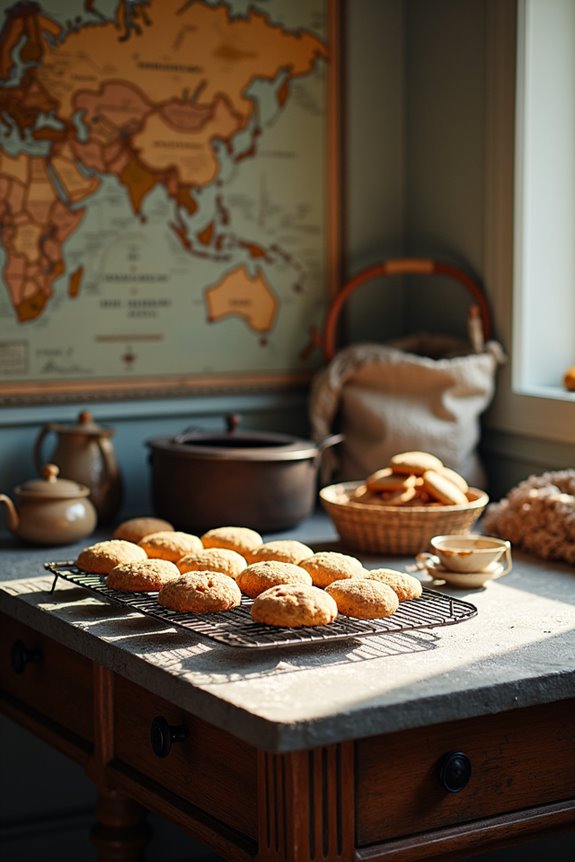
When Dutch settlers arrived in New Amsterdam during the 1600s, they brought more than just their ambitions—they packed their kitchens with cherished recipes and baking traditions that would shape American sweets for centuries to come. These Dutch bakers introduced the word “koekje,” meaning “little cake,” which eventually became our English word “cookie.” They shared their techniques and flavor combinations with English neighbors, blending Dutch methods with English teacakes and Scotch shortbread. This cultural exchange created something entirely new. Colonial cookbooks soon featured these hybrid recipes, cementing cookies as kitchen staples. The Dutch influence didn’t just bring sweets to America—it fundamentally changed how we talk about and bake them, establishing traditions we still use today.
What Colonial Housewives Baked in Early America
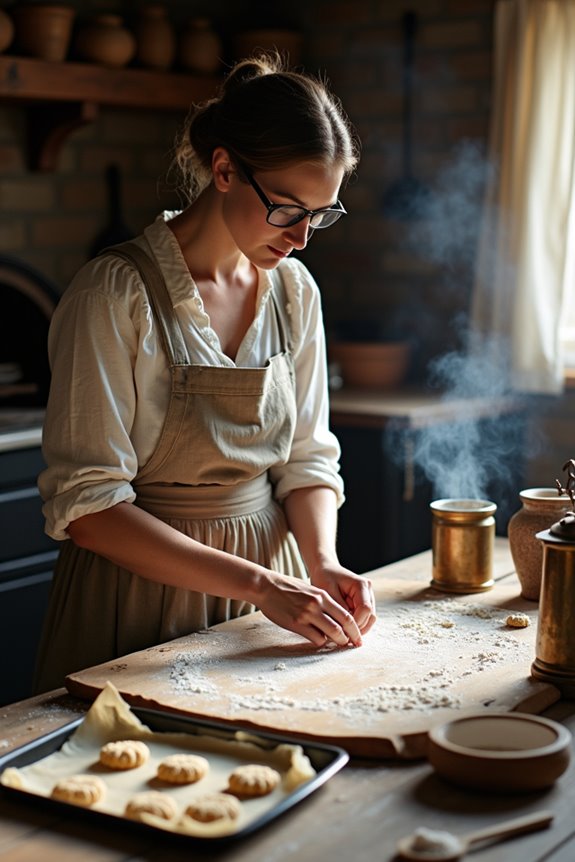
Colonial housewives took the cookie traditions they’d inherited from Europe and made them their own, adapting English tea cookies, Scottish shortbread, and Dutch techniques to fit their new American kitchens. They transformed simple ingredients into beloved treats. Here’s what they actually baked:
- Buttered tea cookies — delicate, lightly sweetened rounds perfect for afternoon gatherings
- Shortbread — rich, crumbly Scottish favorites using generous butter and basic measurements
- Gingerbread — spiced and warming, a colonial America staple
- Regional varieties — Jumbles, Plunkets, and Cry Babies from cookbooks like Amelia Simmons’ 1796 *American Cookery*
These colonial housewives measured ingredients in pounds and spoons, baking at household scale. Their cookie traditions blended European heritage with American resourcefulness, creating the foundation for our modern baking culture.
The First American Cookie Recipes and Names
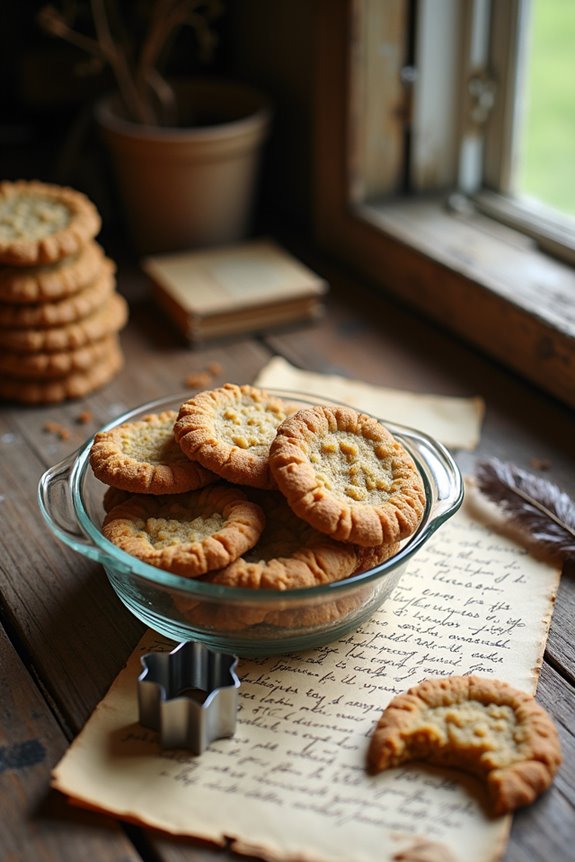
As these colonial bakers perfected their craft, they started documenting what they’d made, and that’s when America’s cookie story becomes significant. In 1796, Amelia Simmons published the first American cookbook with actual cookie recipes—one simply called “Cookies” and another unnamed. These early recipes came straight from English, Scottish, and Dutch traditions brought by settlers. Here’s what’s noteworthy: we know our word “cookie” from the Dutch koekje, meaning “little cake.” Colonial cookbooks listed cookies at the end of cake chapters, showing they held importance in home kitchens. People called them by distinctive names like Jumbles, Plunkets, and Cry Babies. These weren’t the chocolate chip cookies we know today—that development happened centuries later at Ruth Wakefield’s Toll House Inn.
What Changed in Cookie Baking During the 1700s?
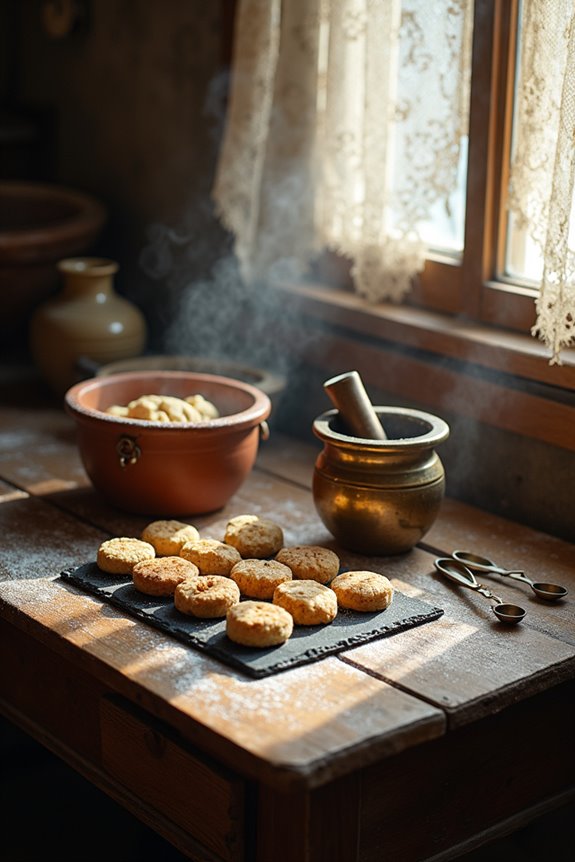
I find the 1700s fascinating because that’s when bakers started creaming butter and sugar together—a technique that significantly changed how cookies turned out, making them richer and more tender than ever before. Dutch settlers brought their own cookie traditions to America, and their influence mixed with local ingredients and methods to create something distinctly American, moving beyond the simple, hard biscuits people had baked for centuries. What’s particularly interesting is that as ovens improved and heat management got better, bakers could finally achieve consistent results with more complex recipes, which meant cookies became less of a luxury item and more of something regular families could actually make at home.
The Creaming Method Emerges
During the 1700s, cookie bakers made a significant discovery: beating softened butter with sugar created a new approach to baking. This creaming method altered cookie-making fundamentals. Here’s what made it important:
- Air incorporation – Beating butter and sugar together trapped tiny air bubbles, making cookies rise and become tender instead of dense.
- Emulsification – Gradually adding eggs created a smooth, well-blended dough that held moisture better than older methods.
- Texture transformation – Bakers could finally achieve soft, cake-like cookies instead of hard shortcrust varieties.
- Ingredient availability – Expanding sugar production and refined butter in households made this technique accessible for everyday baking.
Dutch Settlers’ American Influence
How’d a Dutch word for “little cake” end up shaping American baking? When Dutch settlers arrived in New Amsterdam, they brought koekje—their term for little cakes—and altered American baking practices. These immigrants introduced butter-rich, sweeter cookie recipes into colonial kitchens, gradually replacing the hard, long-lasting biscuits colonists had relied on. Their Dutch baking traditions spread beyond New York during the 1700s, traveling through immigrant networks to other regions. As families adopted these softer, cake-like baked goods, the vocabulary shifted too. The word “cookie” began replacing “biscuit” in American speech, reflecting how deeply Dutch influence had settled into our kitchens. Every soft cookie you bake today carries this heritage.
How Railroads and Trade Expanded American Cookie Flavors
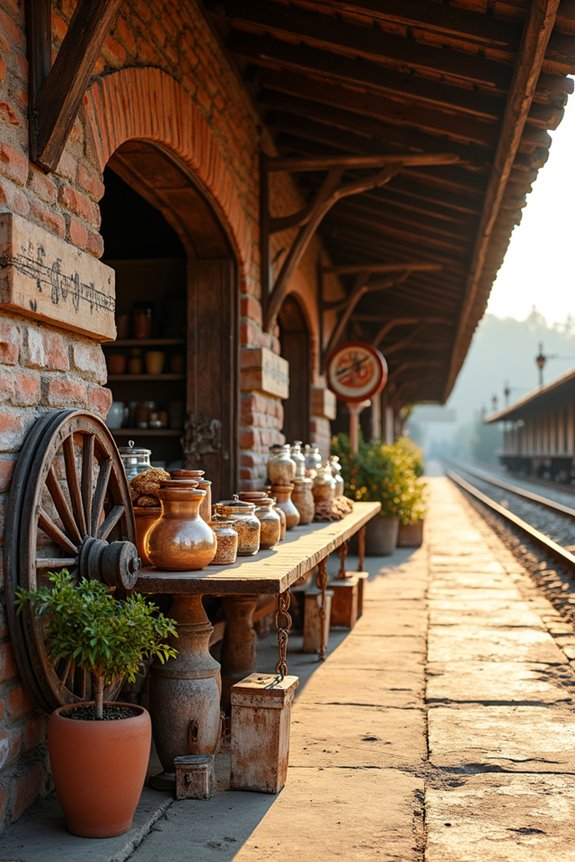
As trains began crisscrossing America in the early 1800s, they didn’t just carry passengers and mail—they changed what ended up in cookie jars across the country. Railroads altered American baking in measurable ways.
Here’s how trade routes and faster transportation shaped our cookies:
- Coconut imports from the South enriched recipes with tropical flavors previously unavailable to most bakers
- Spices, citrus, and dried fruits reached bakers everywhere, broadening what recipes could include
- Preserved ingredients and industrial sugar production meant cookies lasted longer for train journeys
- European immigrant traditions blended with American practices along railroad corridors
These expanding trade routes didn’t just bring new ingredients—they connected regional baking communities. Suddenly, Dutch koekje traditions mingled with English biscuits, and local bakeries standardized recipes through mass distribution networks. We weren’t isolated anymore; railroads linked us together through flavor.
When Industrialization Transformed Cookie Production
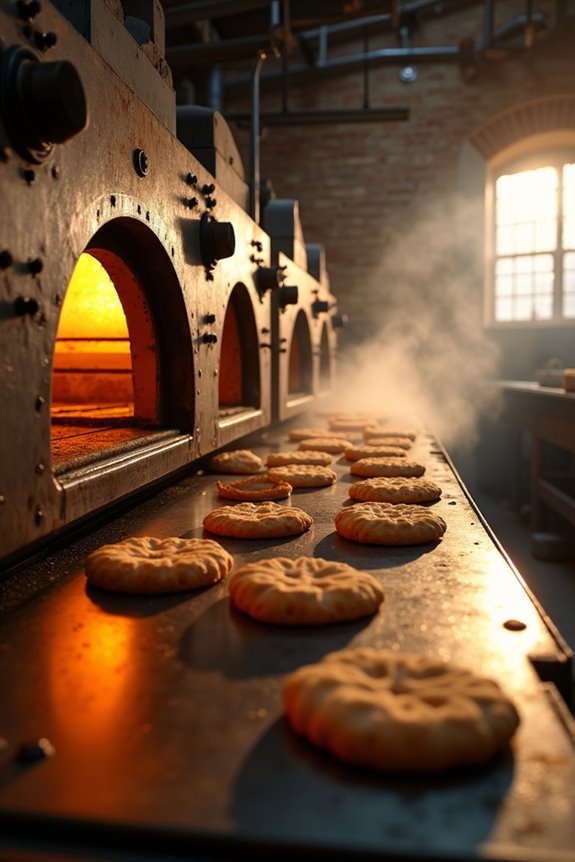
While railroads were connecting Americans through shared flavors, something equally powerful was happening inside factories and bakeries—machines were taking over what human hands had always done. I’m talking about industrialization transforming cookie production entirely.
The late 1800s brought machines that could mix, shape, and bake cookies faster than any baker could manage. Mass production meant standardized recipes. Everything had to be exact—same ingredients, same measurements, same process every time. Companies like Nabisco dominated this new landscape, creating cookies that tasted identical whether you bought them in Boston or California.
| Innovation | Impact | Result |
|---|---|---|
| Factory machines | Faster baking | More cookies daily |
| Standardization | Consistency | Identical taste |
| Preservatives | Extended shelf life | Nationwide shipping |
| Packaging advances | Better protection | Fresher arrival |
| Large-scale production | Lower costs | Affordable treats |
We’d finally cracked the code: making cookies for millions.
What New Varieties Emerged During the Industrial Era?
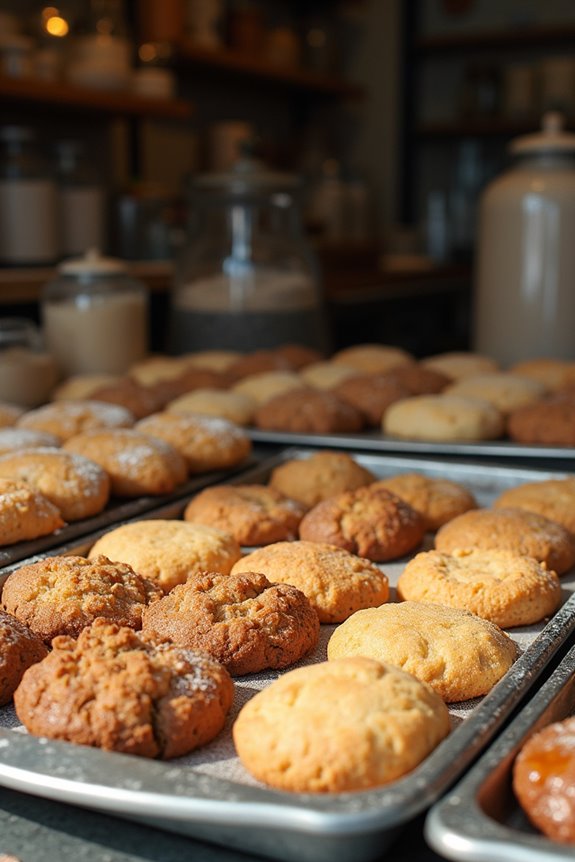
Once factories could churn out thousands of cookies daily, bakers weren’t content making the same old recipes anymore—they started experimenting, innovating, and yes, sometimes getting a little wild with new flavors and shapes.
What emerged during the industrial era for cookie lovers:
- Chocolate chip cookies became mass production staples, thanks to standardized recipes and refined ingredients
- Packaged cookies in convenient formats hit stores in the 1950s-60s, making treats accessible to everyone
- New shapes and designs emerged specifically to appeal to consumers and stand out on shelves
- Standardized recipes using granulated sugar, refined flour, and butter blends produced consistent quality across batches
These innovations transformed cookies from occasional homemade treats into everyday conveniences available anytime.
The Modern Cookie Landscape Today
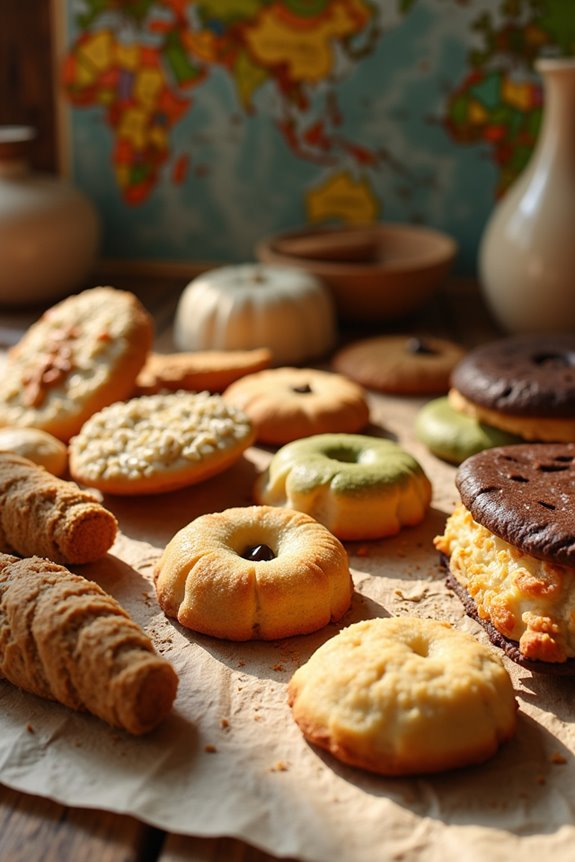
When I look at cookies today, I see two very different worlds colliding: artisanal bakeries hand-crafting small batches with fancy flavors like matcha and salted caramel, while massive factory-made cookies sit right next to them in grocery stores and coffee shops. You’ve probably noticed those giant cookies—the kind that are 6 to 12 inches across and pack 800+ calories into a single treat—they’re everywhere now, marketed as shareable indulgences or social media-worthy snacks. What’s interesting is that I can find cookies from around the globe in my local supermarket, at trendy coffeehouses, and online, with options for every diet imaginable: gluten-free, vegan, strawberry-filled, you name it.
Factory-Made vs. Artisanal Production
Today’s cookie world splits into two distinct categories, and both serve different purposes in our lives. On one side, you’ve got factory-made cookies—think mass-produced packages with standardized recipes and long shelf lives. On the other side, artisanal bakers create small-batch cookies in local shops.
Here’s what makes them different:
- Production style: Factory operations use automation, while artisanal bakeries rely on handcrafted techniques
- Ingredients: Mass producers prioritize consistency; small bakers showcase seasonal, local ingredients
- Flavors: Factory brands like Toll House shaped mainstream expectations through commercial licensing deals, while artisanal shops innovate with salted caramel and matcha
- Availability: Ready-to-bake packaged options compete with fresh-baked offerings
Both influence how we experience cookies today. Modernization brought us convenience; artisanal baking brought us character and quality.
Supersized Cookie Phenomenon
While artisanal bakers were perfecting their craft with seasonal ingredients and handmade techniques, something else was happening in grocery stores, coffee shops, and restaurant chains—cookies were getting bigger. I noticed this shift when supersized cookies started showing up everywhere, from Panera’s Kitchen Sink Cookie to countless gourmet variations. These oversized treats came in flavors beyond the classic chocolate chip cookie, offering everything from indulgent to experimental options. Sure, nutritionists like Leah Ettman raised concerns about cookies packing 800 calories each, but consumers weren’t deterred. This phenomenon reflects cookie history’s evolution—from homemade batches to mass production to today’s cookie craze. Modern supersized cookies balance novelty appeal with indulgence, marking how far we’ve come from simple baked goods to statement desserts that define café culture.
Global Availability and Venues
Where can you actually find a cookie these days? Cookies are everywhere now. The global availability of cookies has expanded significantly, giving us more venues and options than ever before.
- Bakeries and coffeehouses offer handcrafted, historically inspired varieties alongside modern specialty flavors
- Supermarkets stock both fresh-baked and packaged, ready-to-bake options for convenience
- Online retailers ship cookies internationally, breaking geographic boundaries
- Food halls and specialty shops feature diverse regional styles and unique creations
Whether you’re hunting for warm, fresh-baked treats or grabbing shelf-stable packaged cookies, you can find them almost anywhere. Regional variations mean naming differences—cookies versus biscuits—depending on where you’re shopping. The contemporary landscape blends traditional and modern options, so you’ll discover something that fits your cravings, no matter where you live.